
Over the past year, girls and women have been debated and demeaned; our bodies regulated; our leadership labelled ‘difficult’; our rights traded as political pawns. From Afghanistan to Australia, from the manosphere to the White House, our ‘safety’ has been weaponised as an excuse to curtail our freedoms and spout hatred.
Billion-dollar aid cuts have fallen disproportionately on the services we rely on to avoid child marriage, give birth safely or heal after violence. In conflicts, our bodies have been used as battlefields in record numbers.
In our homes, we’ve been killed by those who are supposed to love us. Online, we’ve been stripped naked by unregulated AI, and told not to worry because the images aren’t real.
Meanwhile, the Epstein files have revealed what we’ve been saying all along: patriarchy runs deep, and it harms us all.
The backlash against gender equality hasn’t only put a generation of progress at risk; it has also influenced the public narrative that sets the tone for what happens next. Plan International Australia’s Gender Compass research shows that whilst most of usAustralians support gender equality in principle, many are starting to question whether we still need to work for it; for aren’t women already equal?
It’s a comforting story: that the playing field is now level, and that abuse is individual rather than systemic. But for countless women still juggling unequal care loads, misogynistic attitudes, entrenched violence, economic disparity, or any number of other daily impacts, this is far from the truth.
This gap between perception and lived reality is dangerous. It stifles further action: if we believe equality has already been achieved, why push further?
For the one in three women facing violence, the two in five boys being taught that toughness is the measure of their worth, the countless young mothers fighting to keep their children safe while wearing bruises of their own, the ‘why’ is clear.
After a year of bitter setbacks to the gender equality movement, International Women’s Day needs to return to its roots.
This day began as a protest movement in New York City over 100 years ago, when women garment workers took to the streets to demand fair working conditions. It has roots in women protesting for ‘bread and peace’ at the start of the Russian Revolution. It has roots in communities all over the world, across time, making inequality visible and undeniable, and calling not only for better conditions for women, but an equal world that will benefit everyone.
Somewhere along the way, we have stopped talking about the continued inequalities women face, and started spending this day celebrating the progress they are making – the workplace policies achieved, the high achieving women to be inspired by. This optimism matters, and has been hard-earned, but it’s only half of the story.
The other half involves standing with those still fighting hard for their basic rights. Celebration without solidarity fuels the myth that equality is nearly won.

We need to focus on where women’s inequality begins: in adolescence. Just as the critically acclaimed, deeply harrowing Netflix series of the same name portrayed, girls are being targeted by rising misogyny in their schools and online, and learning to fit their lives around it. The result is normalised violence, and a belief – among all genders – that girls need to modify their behaviour or accept the outcomes. These attitudes formed in adolescence become hard to unlearn.
Worldwide, girls are most likely to leave school and marry as children; a staggering one in five girls globally still experience child marriage. When they do, their risk of violence and extreme poverty increases. The education and freedom lost during these years can rarely be regained.
But when we invest in girls, everything changes. Girls become women with choices, and entire communities rise with them.
Over the past 18 years, Plan International’s longitudinal research has tracked the experience of girls over time. In many ways, their reality is improving. They have better access to education, more pathways to financial independence and deeper understanding of their rights.
What hasn’t receded is violence, or the attitudes that underpin it. The rollbacks on girls’ rights this year – from funding cuts to policy strangleholds – are not isolated decisions. They reflect a culture that still tolerates male dominance and entitlement over girls’ bodies and freedoms.
Centering the ongoing struggle doesn’t mean losing hope. It means turning your spotlight to the girls fighting for their space and survival. The young Sudanese women who have survived sexual violence and are now running mutual aid networks amid the worst humanitarian crisis in a generation. The girls in Colombia who have driven historic laws to ban child marriage. The young Australians rewriting gender norms to be based on respect, consent and freedom. Standing up for women means standing up for all women, especially those furthest from equality. At this moment in history where everything is at stake, International Women’s Day cannot be business as usual.
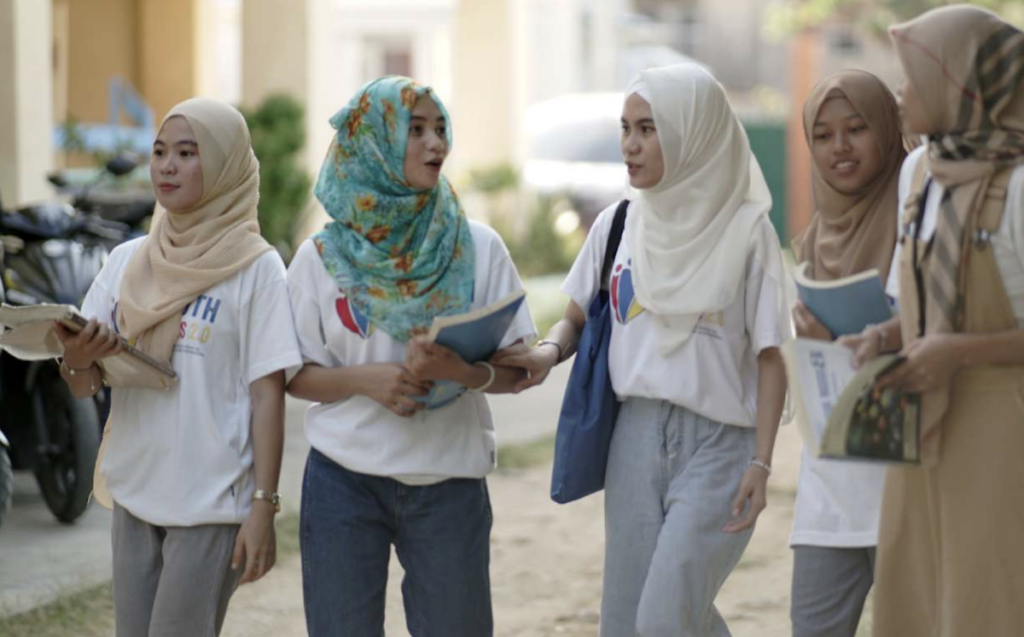
Pictured above: Girls in the Philippines are leading their communities to withstand the impacts of climate change, as part of Plan’s Youth Cares project © Plan International.