
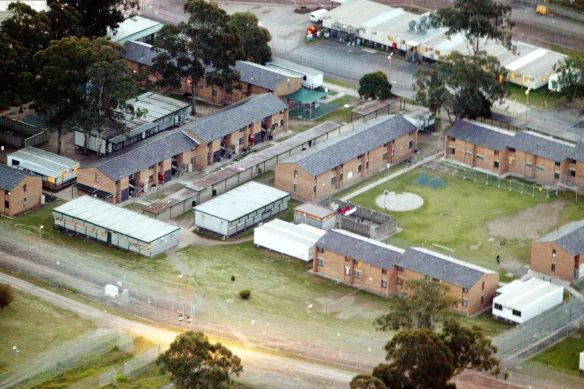
There is something deeply unsettling about the way harm can become normalised when it is bureaucratised. When it is written into policy, absorbed into infrastructure, and managed through daily routine, it stops looking like violence, even as it continues to shape every aspect of a person’s life.
That is what is happening inside Villawood Immigration Detention Centre.
Sisters Inside has spent years alongside women navigating immigration detention, including those held at Villawood. When the Australian Human Rights Commission undertook its inspection, Sisters Inside contributed as consultants and, more importantly, carried the voices of women into that process. What they described was not ambiguous. Women spoke about feeling unsafe, about living with the constant threat of violence, about witnessing and experiencing harm that never quite settles. Some said plainly that they felt safer in prison than in immigration detention.
It is hard to overstate how serious that is. Prison in Australia is already a site of profound harm, particularly for women who are overwhelmingly survivors of violence themselves. For immigration detention to be experienced as worse, less safe, less controlled, more unpredictable, should have been a line in the sand.
Instead, it became another finding in a report.
The Commission produced 31 recommendations, several of them specifically addressing conditions at Villawood. They were not abstract or aspirational. They spoke directly to what women need to live with some degree of dignity: access to appropriate services, infrastructure that allows for safety and privacy, spaces that are self-contained and responsive to women’s lives. Even something as basic as access to a qualified female hairdresser was raised, not as a luxury, but as a recognition that identity, culture and self-presentation matter, particularly in environments designed to strip them away.
What the report also made clear was just how structurally unsafe Villawood is. Women are detained in compounds that sit directly alongside male compounds, including those housing men with histories of sexual offending. There is no meaningful privacy screening. Women can be seen. They know they are being watched. Some spoke about men calling out to them, taunting them, passing things through the fence. For women who have already lived through sexual and domestic violence, this is not incidental, it is retraumatising by design.
The Commission did not minimise this. It described the co-location of women next to these compounds as entirely inappropriate and a significant risk to safety and wellbeing. It pointed to the obvious solution: women should be accommodated in a separate, self-contained space, away from male compounds altogether.
That recommendation sits there, still.
In the time since that report, we have continued to hear from women inside Villawood. And what they are describing now is not improvement. If anything, the conditions have become more restrictive, more isolating, and more difficult to endure.
Women have been moved into a new area in the last six months. On paper, this might read as a change in infrastructure. In reality, it has meant further confinement. They are no longer permitted to access the central “Community” space: the area that includes the library, the hairdresser, shared recreational facilities. That space still exists, but not for them.
Instead, we have been told by the women that life has narrowed to a much smaller footprint. There is no access to a proper gym or sporting field, just a single volleyball court. There are no televisions. There are no gardens, no spaces that allow for quiet, for reflection, for something resembling normality. Even access to books has been refused when women have asked for them.

What fills the day instead is what is offered as “activity”: a coffee club in the afternoon, bingo, colouring in, word searches. At one point a personal development course began, only to be stopped halfway through. There is no continuity, no investment, no sense that time spent in detention should be meaningful in any way.
Even the most basic forms of self-expression are controlled. The Commission recommended access to a qualified female hairdresser. What women describe instead is a barber who comes in with clippers. There is no capacity to dye hair, no choice in how they present themselves. It might seem small from the outside, but inside these environments, these details accumulate. They are part of how control is exercised, not just over movement, but over identity.
What makes this harder to ignore is the contrast within the same facility. Men detained at Villawood continue to access the Community space. They can go to the library, use shared facilities, watch television, spend time on larger sporting fields. The infrastructure exists. The resources exist. The difference is in who is permitted to access them.
This is not accidental. It is a form of gendered deprivation that sits quietly within the broader carceral system.
It is also important to be clear about what this kind of environment does. When you remove access to space, to activity, to stimulation, to information, you are not simply managing people, you are shaping their mental health. You are narrowing their world to the point where time itself becomes difficult to hold. You are creating conditions where distress is inevitable, where hope becomes harder to sustain, where the future feels increasingly abstract.
None of this is new information. The Australian Human Rights Commission documented the risks. Women have been articulating these experiences consistently. Organisations like Sisters Inside have been raising these issues for years.
And yet, very little has shifted in any meaningful way.
There is a tendency to describe places like Villawood as “challenging environments” or “complex systems.” But that language obscures more than it reveals. Villawood is not an accident. It is not a system that has somehow drifted away from its purpose.
It is a system operating exactly as it has been designed: to contain, to control, and to make life inside so diminished that it becomes something to endure rather than live.
For women, that containment takes on a particular shape. It is layered with histories of violence, with the ongoing impacts of displacement, with the realities of being held in spaces that do not recognise or respond to gendered harm. It is reinforced through environments that restrict movement, limit connection, and deny access to even the smallest forms of autonomy.
The question is no longer whether we know what is happening inside Villawood.
We do.
The question is why, knowing all of this, with detailed findings, with clear recommendations, with women continuing to speak, these conditions are still being maintained.
And what it says about the value placed on the lives of the women inside.