

Just 10 per cent of Australian family farms are succeeded by daughters, despite women contributing 49 per cent of the total economic value in farming communities.
Their labour, often unpaid, emotional, or earned off-farm, keeps operations afloat during drought, disaster and market shocks. Yet when it comes to the single most important decision for the future of these businesses, succession, many are left out of the room.
“We’ve seen daughters and daughters-in-law sidelined from succession conversations despite carrying the weight of the business in invisible ways,” says Alice Byrnes, co-director and lawyer at Cheney Suthers Lawyers.
“They’re often the first to raise concerns about the lack of a plan, but are still excluded when it’s time to make one. Meanwhile, on-farm children are carrying business debt, off-farm children are making assumptions, and families are breaking down over disputes that could have been avoided.”
Cheney Suthers Lawyers, based in Orange in regional NSW, has just released a new report, From Crisis to Clarity: Proactive & Collaborative Farm Succession Planning. It outlines a eight-step action plan to help farming families navigate succession with transparency, equity and long-term business sustainability in mind. But the report doesn’t just tackle legal and financial strategy—it calls out the gender bias, silence and fear that often define succession in rural Australia.
“Succession is too often viewed as something to avoid until absolutely necessary,” Alice explains. “But by then it’s already a crisis; someone’s died, a divorce has happened, or the bank is circling. We need to normalise having these conversations early, openly, and with everyone at the table.”
Among those who contributed to the report is Tess Herbert, a multi-generational farmer and Director of Gundamain Pastoral Co. Tess has spent more than two decades ensuring her family’s farm business is succession-ready, because she’s seen what happens when it’s not.
“My in-laws handled succession planning very poorly, so I was the off-farm income for quite some time,” she shares.
“The one time we did have a facilitator in, it went very, very badly—lots of yelling and swearing. The first question was asked, doors were slammed, and people stormed out. That was it. There was no appetite for discussion.”
“My husband’s two sisters were told very clearly not to even think about being part of the farm. There was no space for them in the conversation.”
Tess and her husband took that experience as a warning. Today, they’ve structured their business to support multiple children returning, if they choose to, and have formalised plans for off-farm equity and long-term growth.
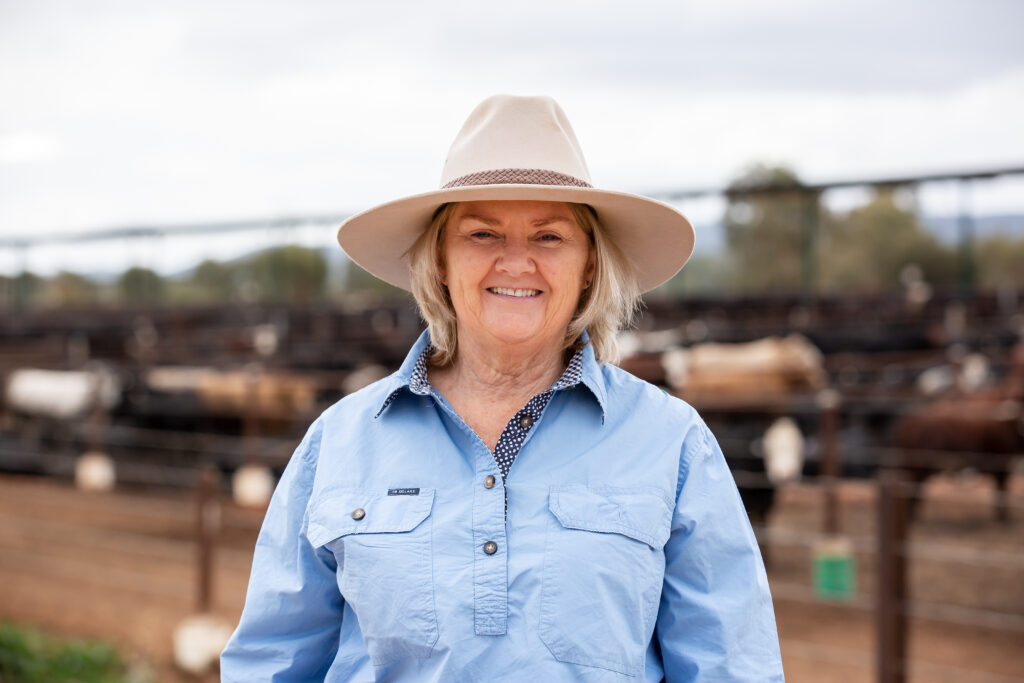
For Renee Reid, a daughter-in-law of a fifth-generation farming family, it took 15 years of marriage before succession was ever discussed.

“Succession planning was never openly discussed in our family. My only ticket to having a voice in the process was through my husband,” she says.
“Women, especially daughters-in-law, are often excluded from these conversations, yet they are the ones making sacrifices—financially, career-wise, and emotionally—to keep the farm running.”
“It’s not just about passing down land. It’s about building a future that works for everyone involved.”
And in 2025, that future must be built with climate resilience in mind.
According to the Australian National University, farm profits have already declined by 23 per cent due to climate impacts, equating to roughly $29,200 in lost income per farm each year. The CSIRO predicts another 13 per cent drop by 2050 if farms fail to adapt. West Australian cropping operations could face losses of up to 32 per cent if nothing changes.
“Climate change is a business risk, not just an environmental issue,” says Tess. “We’re measuring our emissions, our carbon and our biodiversity. I see climate adaptation as a long-term business strategy. If we don’t get ahead of it, we’ll be forced into it later.”
Farming families are now beginning to embed sustainability into their succession strategies through diversification into carbon projects, renewable energy leases, and regenerative practices that improve land value over time. Yet many still delay the hard conversations that would allow those transitions to take place across generations.
As Alice puts it, “When we talk about succession, we’re really talking about identity, power, and legacy. That’s why it feels so emotional. But if we don’t address it, families don’t just lose farms, they lose connection, trust, and long-term wealth.”
The report recommends that families engage early with legal, financial, and agribusiness advisors while ensuring all voices, especially those who have traditionally been excluded, are heard and respected.
Feature image: Renee Reid and her family.