
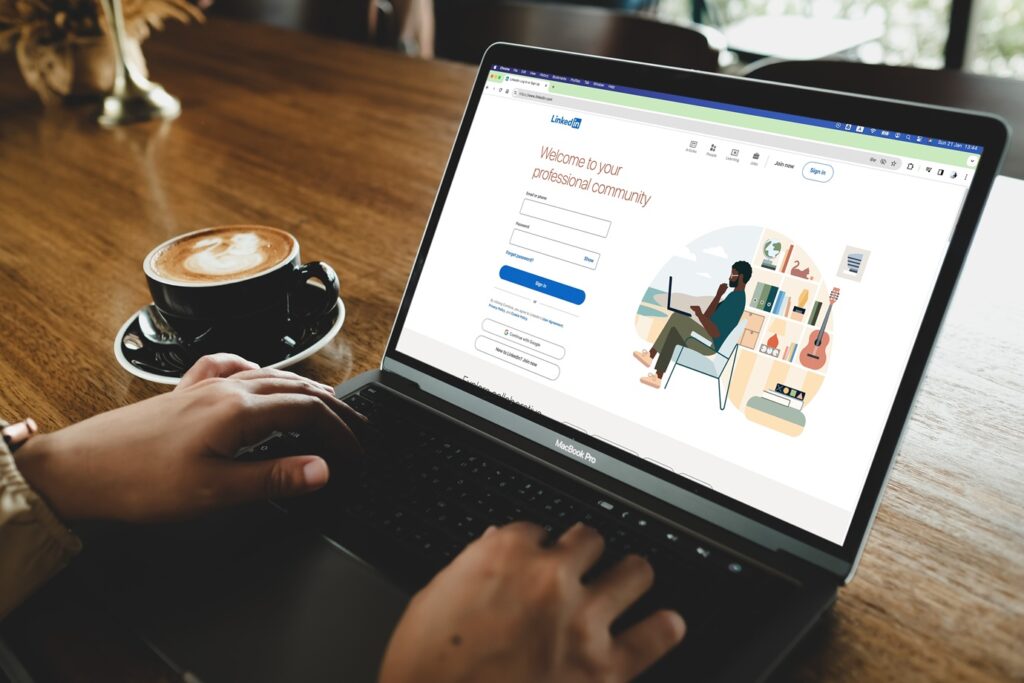
Women on LinkedIn say their posts gain noticeably more reach and engagement when they switch their profile gender to “male.”
It’s a collective experiment that has many questioning whether there might be a gender bias found in the platform’s algorithm.
Megan Cornish, a top voice on LinkedIn and licensed clinical social worker, was among the women who tested out this theory, and she said her views went up 400 per cent on the platform after changing her gender to “male”.
“This is not how LinkedIn used to be- it must be an algorithm change, I’d say in the last 6-12 months. But now, my top 3 posts from the last month were all written in the last few days,” Cornish wrote on LinkedIn.
Along with changing her gender category, Cornish also changed her posts and descriptions to include more male “agentic” language, which she based on research articles that describe gender differences in communication.
Another woman, Kamales Lardi, a CEO and thought leader, followed Cornish’s approach and saw similar results, watching her own post impressions increase by 421 per cent in a few days.
“Early this year, my posts impressions dropped significantly (and suspicously) after several posts criticising Elon and the coalition of tech bros for their unethical behaviour. It never fully recovered after, and I had struggled to gain impressions since,” Lardi wrote on LinkedIn.
“Now, with this change on my profile, there was an immediate impact.”
Responding to the trend, LinkedIn wrote in a blog post on Thursday that their algorithm is not influenced by gender, despite the anecdotes being shared.
“Our algorithm and AI systems do not use demographic information (such as age, race or gender) as a signal to determine the visibility of content, profile or posts in the Feed,” LinkedIn said.
“Our product and engineering teams have tested a number of these posts and comparisons, and while different posts did get different levels of engagement, we found that their distribution was not influenced by gender, pronouns, or any other demographic information.”
Similar to other social media platforms, LinkedIn’s algorithm determines which posts to show users.
Previous scientific studies have analysed how real world gender bias has the potential to impact the algorithm. Looking at Instagram in 2018, Columbia University researchers found that male users were far more likely to be suggested to new users and expand their networks more quickly than top-engaging women.
Over the years, female users on LinkedIn have also spoken out against sexual harassment they’ve received on the business networking platform.
Having had enough of the sexual harassment from men, chief executive of the China Australia Millennial Project, Andrea Myles did a similar gender experiment on LinkedIn back in 2018, where she changed her name from ‘Andrea’ to ‘Andrew’. The result saw the inappropriate messages from men in her inbox stop, as well as a reduction in the number of people re-explaining content to her when she posted.