

Cissy Ma left the corporate world with a mission to help small business owners and aspiring entrepreneurs access the opportunities that big companies take for granted. Now, she’s showing more Australians, particularly women and culturally diverse professionals, that buying an existing business could be one of the most overlooked pathways to building wealth.
After two decades in corporate finance, Cissy Ma saw a pattern she could no longer ignore: the system worked best for large clients, while many small business owners and aspiring buyers were left without the support and structure needed to raise capital, prepare for sale, or acquire a business with confidence.
“Small business owners are the ones who really need help,” Ma tells Women’s Agenda. “They don’t have the internal systems and disciplines that larger businesses have, and when they want to raise capital or sell their business, they’re often not ready.”
“There was a big gap where these business owners just had nobody that they could turn to.”
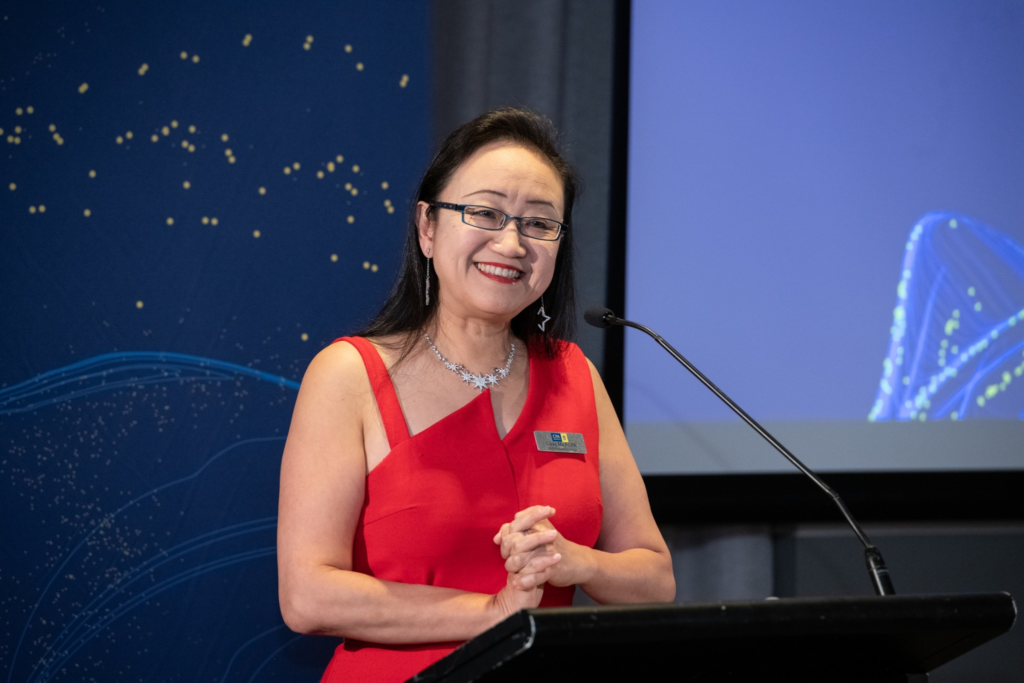
In 2018, Ma left corporate life and launched her own business to help people raise capital, buy businesses, and prepare businesses for sale with the right support in place.
“I reached a crossroads: I could stay in corporate and keep working with large businesses, or I could start my own business and focus on the SMEs who really need the help,” she says.
Today, through Grow and Sell Your Biz, she works with business owners preparing for sale and aspiring entrepreneurs looking to acquire established businesses.
It’s well-trodden ground for Ma, who led about $17 billion of domestic and cross-border mergers and acquisitions throughout her corporate career. She now applies that deal experience to buyers and owners who do not have an internal corporate team behind them.
Why Ma believes buying a business is an underused pathway to wealth
Ma sees business ownership as one of the most underutilised pathways to wealth creation in Australia, particularly for people who want to skip the high-risk stage of starting from scratch.
Through her Business Buyers Launchpad program, she teaches clients how to identify acquisition opportunities, negotiate deals and secure financing.
One of her youngest clients, a first-time buyer, acquired a medical centre in Brisbane at 29. Another purchased a power supply company in Sydney using a combination of bank finance and vendor funding.
“You don’t need millions of dollars to buy a multi-million-dollar business,” Ma says. “You need to know how to structure the deal.”
With a wave of Baby Boomer and Gen X owners nearing retirement, Ma says the opportunity for business acquisition is growing across Australia. A PwC survey points to the scale: 1.4 million business owners are set to retire by 2036, and one-third have no succession plan.
“According to the Exit Planning Institute and sources citing it, roughly 70%–80% of small businesses listed for sale never sell, meaning only about 20% complete a sale,” Ma says. “They just close their doors.”
“Those business owners have been running their businesses for so long, but instead of getting someone to buy the business, they end up throwing it away,” she adds. “It doesn’t serve anyone.”
Stepping into entrepreneurship in midlife
Like many women entrepreneurs, Ma made the leap into business ownership in midlife, after her children had grown up and become independent. She believes this is why many women in their 40s and 50s are increasingly starting businesses, or exploring acquisition as a route to ownership.
Recent figures show entrepreneurs in the midlife stage contribute $11.9 billion per year to the Australian economy across nearly 380,000 businesses. They also launch 14,000 new businesses each year, making them the fastest-growing cohort of entrepreneurs.
But while business ownership has brought more freedom and purpose, Ma doesn’t pretend it is easy.
“In corporate, you’re accountable for your function,” she says. “As a business owner, you’re accountable for the outcome.”
The power of mentoring for culturally diverse women
A decade ago, Ma founded the APAC Women’s Mentoring Circle after recognising that many culturally diverse women lacked access to mentors and professional networks. What began as a small mentoring initiative has since grown into a community of more than 1,500 women.
The group started in the wake of Ma’s own experience navigating Australian workplaces as an Asian woman.
“We were brought up to be modest, to put our heads down and do the work,” she says.
“But that’s not the truth in the Australian landscape. Whether you’re in corporate or a small business, you still have to tell people what you’re good at and you still have to speak up.”
Ma is also an active mentor at Mentor Walks, another mentoring group for women seeking advice from senior women across sectors. She points to data showing culturally diverse people, especially women, remain underrepresented across Australia’s largest boards.
Mentoring and coaching can be practical tools to change that, she says.
“I wish I’d had a mentor or coach when I was younger,” she says. “I probably would have started my business, or bought a business, earlier.”
What success looks like now
Looking ahead, Ma is focused on building impact. She wants to help at least 100 people become business owners through acquisition, while also championing women and culturally diverse people in business.
She is also passionate about embedding environmental, social and governance (ESG) principles into business strategy, reflected in her volunteer roles on the CPA Global ESG Centre of Excellence since 2020, and her 2025 presidency for CPA Queensland.
For Ma, success is multi-faceted: not only building her own business, but helping others access opportunity and build wealth in ways that might otherwise feel out of reach.
It is, she says, about sending the metaphorical elevator back down.
Thanks to our partner CommBank. CommBank supports women in business and the community across all industries and sectors through its Women in Focus team. For more information head to WomeninFocus.com.au.
This article represents opinions and views of the interviewees’ personal experiences only. It does not have regard to the situation or needs of any reader and must not be relied upon as advice. It is not intended to imply any recommendation or opinion about a financial product or service. Before acting on this information, consider its appropriateness to your circumstances.