
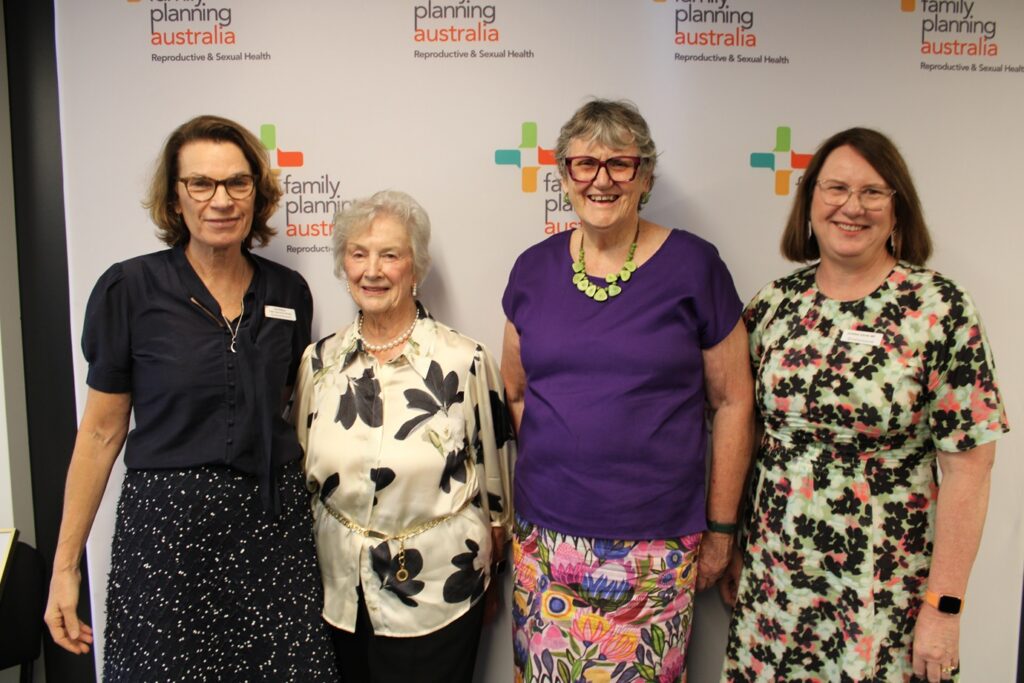
Family Planning Australia has celebrated its 100th year of operation, advancing the nation’s sexual health, women’s rights and reproductive education.
Since opening its doors in 1926, women’s rights campaigner Wendy McCarthy AC said the organisation had “changed the rules for all of us”.
At a celebration event for the 100th anniversary last week, McCarthy told dignitaries and staff that Family Planning Australia “launched the nation’s first birth control clinic in 1933 and brought the Pill to Australia in 1961”.
“These advances were happening at a time when birth control, abortion and reproductive rights were not part of the daily conversation.
“Family Planning Australia never shied away from starting the tough conversations and finding ways to provide people with the care they needed,” said McCarthy, adding that the organisation “was and still is the place you go to for trusted advice.”
“It has survived for 100 years because it has always brought crucial services to women, often at times when there was simply nothing else.”
Having spent over five decades championing the rights of women and girls, McCarthy was elected to the Family Planning Board in 1975 and later became the first professional Media, Information and Education Officer, a role she shared with Antoinette Wyllie.
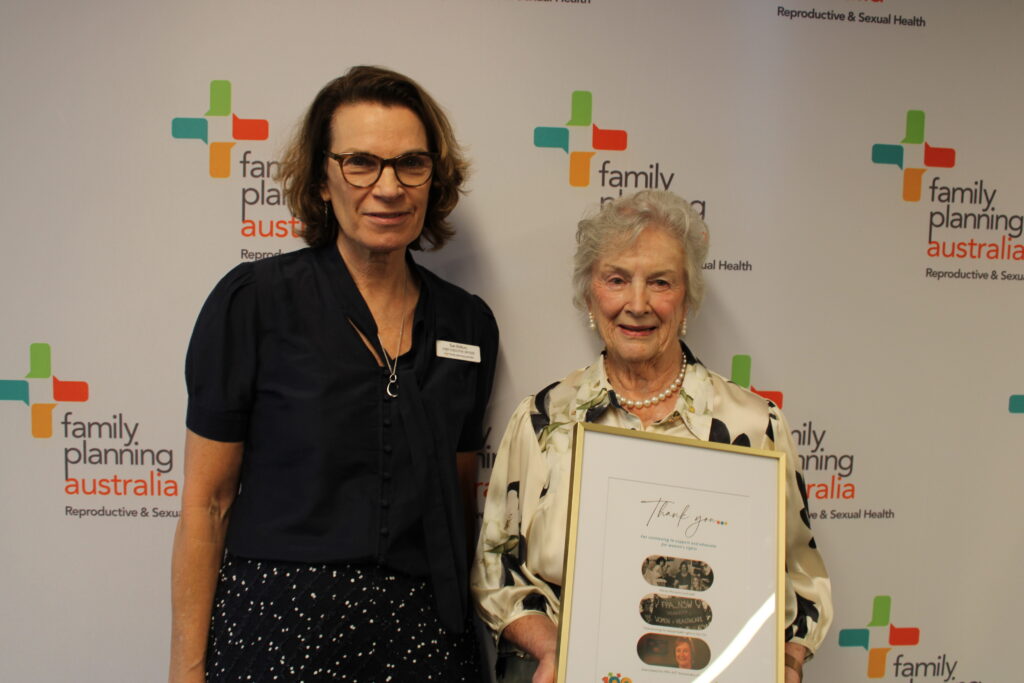
Family Planning Australia CEO Sue Shilbury also spoke on the importance of celebrating the organisation’s 100 years of changemaking, saying the work is crucial to women’s rights and reproductive autonomy.
“In the 1970s, when Family Planning Australia started making contraception available to all women, regardless of if they were married or had their husband’s permission, this was groundbreaking and it was until 1996 that society formally caught up with the Married Persons Equality of Status Act, giving all people, regardless of gender, the right to consent to their own medical treatment,” said Shilbury.
“We’ve been offering sex education and talking about consent since 1942, and in 2019, we championed the NSW Parliament’s decriminalisation of abortion.”
Despite how far Australia has come, Shilbury says Family Planning Australia knows there’s still a lot of work to be done to further women’s rights.
“Women continue to face healthcare challenges such as medical misogyny, low rebates for critical procedures and medications and a lack of understanding for significant issues like menopause,” she said. “However, when we look at the progress that has been made organisationally and socially, it is still very humbling.”
“Caring for women and their unique health needs will always be a priority for us, but over time, we have certainly shifted and are now looking beyond reproduction to serving a range of ages, sexualities and health issues.”