
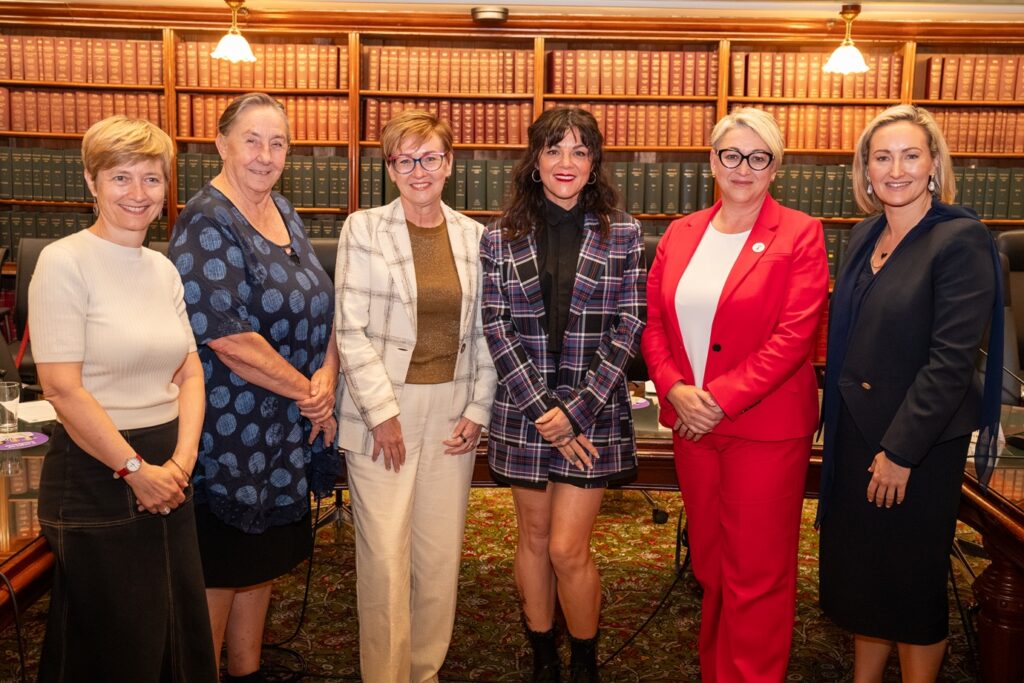
Ahead of World Menopause Day on 18 October, advocates and NSW Minister for Women Jodie Harrison are calling for Australian workplaces to better support women through perimenopause and menopause.
This means tackling stigma, improving awareness, and ensuring women can stay and thrive in their careers, without being forced to change jobs or enter into early retirement.
A study in 2021 found 83 per cent of women experiencing menopause were affected at work, but only 70 per cent would feel comfortable speaking with their manager about it.
“Women’s experiences of suffering in silence [have gone on] for too long and remind us of just how urgent this issue is. It deserves our full attention and action,” Harrison said at a panel discussion on the issue in NSW Parliament House on Tuesday.
The discussion delved into the lived experiences of menopause and perimenopause in all areas of life, including women who experience menopause earlier than the average age of 51 due to medicine or surgery.

“Together we can break down the barriers that women still feel in discussing menopause and perimenopause at work,” Harrison said, noting that this involves creating workplaces “where people can feel supported and know that their needs will be met when they raise the issues in a safe way.”
“We can ensure that workplaces don’t just accommodate menopause and perimenopause, but really actively support people who are experiencing this, so that they can retain and have diverse and strong workplaces.”
A menopause ‘Me Too’ movement
Other leaders calling for this support are renowned menopause advocate Em Rusciano, CEO of Jean Hailes for Women’s Health Dr Sarah White, Deputy Director of the Australian Centre for Gender Equality and Inclusion at Work Professor Elizabeth Hill and Gender Equity Officer at Unions NSW Karen Willis OAM.

Sharing her own lived experience of menopause, Australian comedian, presenter and podcaster Em Rusciano described the challenges she faced after going through perimenopause in her late 30s and feeling unprepared.
“We need a menopause ‘Me Too’ movement, where women stand up and say, ‘This is happening to me. It’s real. It’s hard, and I deserve support’, because that’s what this is… hopefully a collective exhale and a refusal to go quietly,” said Rusciano.

Speaking to the impact of perimenopause and menopause on women’s careers, Dr Sarah White, the CEO of Jean Hailes for Women’s Health said evidence-based solutions need to be available for workplaces to provide adequate support.
“Jean Hailes’ National Women’s Health Survey found that 17 per cent of women aged 45 to 64 take an extended break from workforce participation due to illness,” said Dr White, noting that “menopause is a significant factor in this decision.”

“We need to empower women with practical, evidence-based solutions so we don’t lose the incredibly valuable skills, knowledge and experience that women in midlife bring to the workplace.”
Open workplace conversations
With more than three quarters of working women in Australia affected by perimenopause and menopause symptoms, the Minns Labor Government says it is working to raise awareness around the importance of addressing employee stigma, creating safe and inclusive workplaces, increasing manager awareness, as well as sharing initiatives on improving women’s overall health and wellbeing.
Currently the NSW government provides resources to support women and workplaces navigating the menopause transition, including the Menopause and Perimenopause Toolkit, which has guides, podcasts, videos and checklists for managers and employees.
Looking at what’s next, Rusciano said Australian workplaces must keep talking openly and honestly about the reality of perimenopause and menopause.
“We must train managers to respond with empathy, not awkward silence, and we must make menopause education as standard as first aid,” said Rusciano.
“When women are supported through perimenopause and menopause, they don’t just survive, they thrive. They mentor, they innovate, they stay.”
“Imagine a world where we didn’t lose women at the peak of their power. I want to let you know that the great untapped resource of this country isn’t rare earth minerals or solar and wind potential. It’s midlife women who haven’t been forced out.”