

Instead of asking how to get more women into startups, it’s time to flip the script and rethink the systems that have been designed to exclude them.
Inclusive organisations are ten times more likely to be innovative than non-inclusive ones, and yet many Australian programs continue to mirror the male founder archetype.
That’s according to groundbreaking insights from the CSIRO ON Program’s new Inclusive Innovation Playbook, in partnership with ANU through its Global Institute for Women’s Leadership (GIWL) and the Wiyi Yani U Thangani Institute (WYUT).
“The evidence shows that we’ve got really big structural problems, so it’s not any one program or policy fault,” says ANU’s Dr Elise Stephenson, a renowned researcher on the report, shares with the Women’s Agenda.
“We are in a place where we don’t have a super representative innovation ecosystem, and the people who are involved in this ecosystem don’t always feel like they’re able to get funding, the support, or the resources they need to flourish and make the amazing innovations that we need in Australia.”
With the aim to shift how Australia approaches inclusion within its innovation ecosystem, the Playbook explores how inclusive practices can create better outcomes for researchers, innovators and the communities they serve.
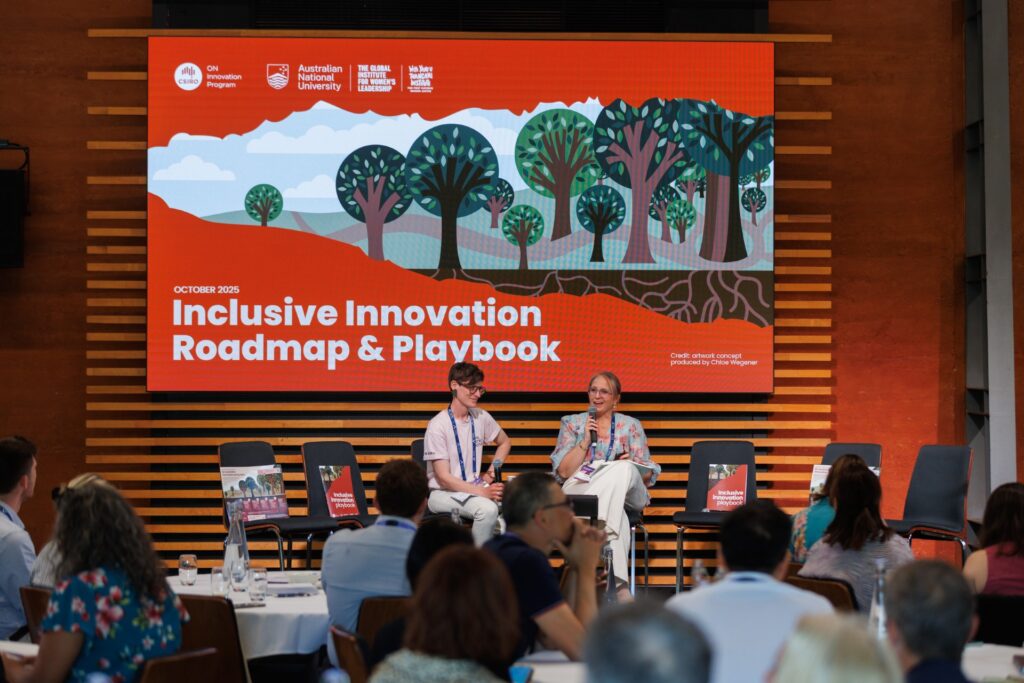
System level shifts
CSIRO ON’s Program Director, Tennille Eyre tells Women’s Agenda that one of the major reasons they started the project was to gain a greater understanding of how to ensure their own program was doing as much as possible to reduce barriers and be accessible to innovators from all facets of the community.
The insights and impact grew even further when CSIRO reached out to collaborate on the playbook with ANU and Dr Stephenson’s team.
“This playbook helps people understand that everything within your sphere of influence is impactful and has the ability to create substantial change,” says Ms Eyre, adding that it’s important for programs to realise that when it comes to inclusion “doing something is better than just doing nothing”.
“Oftentimes, people are worried about doing the wrong thing, but the biggest thing is to just have some courage and try to make change where you can, within your realm.”
“Unless we have leaders and people who are brave enough to champion change in these spaces, we’re not going to see the needle shift. We need a lot of people to make a lot of small changes for us to see these system level shifts, and they can do it today by reading the playbook.”
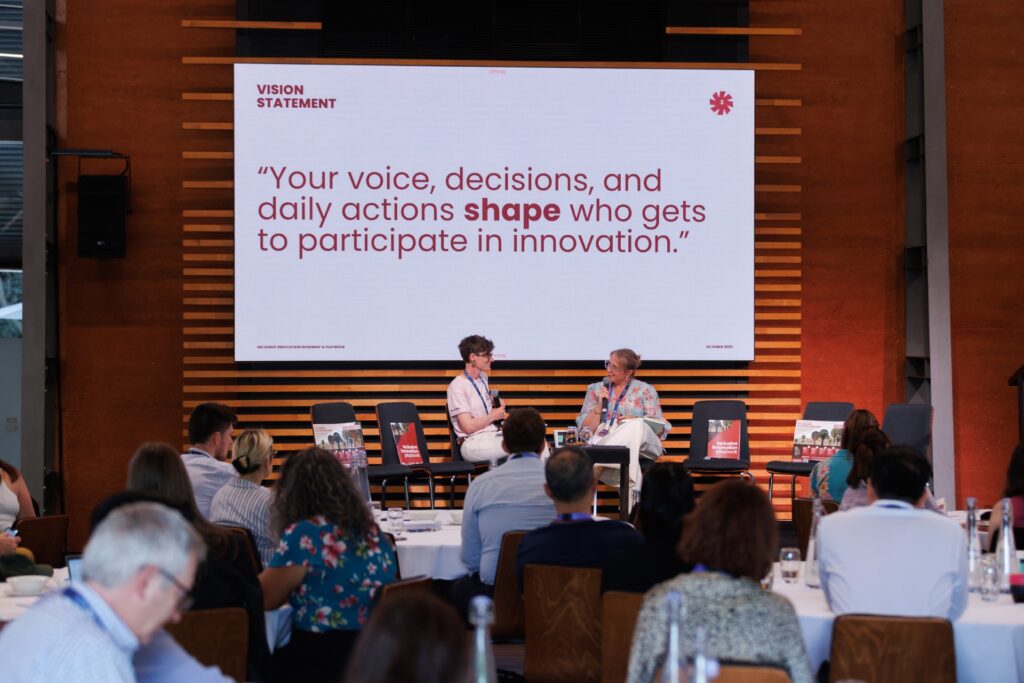
Breaking the meritocracy myth
Within Australia’s current innovation ecosystem, women often come up against invisible barriers that hide behind the idea of a level playing field. The playbook labels this as the “myth of meritocracy”.
When it comes to how this plays out, Dr Stephenson points to the bias that can occur when it comes to recognising people for grants and funding.
“We want to make a concerted effort to make sure that we’re not just putting forward the same people and the same ideas over and over again,” she says, adding that this involves considering things like gender balance and First Nations inclusion.
Another aspect of this comes down to the types of relationships that are celebrated within programs and workplace policy.
Networks don’t always have to be transactional, says Dr Stephenson and Ms Eyre, noting that the research has shown certain groups of people, such as women and First Nations communities, often thrive by building support networks and lasting workplace relationships in a more reciprocal manner.
The research also shows that innovation programs looking to level the playing field for everyone should consider the role of caregiving in people’s lives, especially women.
“There’s this idea that we all start from the same spot,” says Dr Stephenson. Noting that when you dig further into the lives of real people, it’s easy to see, this is not the case.
“Maybe there was someone who’s really interested in innovation but didn’t get to tinker as much as a kid because they had to care for their sibling with a disability,” she says, adding that this is why it’s important for innovation programs to co-design with a diverse group of people if that’s who they want participating.
Taking action now
For programs and organisations confused about where to start, Tennille Eyre says the playbook has broken things down and made it super simple to get started.
“We’ve broken down the program into personas, so if you’re leading an innovation program, we have a persona that’s specifically called out in the playbook and a dedicated roadmap for it as well,” says Ms Eyre, adding that programs can see tailored recommendations for their particular space.
Whether someone is running a program, is a funder or part of a research team, Tennille Eyre says the first step is to understand what biases and assumptions you may hold and consider how they might shape your sphere of influence.
The next step, she says, is to “Unpack and identify where the opportunities are that can create incremental change or influence some change.”
“You can do it today. You can read the playbook. You can have a look and self-evaluate. You can look at your own data. None of these things are insurmountable. Inclusive innovation isn’t just good policy – it’s the key to unlocking Australia’s full potential.”
To read and find out more about the Inclusive Innovation Playbook, recently launched in partnership with ANU’s GIWL and WYUT, click here.