

Tending to a loved one with a terminal illness is a harrowing experience, and yet, it’s a task that opens the eyes to the reality and vulnerability of the human condition. This powerful caregiving role is brought to life in a new and electrifying on-stage adaptation of beloved Australian literary icon Helen Garner’s novel, The Spare Room.
Directed by Eamon Flack, the adaptation follows two old friends, Helen (Judy Davis) and Nicola (Elizabeth Alexander), in a story that confronts the inevitability of death but thrums with the nuances of life, and the ever complex dynamic of friendship.
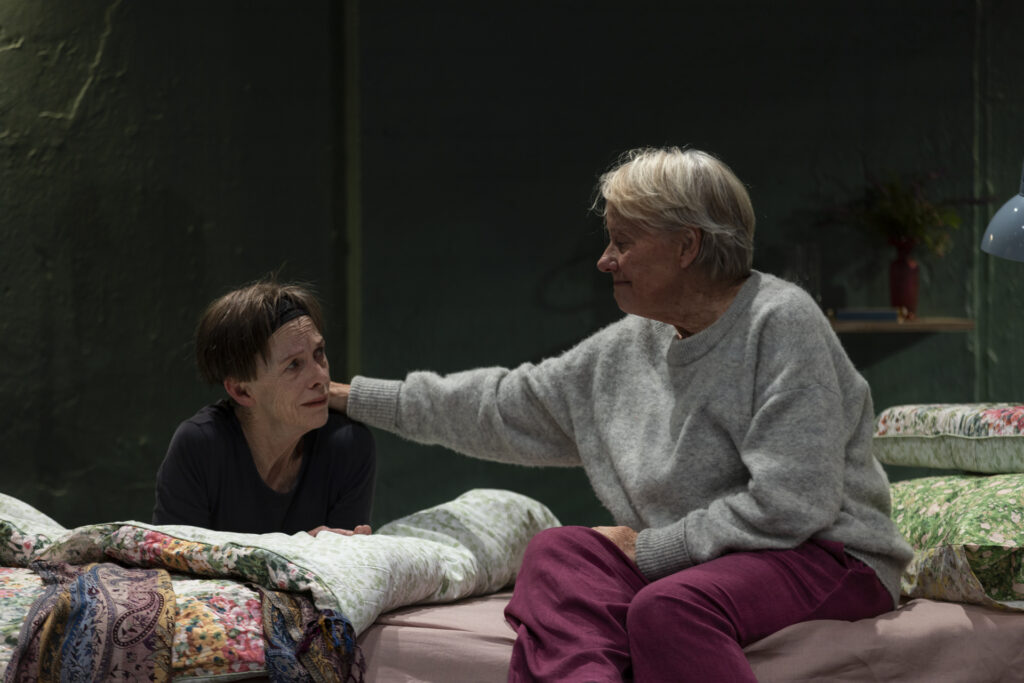
When Helen’s old friend, Nicola, travels from Sydney to Melbourne to attend an alternative- albeit suspicious- clinical treatment for her cancer diagnosis, Helen opens the door to her spare room for Nicola to stay in.
As Nicola places her faith in the alternative treatment plan as an obvious way to avoid the reality of her terminal disease, Helen decides to turn off her characteristic cynicism and indulge her friend in this unfounded hope that seems to keep the joy in her spirit. It’s a loving decision on Helen’s part that works well in the beginning, until it unravels full force by the end of week three of Nicola’s stay.
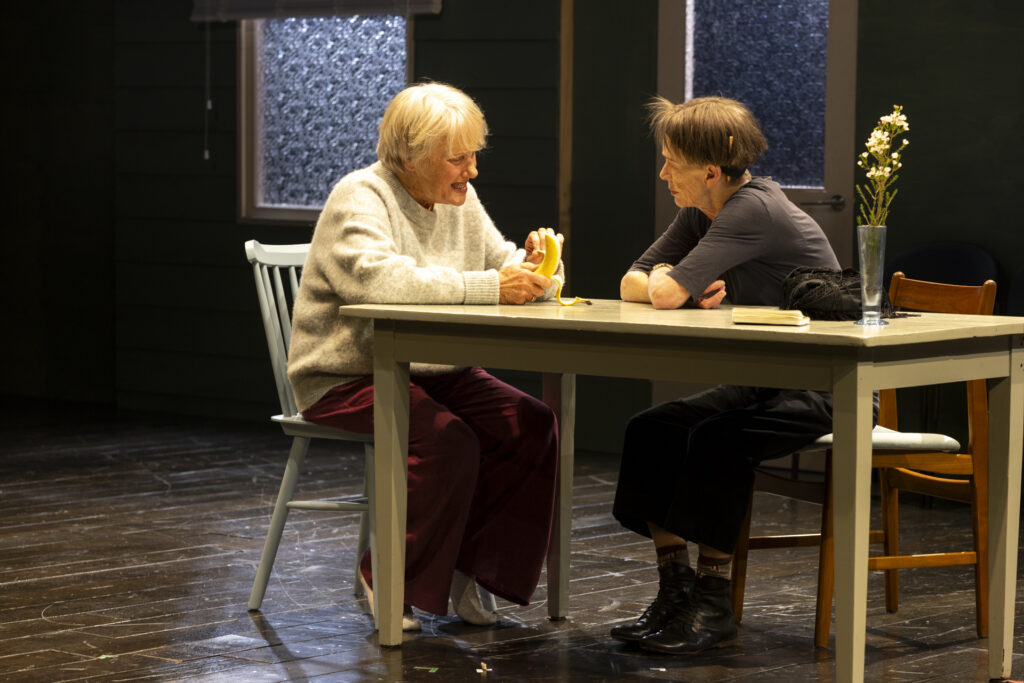
Having taken on the role of caregiver to Nicola, Helen finds her time and mental load filled to the brim with Nicola’s need for constant support, particularly through the nights. Washing piss-soaked sheets, convincing Nicola to take morphine for her pain and cycling across town to find a single can of lemonade for her thirsty friend, Helen does all of this and more with a clenched jaw and a spring in her step.
It’s an act that can only go on so long, before exhaustion and fatigue begin to peel away at Helen’s ability to keep a calm demeanor and brave face for her friend.

In a truly brilliant performance, Davis portrays the reality of caregiving through Helen, with both humour and raw emotion. There’s a palpable energy on-stage throughout the show, but Davis is able to channel and control when it gets released. She slowly exudes Helen’s frustrations with Nicola until it culminates in an outburst of anger and exhaustion that anyone who’s been in a similar caregiving dynamic is likely to understand.
While the anger is a key turning point for both Helen and Nicola, there’s never a lack of trying in each of their characters. Davis portrays a maintained admiration for Nicola, and Alexander expertly proves where the admiration comes from.

Playing Nicola, Alexander gives a wistful and nostalgic element to her character’s personality, as Nicola slowly comes to terms with the reality of her terminal situation amid her desire to ignore it and pretend that she has all the time in the world to do the things she never got to do earlier in her life.

Accompanying Davis and Alexander in their unflinching performances are an evolving cast of characters played seamlessly by three others: Emma Diaz, Alan Dukes and Hannah Waterman.
In the background of everything as well is the hauntingly beautiful sound of a cello, played by Anthea Cottee, who uses the music to draw everyone deep into Helen and Nicola’s intimate world.

While the show slows near the end, it never strays from the truth: There’s no right or wrong way to navigate a life nearing death.
A maddeningly truthful exploration into caregiving and female friendship, watching Helen and Nicola’s misunderstandings of each other unfold on-stage will leave you more empathetic than when you walked in.
The Spare Room is being performed at Belvoir St Theatre from 7 June – 13 July 2025. Ticket prices range from $41-$97. More information can be found here, or call (02) 9699 3444