
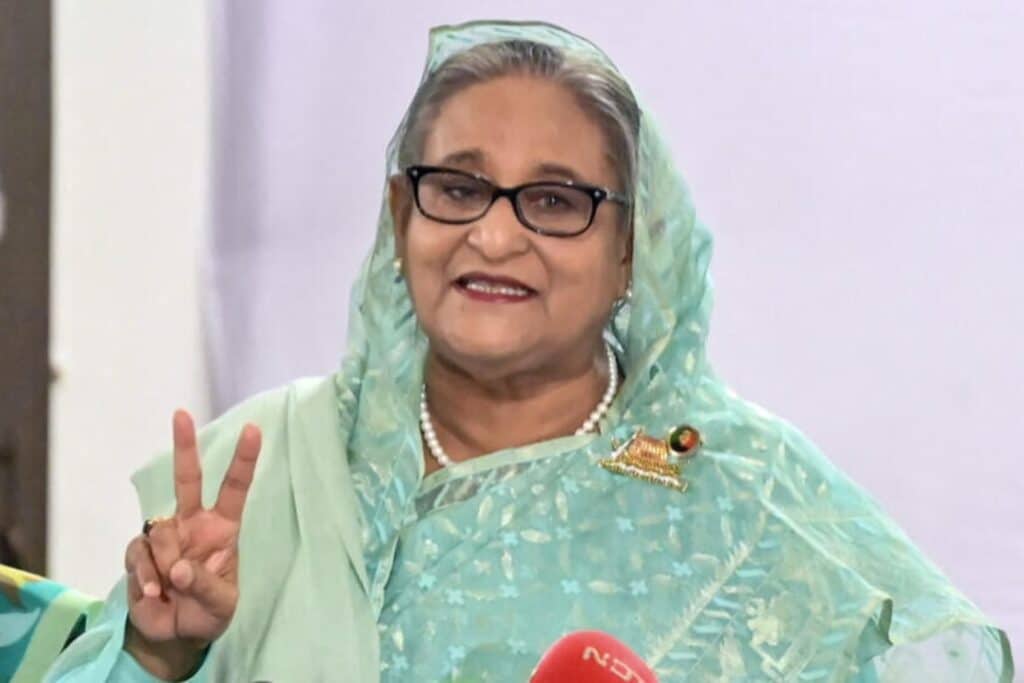
Sheikh Hasina was once known as the Iron Lady of Bangladesh, serving two separate stints as prime minister beginning in 2009, leading the country to strong economic growth.
But her 15 years in power were marred by rising inequality and human rights violations as she took a hard line on dissent. She resigned from her post in August 2024 and fled the country, following weeks of student-led protests.
Now, the 77-year-old has been sentenced to death by a Bangladeshi court for crimes against humanity.
Bangladesh’s war crimes court found Hasina guilty of incitement, orders to kill, and inaction to prevent atrocities that occurred during the crackdown on students protesting in 2024 that resulted in more than 1400 deaths.
The court’s judgment included extensive evidence gathered by the UN and international human rights organisations, including a UN Office of the High Commissioner for Human Rights report finding that the ‘vast majority” of those killed and injured were shot by Bangladesh’s security forces. The death toll includes up to 180 children, according to the UN data.
Hasina is currently in exile in India and was tried in absentia. She denies the charges against her and declared the court’s decision was “biased and politically motivated.”
“I am not afraid to face my accusers in a proper tribunal where the evidence can be weighed and tested fairly,” she said in a statement.
The Bangladeshi government has written to India requesting the extradition of Hasina. India has so far made no such promise to do so, but has said in response that it is “committed to the best interests of the people of Bangladesh.”
A Human Rights Watch report found that Hasina’s government had deployed the army against student protesters, and “imposed shoot-on-sight curfew orders,” as well as the shutdown of mobile and internet services. UN investigators reported the anguish of parents searching hospitals and police stations for days to find their children, and that hospital staff had been pressured to remove or alter death records.
Hasina became prime mininster for a second term in 2008 after her Awami League party won the general election. Her government put down a revolt in February 2009 that resulted in the deaths of more than 74 people.
In 2011, her government amended the constitution, removing the caretaker government system that conducts elections. Her leadership was also in place during the Rana Plaza building collapse that killed more than 1000 people and drew global attention to the lack of safety in the garment industry. Political violence and unrest continued after a second general election that was boycotted by the opposition in 2014, and Hasina secured a third consecutive term in 2018 in an election marred by vote-rigging allegations. She won in January 2024, taking a fourth straight term in an election again boycotted by the opposition. The student protests ramped up in July and August, protesting job quotas reserving one-third of positions for the children of freedom fighters.
Families of victims killed during the July-August student crackdowns have told reporters the court’s ruling marks the first official acknowledgement of those they lost. Pressure is expected to build on India to comply with the extradition order.

Hasina was the second woman to serve as prime mininster of Bangladesh, following Khaleda Zia, who served in the role from 1991 to 1996 and again from 2001 to 2006.
Around twenty heads of state and government have been sentenced to death in the past 125 years.
Get our daily update on the latest news and views impacting women. Subscribe for free here.