
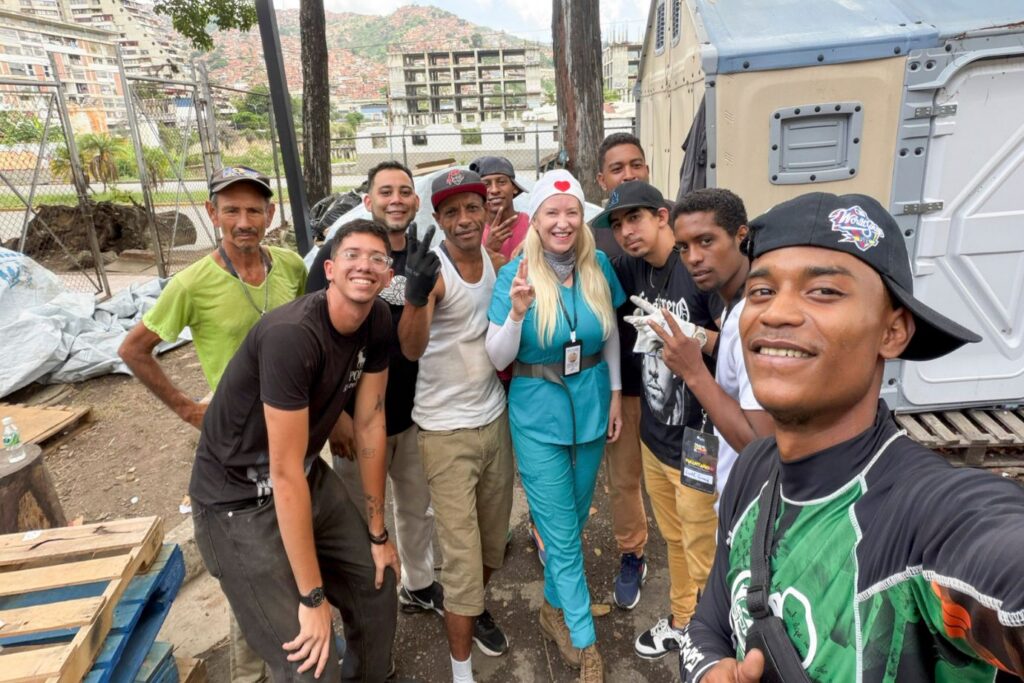
She’s worked in more than 100 countries and spent decades saving lives, but few Australians know much about Dr Alison Thompson. Now, as she continues relief efforts following Venezuela’s devastating earthquake on June 29, journalist Hugh Bohane meets the emergency doctor to learn more about the current emergency, her life and career working across disasters, and why she believes the most powerful weapon on Earth is love.
Australian emergency doctor and 2026 NSW Australian of the Year, Dr Alison Thompson, says the earthquake in Venezuela is one of the worst disasters she has witnessed in 25 years of humanitarian work, comparing the devastation to the September 11 attacks but on a vastly larger scale.
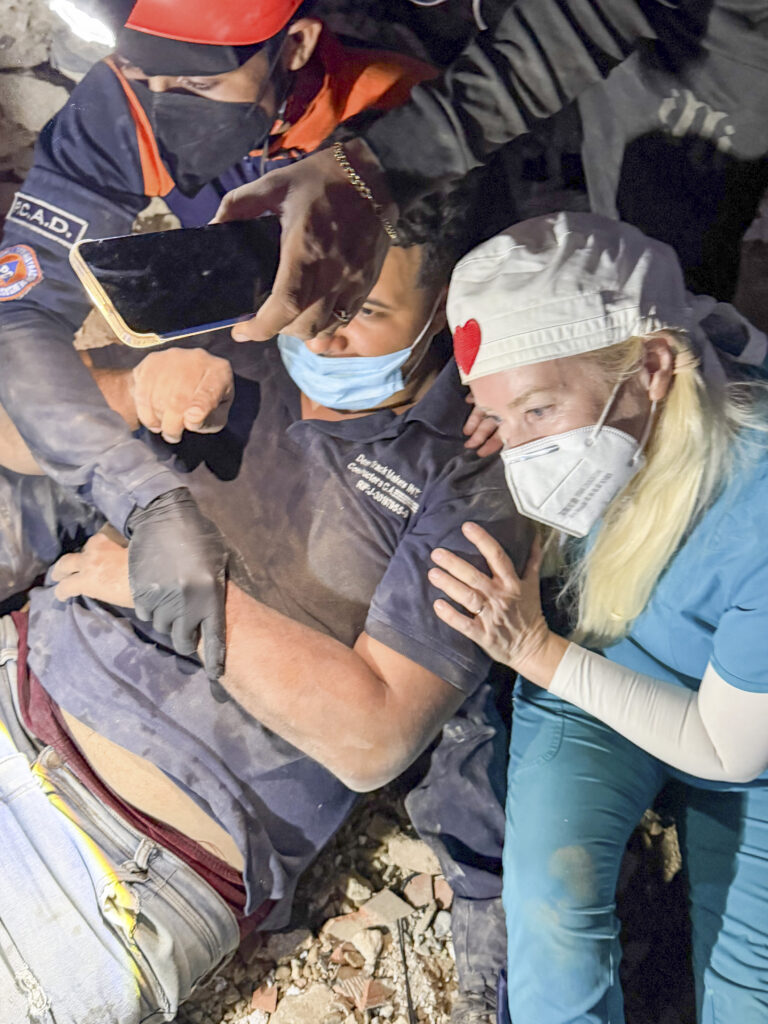
Working alongside local and international Urban Search and Rescue (USAR) teams, Dr Thompson is treating survivors and supporting search operations in the aftermath of the disaster. She says entire communities have been reduced to rubble, and thousands of people remain without shelter.
“The Venezuela earthquake is one of the largest disasters I’ve seen in 25 years. It’s the first one to remind me of working on the pile on Sept 11th. Instead of two high-rises collapsing, it’s 180 high-rises – people are digging for their loved ones with their bare hands – there is no coordination, and there isn’t enough equipment or large machinery,” she said.
“I’ve seen men crying rivers and a nation in shock.”
A disaster unlike any other
Dr Thompson, founder of Third Wave Volunteers, said the disaster’s scale and complexity had strained emergency responders and exposed significant gaps in coordination and resource allocation.
“The areas of destruction are widespread and complex,” she said.
“All the non-profits are scrambling to help in many directions.”
She said one of the greatest challenges was the loss of housing, with around 180 high-rise buildings collapsing and forcing thousands of people to sleep in temporary shelters or on the streets.
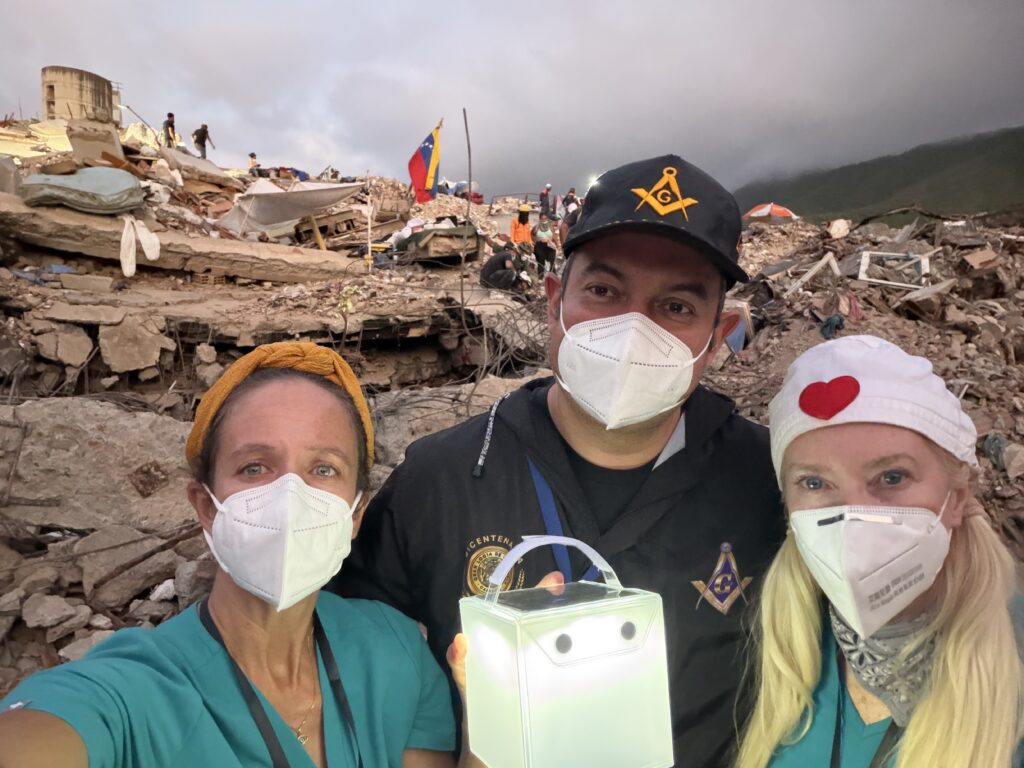
Among the most urgent needs are solar lights, which she says provide practical support and security for displaced families.
“Solar lighting is among the biggest needs, as everyone’s in the dark and light also represents safety,” she said.
Third Wave Volunteers aims to distribute a further 10,000 solar lights, each costing about US$15.
Women leading on the frontline
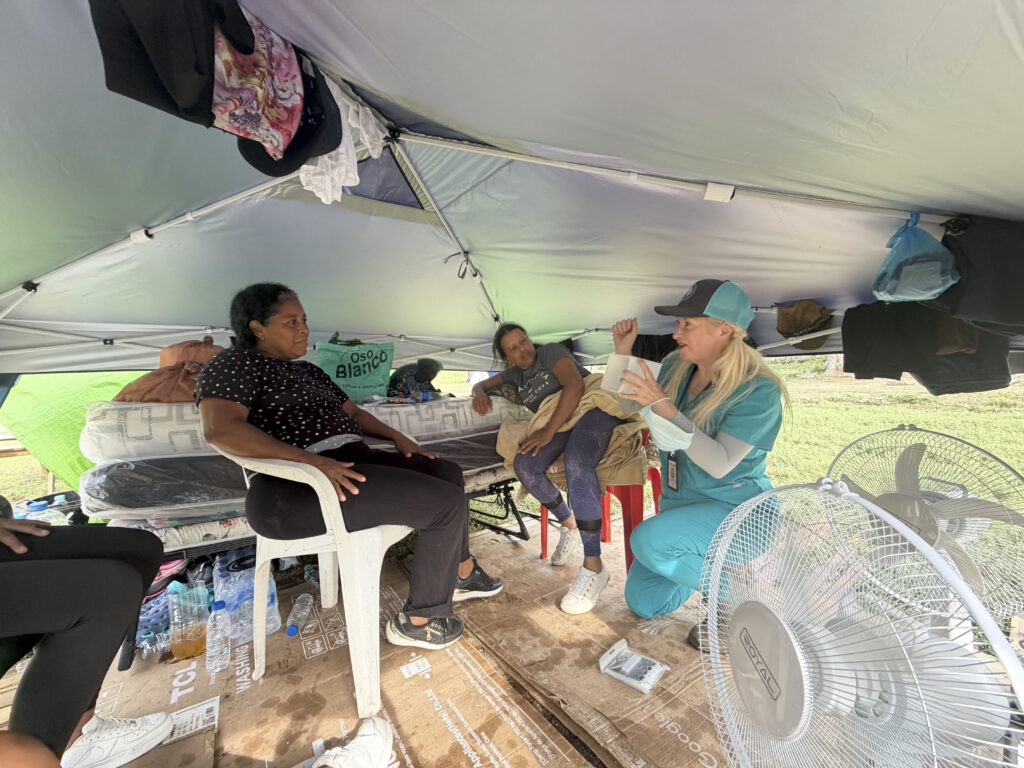
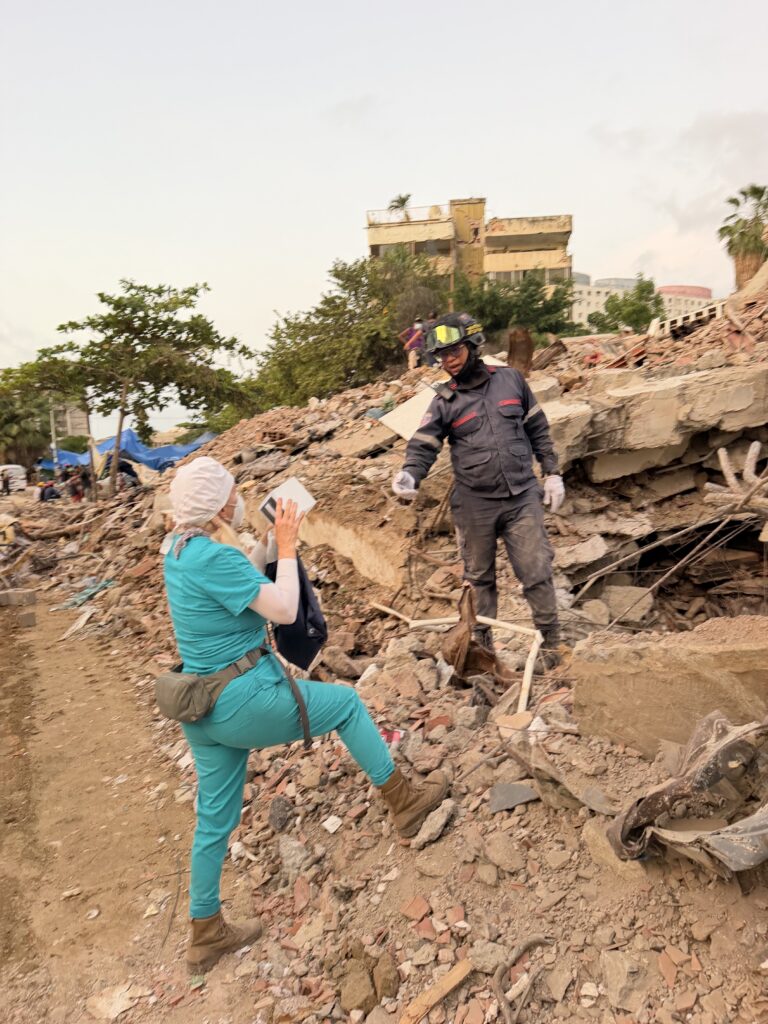
Dr Thompson says that working as a woman in some of the world’s most dangerous environments has presented unique challenges, but it has also created unexpected opportunities.
“I have found, as a whole, that the communities we go into feel more comfortable and safer working with a woman than with a male leader,” she said.
There have been occasions when cultural stereotypes have led to her work being overlooked.
“Of course, there are all those macho stereotypes in certain countries that feel a woman’s place is only barefoot in the kitchen, producing babies. When I would help a family, they would write a thank-you letter to one of our male workers who had nothing to do with that help.”
Despite those experiences, Dr Thompson says she has never allowed gender to define her leadership style.
“As an Incident Commander, when I’m out in the field, I don’t see myself as male or female. I’m just a Commander in charge of whoever is with me – once people see that I know what I’m doing, they fall in line.”
She believes being a woman has also provided unique advantages in conflict zones. During humanitarian missions in Ukraine, she found that female medical teams were more readily trusted than mixed-gender groups.
“In the end, I ended up taking only female teams, and we were trusted right away with our white nurse hats, each with a red heart sewn on. We were able to get past all forms of security and into secret war rooms and areas we wouldn’t have been able to enter if we’d had men with us.”
A woman waiting for her family
While Dr Thompson has responded to almost 1,000 disasters over the past 25 years, what she has encountered in Venezuela is weighing heavily on her.
She met a woman sitting in silence on a pile of rubble after search crews had spent another day searching for survivors.
“There had been hope in the air because someone had been found alive. That’s where I met her – a lady sitting alone on a pile of rubble, staring at the concrete beneath her, praying and hoping that her husband, her daughters and their children would somehow magically appear before her, and that if she prayed hard enough, it would be true.
“Weeks later, she’s still sitting there, waiting for them.”
For Dr Thompson, the encounter captures the human cost of the disaster, far beyond the statistics.
Representing Australia abroad
Although recognised as the 2026 NSW Australian of the Year, Dr Thompson says she does not think most Australians know who she is, as much of her work takes place far from home.
“I really don’t think Australians know who I am because I’m not in the papers every day, on TV, or an influencer – I’m in very remote countries, living in harsh conditions in hot tents in refugee camps or war zones.”
Years of humanitarian work have deepened her appreciation of Australia.
“I am so proud to be Australian and to have grown up with the freedom we have. After working in over 100 countries, I can say that we really do have the best life offered to us.”
While she understands Australians can sometimes lose sight of what they have, she hopes her experiences will encourage people to see the country differently.
“I see people always complaining about so much in Oz, but we need to take a breath and note all our sun-kissed land has to offer.”
She says Australia’s overseas reputation is overwhelmingly positive.
“People around the world love Australians, and when I start jumping around like a kangaroo, they get it and start smiling and hugging me.”
‘The most powerful weapon on Earth is love.’
After witnessing disasters, conflict and humanitarian crises in more than 100 countries, Dr Thompson says one lesson has remained constant.
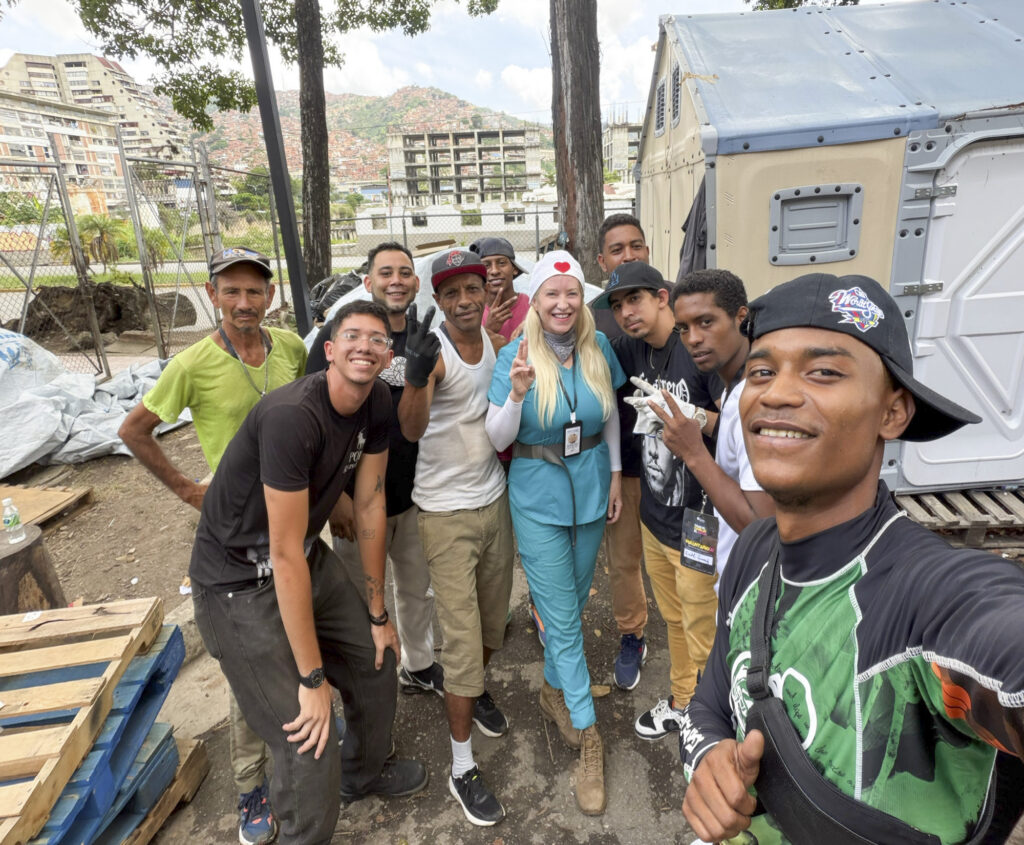
“I’ve witnessed and learned that the most powerful weapon on Earth is love.”
She believes compassion is not merely an ideal but an essential response to a world facing increasingly complex crises.
“Conflict, hatred, dictatorship, power and greed have risen all over the globe.”
Yet despite that, she remains optimistic.
“Love and compassion are the key to our happiness in life, and there is no other solution to all the problems on earth.”
For Dr Thompson, humanitarian work is ultimately about turning compassion into action.
As this story was being finalised, Dr Thompson received reports that rescuers had located survivors beneath the rubble.
After checking with colleagues on the ground, she said the reports appeared to be genuine.
“I just started bawling,” she wrote.
“There is always hope.”
The news came only hours after she had described meeting a woman who continued to sit on a pile of rubble, praying that her missing husband, daughters and grandchildren would somehow emerge alive.
For Dr Thompson, the rescue was a reminder that even after days of searching, hope can endure.
Hope amid heartbreak
As of writing, rescue operations remain focused on finding survivors trapped beneath collapsed buildings.
“In the first 72 hours, it’s important to get all the USAR (Urban Search and Rescue) teams in, along with large machinery to help lift the rubble, fuel, shovels, equipment, ambulances on site, large lighting, mental health workers, and search dogs.”
She recalled a particularly difficult moment while working at a search site.
“Last night, on the pile, while searching in pockets for solar lights to use way underground, another worker fractured his leg – just as another body was found.”
Despite responding to hundreds of disasters over the past quarter-century, Dr Thompson said the Venezuela earthquake is especially notable.
“What struck me most about this disaster is that, for the first time in 25 years of 965 disasters, it’s the closest I’ve come to something similar to the September 11th attacks, except that 180 high-rise buildings have collapsed instead of just two.”
She said humanitarian responses depend not only on trained emergency workers but also on local volunteers, who are often the first to respond.
“The importance of everyday volunteers from the grassroots up – they are a huge, capable army that fill the gaps before, during, and long after the disaster, when trained help has left.”
“There’s a role for everyone, from handing out water to sorting aid. You don’t need many skills to help or to give someone a hug. The volunteers who live in a disaster area are the real first responders before the trained first responders arrive.”
Dr Thompson also highlighted the growing importance of communications technology in disaster zones, noting that satellite internet had become essential for operations.
“Starlink communications have become very important across the disaster zone – which makes a difference in saving lives by providing fast communications for needs – and for families to reach relatives.”
She believes the increasing frequency and scale of natural disasters mean that governments and aid organisations cannot respond alone.
“These disasters have grown so large, with a billion-dollar disaster every three to ten days, that there’s a place for all citizens to step up – it’s far too big for governments and non-profits to handle alone.”
Media coverage also plays a critical role in sustaining humanitarian responses once the initial headlines fade.
“Journalists getting the news out to the world is very important, as that’s how help from around the world pours in,” she said.
She encouraged Australians to continue sharing verified information and to support trusted aid organisations.
“Australians can help keep the story alive on social media by sharing stories and donation links from trusted organisations, as disasters are usually off the news after the first few weeks.”
She hopes Australians will support efforts to provide displaced families with solar lighting.
“Imagine if 150,000 Australians stopped drinking coffee for one day and each put in $15? The Venezuelans may be on the other side of the world, but we are all part of the human family in the name of love. These people are the most wonderful, kind, and friendly I have met in years of disasters – they remind me a lot of my fellow Aussies.”
Despite the destruction she has witnessed, Dr Thompson said the generosity of the Venezuelan people has made a lasting impression.
“Pray for Venezuela. The people here are really friendly and kind, and they’ve embraced us with a love I haven’t seen in a while. It’s all about love, and love always wins in the end.”
As rescue and recovery operations continue, Third Wave Volunteers is seeking support to expand its humanitarian response, including emergency shelter and solar lighting for families displaced by the earthquake. Dr Thompson hopes the story remains in the public eye long enough to secure the assistance communities will need beyond the immediate rescue phase.
To support Third Wave Volunteers’ earthquake relief efforts in Venezuela, including the distribution of emergency solar lights and shelter, visit their Spotfund fundraising page.