
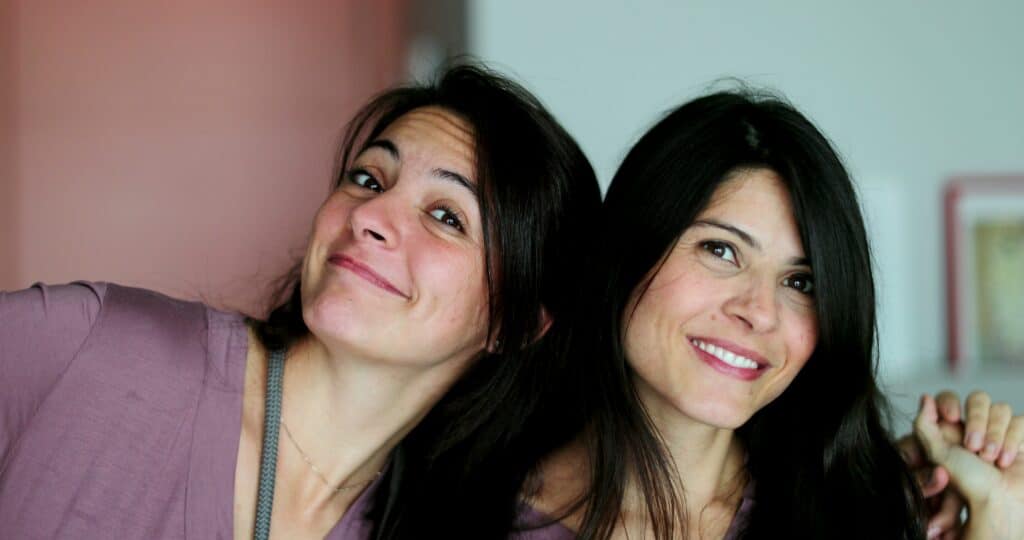
Last Friday was Siblings Day. Each year, it’s an opportunity to address some of the issues facing siblings, including how siblings manage elder care and care for each other. Dr Shannon Schedlich is the CEO of Siblings Australia, the only organisation supporting the brothers and sisters of people with disabilities and chronic illness.
I’m a big fan of Swedish death cleaning.
Periodically, I’ll come home and go into a frenzy of tidying and throwing things out.
Coincidentally, or not, these occasions often coincide with spending time at my Dad’s house.
My mum passed away five years ago, and Dad still lives at home, despite his Alzheimer’s advancing at a pace.
I’m his primary carer.
I cannot halt the progression of his decline; but I can Swedish death clean my house.
Because one day, I won’t be here. And my kids will be grieving their mum, and there’ll be nothing I can do to soothe that, because I’ll be gone.
But if I can take one thing off their plate in that moment? If I can make their path slightly smoother? You bet you I’m going to do it.
I often think of this path-smoothing I am trying to put in place as I speak to adult siblings of people with disabilities.
They often contact us at Siblings Australia because they grappling with end-of-life discussions with their parents about what is going to happen after their parents pass away. And this isn’t a small group. More than 5 million Australians are siblings of people with disability or chronic illness: a cohort that is largely invisible in policy, planning, and – importantly -family conversations.
Who will take over being primary carer for their brother or sister? How are NDIS plans currently structured, and who actually understands how they work? Is this information written down and stored somewhere, or does it live in mum’s head? What happens to the relationships with providers, the informal supports, the routines that make things work? Finances, legalities, personal wishes … what is currently in place, and how do you access that information?

And where do you fit your own grief at losing your parents in and around these everyday practicalities you are trying to unpick?
Their parents aren’t being purposefully obstructive. They don’t want to burden them. They don’t want to think of their own mortality. They think they’ve got time.
And we know how this story often plays out. Caring roles in Australia are still overwhelmingly carried by women: mothers first, and then, often, daughters, balancing their grief, their own families, their work, and the coordination, advocacy, and administration that goes with supporting someone with complex needs (would you like the equivalent of another full-time job with that bereavement?).
We don’t always have time to plan these things out in a nice, sequential way. We don’t always have the opportunity to smooth the path before crisis forces the conversation.
It’s the Swedish death cleaning of the administration that goes into supporting the lives of people with disabilities.
In my family, my stepdaughter’s care is complex. One day, someone else will need to understand her as deeply as we do. The responsibility will shift sideways, not down. It is not fair that we leave that planning to chance, her brothers and sisters deserve better.
Last Friday (10 April) was Siblings Day, marking an opportunity to celebrate sibling relationships and to be honest about what those relationships carry.
If you are a parent who knows there will be more to do once you’re gone, start now. Write it down. Not just the ‘what’, but the ‘why’. Share the knowledge that currently sits with you, and bring your children into the conversation before a crisis does it for you.
Think of it as a final act of care: a way to steady the ground beneath them.
If you’re a sibling reading this, send it to your parents and say: ‘Another mum asked me to pass this on.’
And everyone else? Clean out your junk drawer.