
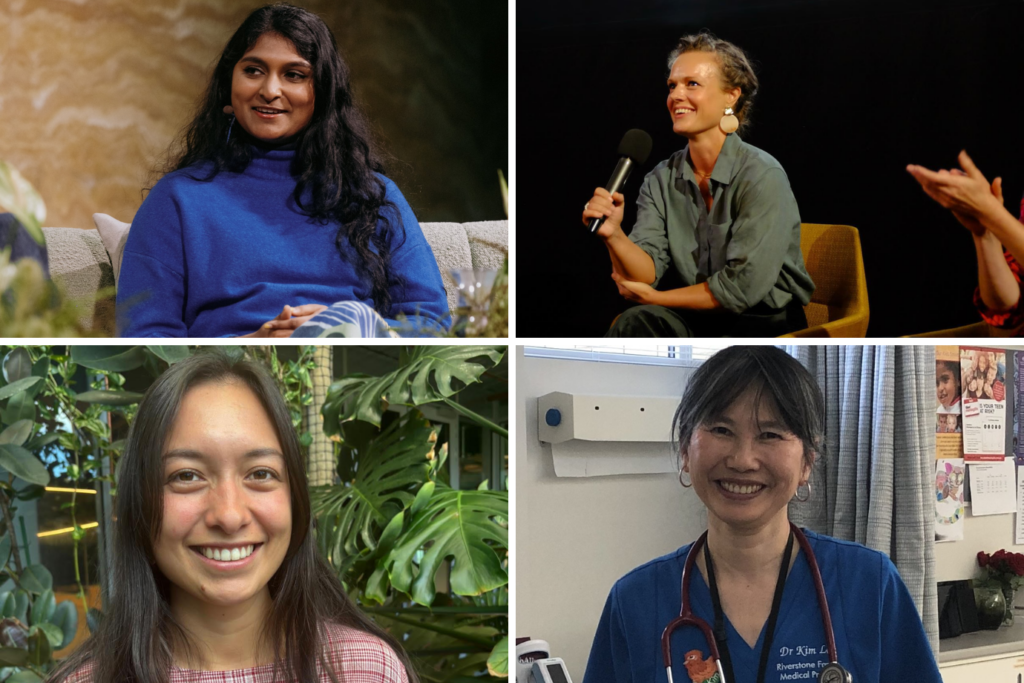
If you take a quick glimpse at the women across Australia who have been campaigning for climate action for years, and in some cases decades, there is an undeniable common theme.
Care, community and kindness are at the centre of everything they do.
Whether it is a young woman joining the School Strike 4 Climate movement for the first time, a bushfire survivor on the frontlines of disaster recovery, or a health profession pushing for better for her patients, a sense of justice and a duty to others is central to women campaigners.
In this series, Women’s Agenda is exploring the role of care, kindness and connection in Australia’s response to climate change – aspects that are typically overlooked and undervalued but often led by women.
This article brings you our list of women campaigners fighting for change, a snapshot of women across the country who care deeply about their community in the face of the climate crisis.
Campaigning work in the climate action space is often unacknowledged and unpaid, and it demands a great deal of tenacity and strength to continue in the face of pushback from powerful corporations and governments. These women each embody what it takes to step out of a comfort zone to demand better from a system that has let climate change accelerate, despite all the evidence suggesting more must be done to contain it and prepare for what’s to come.
Below, we speak to the campaigners about their work, and what caring in the face of the climate crisis means to them.
Varsha Yajman, youth climate justice and mental health advocate
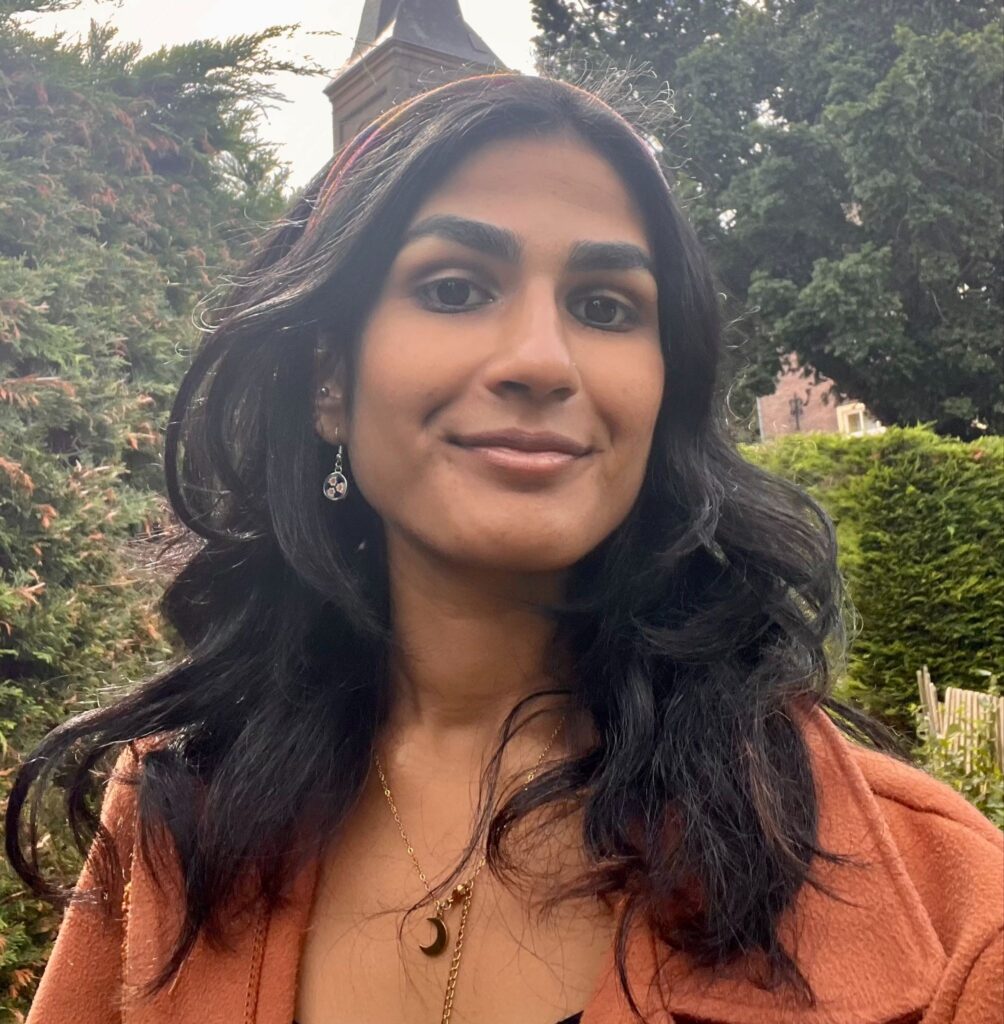
Varsha Yajman is among Australia’s most prominent young climate justice advocates, having spent years at the forefront of the School Strike 4 Climate movement. She initially got involved in Year 11 when she wanted to make friends outside of school. She soon found herself taking part in the Australian Youth Climate Coalition’s student leadership program, and later, she helped organise 350,000 people who took part in landmark the School Strike 4 Climate on September 20, 2019.
Yajman, who has since worked in climate litigation as a paralegal and grad lawyer, is also a strong voice on young mental health, which she says is inextricably linked with the climate crisis. “I see climate awareness and prevention as essential to mitigate severe mental health impacts,” she tells Women’s Agenda.
She’s passionate about pushing corporations and governments to step up on the issues young people care about, and is calling for the government to stop approving new coal and gas projects. She says fossil fuel corporations must pay their fair share of tax, “instead of thriving off loopholes and subsidies”.
Yajman says the lack of attention given to marginalised communities and non-Western nations scares her. “Indigenous communities and regions like the Pacific and South Asia are the most vulnerable to climate change, whether it be because of their colonial legacy and/or their geographical positioning.”
“I believe countries, like Australia, with greater resources and that are beneficiaries of colonialism, have a responsibility to these nations to use their media to spotlight the impacts on these communities/nations and to financially support them too.”

Jessie Price, independent candidate
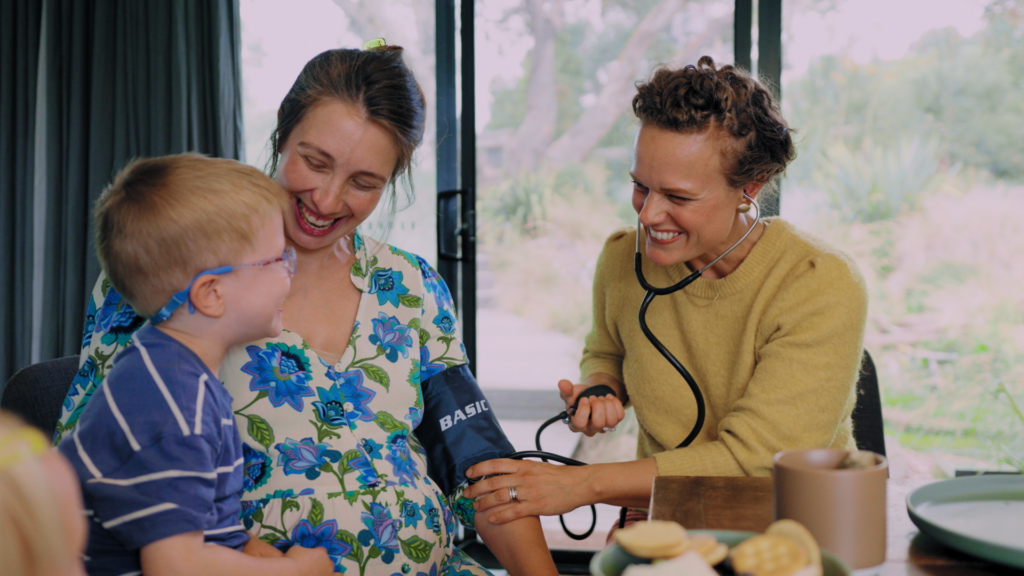
Jessie Price ran as a climate-focused independent candidate for the ACT seat of Bean at the 2025 federal election, achieving an incredibly close margin of less than half of one per cent.
She’s committed to continuing to campaign, and will challenge Labor again for the seat in 2028. But before she had her sights set on the House of Representatives, Price was working as a midwife in Canberra, including during the 2019 bushfires. It was a time where she recalls the hills being ringed in fire for weeks on end, and the city being blanketed in smoke. She was visiting families with newborn babies in their homes and felt a sense of existential dread.
“It was in all the houses, it was in the hospital rooms – you couldn’t keep it out,” she tells Women’s Agenda.“I remember visiting people at home, and they would have their gas heating system all taped up with newspaper and masking tape, just trying to stop the smoke seeping into the home. It was really horrendous.”
“There was the existential dread of [thinking] this is literally climate change happening in real time. These beautiful, sweet, new babies [are] being born, and the hills are literally on fire.”
With her sights set on federal politics, Price is passionate about the power of community and connection in the face of climate change and a political system that seems unwilling to face it head on. She says it’s more important than ever as we deal with more frequent and extreme disasters, including heatwaves.
“When I know my neighbors, when I know the person on my street who’s in a wheelchair, when I know who’s elderly on my street, who’s had a new baby, when we all know one another like that, when those next fires do come over the hill, we can check on one another,” she says.
“We know those connections actually are what is going to pull us through no matter what happens. That is the antidote to the rise of fascism we see in the world that is part of this climate exploitation and destruction.”
Grace Vegesana, National Director at Australian Youth Climate Coalition
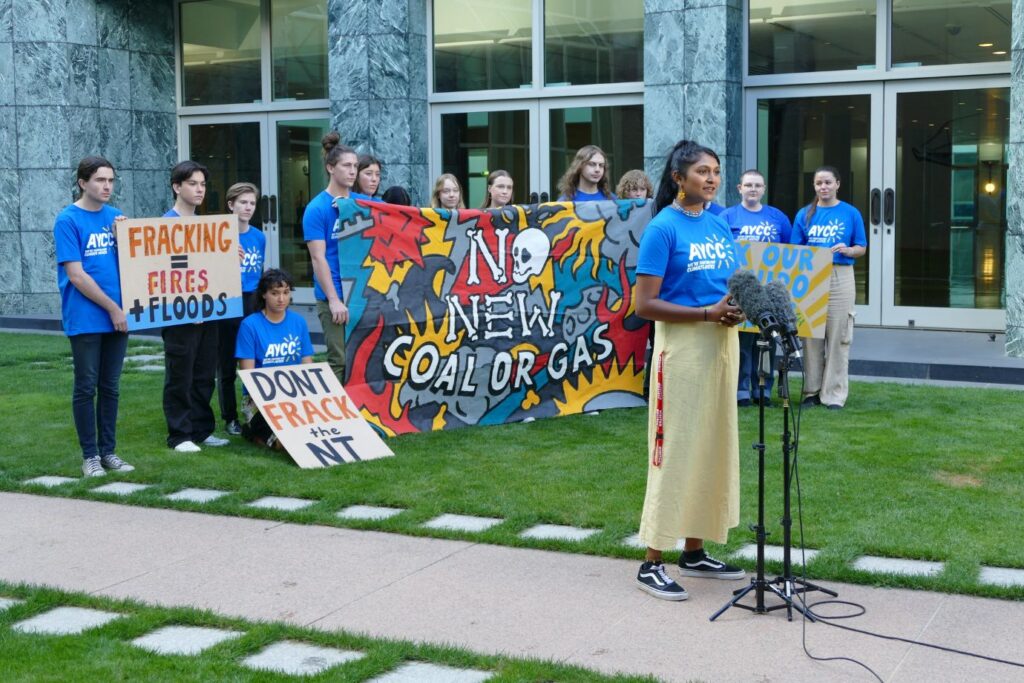
26-year-old Grace Vegesana grew up in Western Sydney, the most culturally, religiously, linguistically and socially diverse region in Australia. Her family’s roots are in the Global South, including India and Botswana, meaning she grew up seeing the impacts of climate injustice before she could name what it was.
“But it was growing up in my community of Western Sydney – where summers get up to almost 49°C on the ground – that I discovered who I was in the context of the climate crisis,” Vegesana tells Women’s Agenda. “I have personally witnessed my neighbour dying from heat stroke in Western Sydney, simply because she was older and couldn’t afford to turn on her air conditioning.”
Over eight years ago, when she was 17, Vegesana attended an Australian Youth Climate Coalition training weekend, saying it was the first time she was ever in a room full of other young people who saw the world the same way she did.
Vegesana is now the Australian Youth Climate Coalition’s National Director, leading Australia’s largest youth-run organisation in the fight for climate justice – and the longest running youth-led climate organisation in the world. She’s trained thousands of youth climate activists in organising and campaigning.
“Climate justice is naturally intertwined with gender justice because of who is disproportionately impacted, but also because those closest to the problem are also closest to the solutions,” Vegesana says.
“More than 90 per cent of AYCC’s current volunteer base are young women and gender diverse people, and many remark that AYCC is the first place where they felt safe to voice their opinions.”
Dr Kim Loo, GP and climate advocate
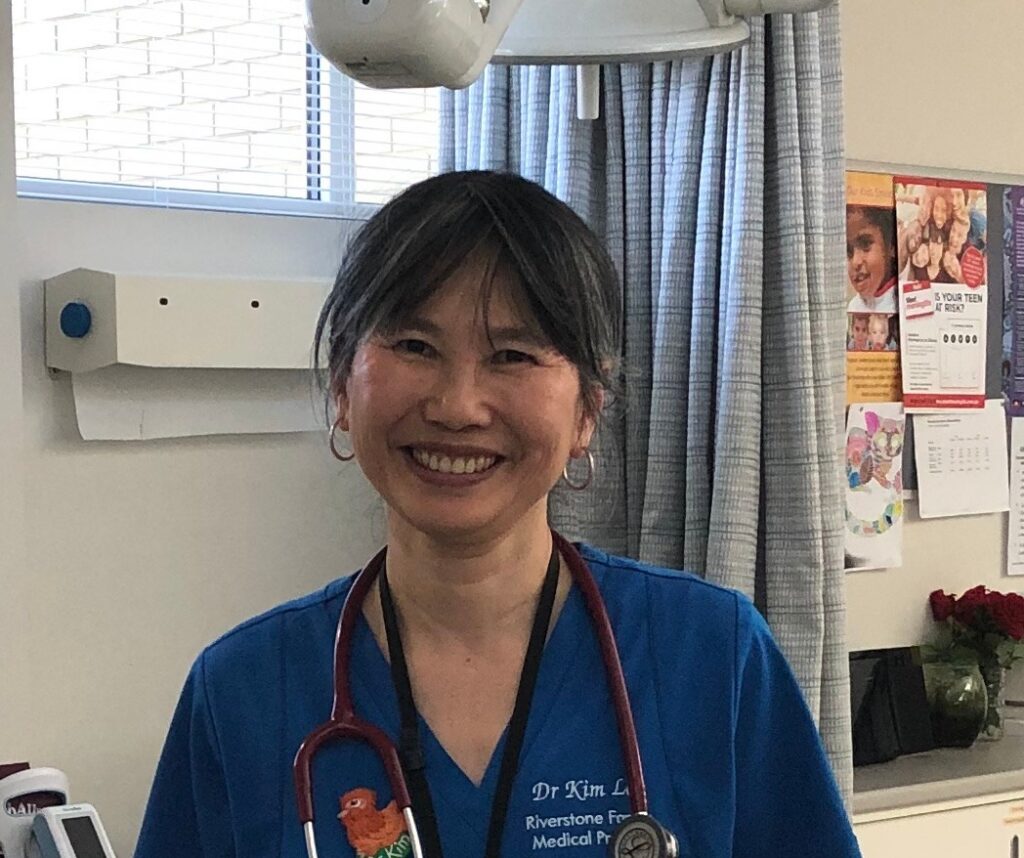
Dr Kim Loo has worked in Western Sydney for more than three decades, and when she started seeing patient after patient suffering through heatwaves, bush fires, smoke, and flooding, she knew she needed to stand up in the fight for climate action. The GP and board member of Doctors for the Environment Australia has seen first-hand how people living with complex chronic conditions, disabilities and trauma are more at risk during climate-fuelled disasters. She also knows the burden of care often falls on women.
“Women are more likely to be carers for children and the elderly,” Dr Loo says. “This means they will be more at risk if the home can’t be adequately cooled during heatwaves. Heat waves increase the incidence of interpersonal violence . And women still die at such a high rate.”
As an advocate for climate action, Dr Loo calls on the government to view each decision they make through the lens of health, especially when it comes to approvals for new coal and gas, and in the roll out of renewables.
“Care and kindness need to be at the centre of all decisions. I see my advocacy as coming from a place of love. Love for my family and my community. Love for my garden and chickens fuels my advocacy,” she says.
Zoe Schultz, First Nations researcher and advocate
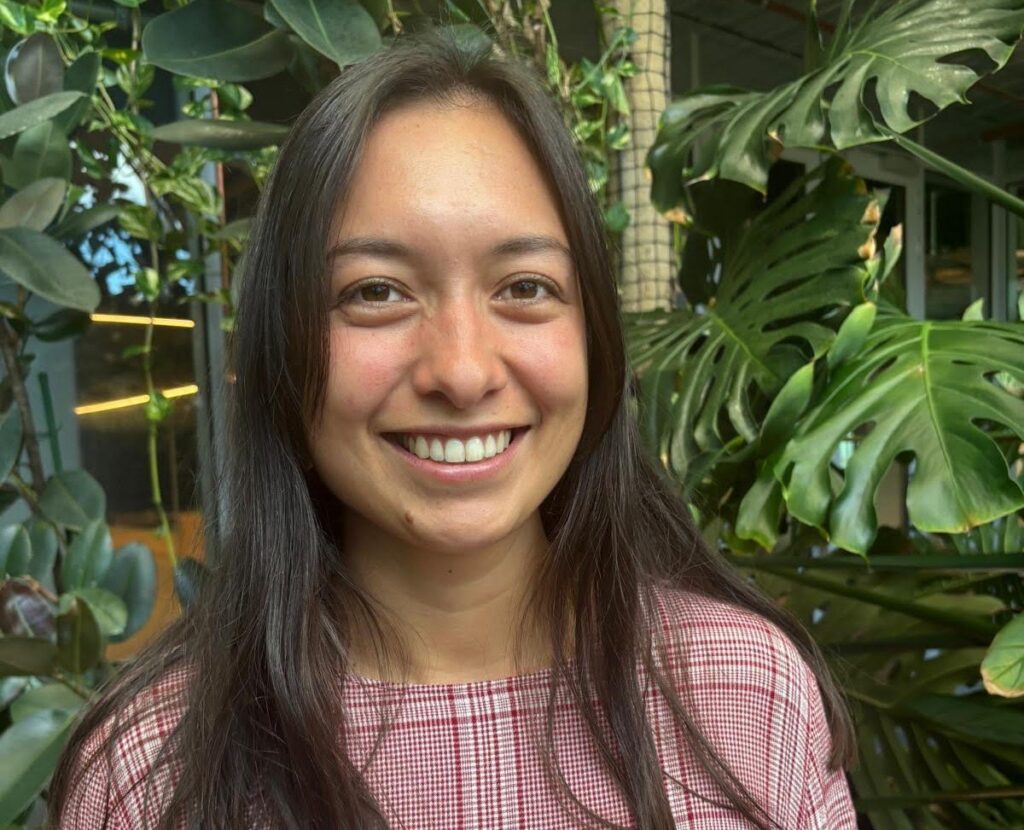
Zoe Schultz, a Gamilaroi and Malaysian Chinese woman, is a key voice behind recent research looking at the role First Nations women play in fire and land management, and how it is a vital strategy for protecting communities from escalating climate disasters.
Schultz, a Research Fellow with National Indigenous Disaster Resilience at Monash University, has helped draw attention to the work of First Nations women in this space, advocating for culturally responsive professional development. She says care is at the heart of First Nations culture and it’s imperative we create workplaces where these women feel culturally safe, respected and valued to contribute and lead meaningfully.
“Caring for Country has always involved shared responsibilities, with women also holding distinct and equally valued roles alongside men,’ Schultz tells Women’s Agenda.
“First Nations women bring distinct and invaluable strengths to their roles as firefighters, land managers and rangers across Australia. Community connections, cultural knowledge and diverse lived experiences are some of the many strengths that First Nation women bring and use to build trust and relationships with communities.”
Schultz says her passion for the work comes from both of her cultures, and a deep love and respect for Country and our non-human kin.
“I have also been fortunate to learn from my family and both my cultures (Aboriginal and Chinese) about the importance of respect and collective care and responsibility.”
Yolanda Waters, CEO of Divers for Climate
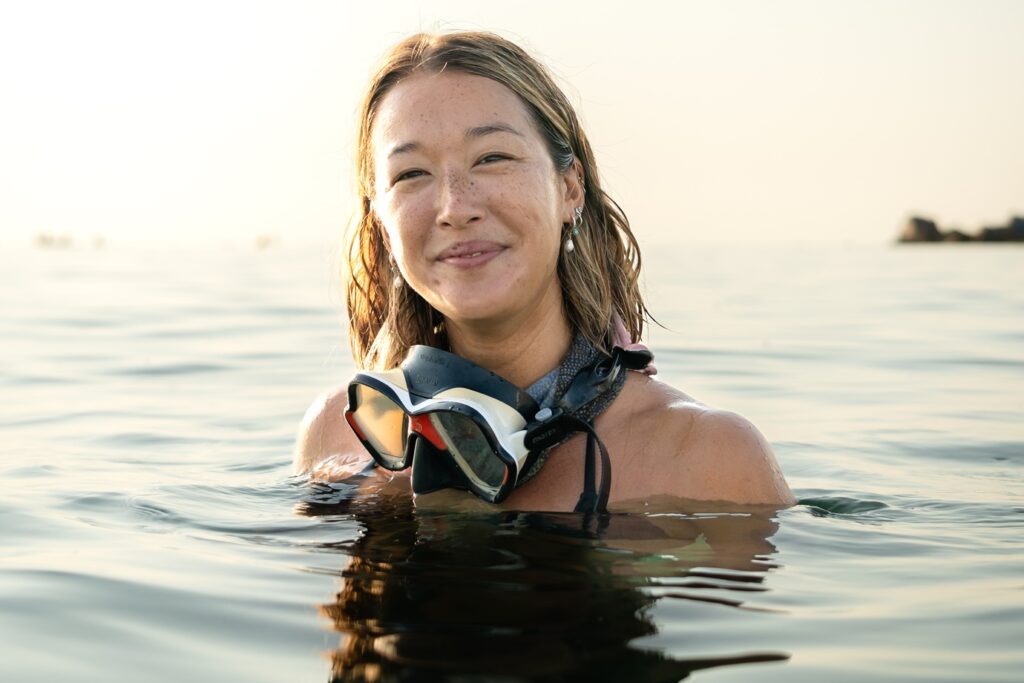
If you had told Yolanda Waters when she was working as a dive instructor six years ago that she’d be headed into a career focused on campaign strategy, meeting politicians and running a non-profit, she wouldn’t have believed it.
“But when you spend your days underwater, watching climate change unfold before your eyes, and on top of that, navigating tricky customer questions about the future of the places we love, it becomes harder and harder to separate your job from the bigger picture,” Waters tells Women’s Agenda.
“At some point you realise that caring about the ocean means speaking up for it, especially in places where decisions are made.”
Waters is a marine social scientist and the founder and CEO of Divers for Climate, where she says care for the community is at the heart of everything the organisation does. She says many divers want to engage in climate policy, but haven’t yet felt confident to do so.
“There are few professions where you have to confront climate change so intimately while also being expected to sell tours to it,” she says. “We believe that when our community is connected, equipped and empowered to respond to climate change, a thriving ocean becomes a by-product. That’s why our focus is on listening and supporting divers to be heard without adding pressure or stress.”
“The recent harmful algal bloom in South Australia is a great (though terrifying) example of the kinds of pressures marine communities are facing. While this specific event was caused by a myriad of factors, climate-driven changes like warming oceans and shifting conditions are making events like this more likely and more severe, and frontline communities like divers are bearing the consequences.”
Divers for Climate is made up of a young, all-female team. Waters said their leadership style is one of their secret weapons.
“No one’s ever expecting us to win with empathy and kindness. And yet, we’ve found that leading this way seems to work and we’ve been able to break down barriers within the industry that haven’t been done before.”
“The leadership we need is really all about people – we need relational leaders, we need more leaders who can communicate across cultures and complexity, who can listen, learn, find common ground, and bring communities together.”
Barbara Ibuai, Torres Strait Islander advocate and founder
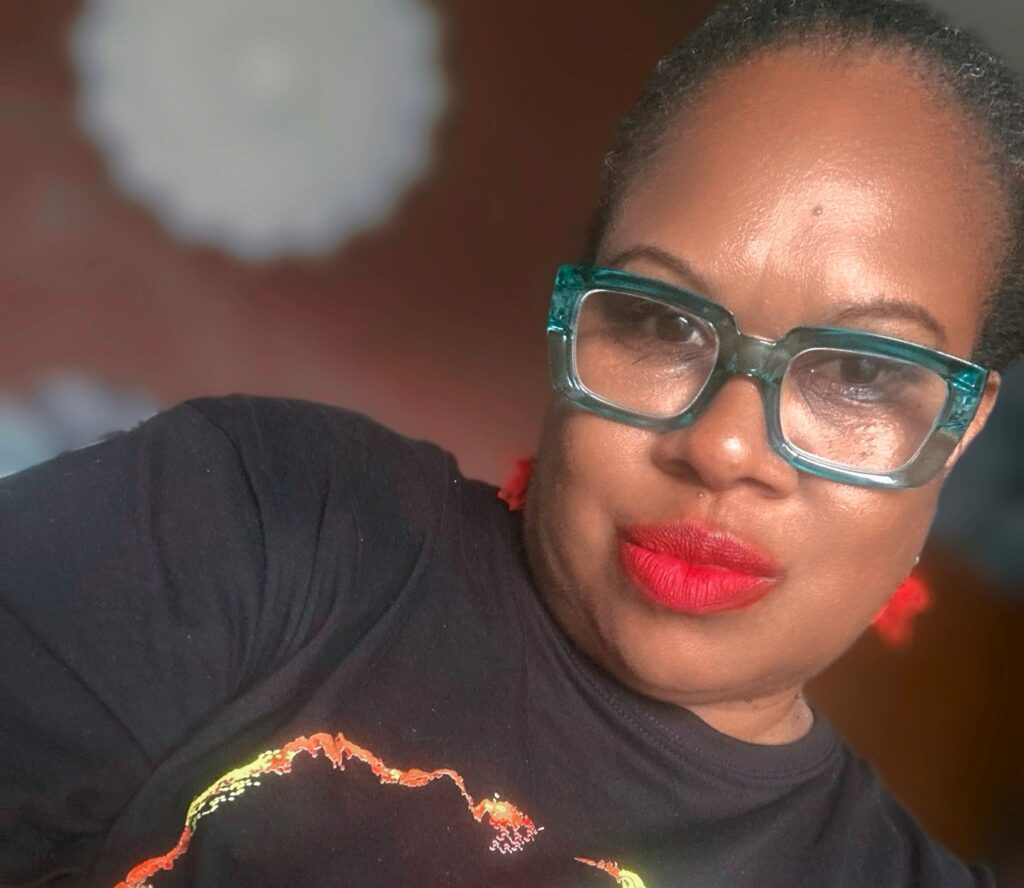
Saibai Koedal woman Barbara Ibuai is the founder of Climate Collective Zenadth Kes, an emerging Torres Strait Islander led not-for-profit climate initiative. Ibuai tells Women’s Agenda the organisation is a place-based, frontline community approach to climate action.
Ibuai spent much of her childhood on Saibai Island, where her family is from and where she was raised by her grandparents. She describes those early years as shaping her worldview, values and deep connection to Country.
“My blueprint in my brain about what life is, my world lens, my values and my connection to my environment… the interaction with the environment was an everyday thing,” she says.
The Climate Collective Zenadth Kes was born after Ibuai witnessed the distress of Elders who felt there was no coordinated support for Torres Strait communities already experiencing rising seas, heat stress and inundation.
“When you’re at the forefront and your direct Elders are reaching out… there’s no big boat coming,” she says. “That was enough for me.”
For Ibuai, the climate crisis is an existential threat, with some Torres Strait communities facing the possibility of relocation and the devastating loss of cultural connection to Country.
“These high tides that are coming every summer now, the heat stress on our people, the entire inundation of the salt water up onto the island, into the residential spaces underneath houses,” she said.
“People are going to have to get relocated very soon. We will be possibly the first refugees of this country, domestically.”
Ibuai believes the region deserves its own climate organisation, one grounded in local knowledge and community leadership while contributing to the broader climate justice movement.
“We as women, in a cultural sense, we look after families in our homes. We have done that since time immemorial. It’s a human thing. First and foremost, I’m coming in to help keep the house in this crisis, and help to prepare my house, which is the region.
“We are calling it an existential threat to our very survival in existence in this place.”
Fiona Lee, bushfire survivor and campaigner
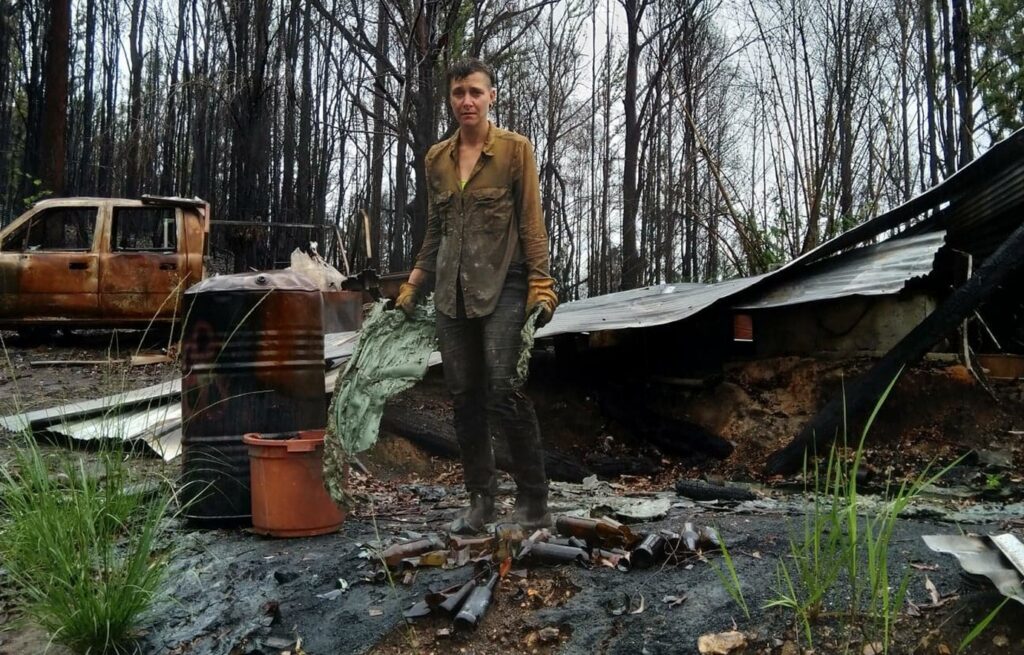
When Fiona Lee lost her family home on the NSW mid-north coast in the Black Summer bushfires in 2019, it stripped away any illusion that climate change was a distant problem. It was a time that forced communities to be resilient and look after each other, especially as it became clear that decisions being made in parliament were not happening quick enough to keep up with the reality on the ground.
“It hit my family right in the heart. Since the 2019-20 fires the narrative on climate has shifted and we now readily link extreme weather to climate change,” she tells Women’s Agenda.
Lee, an artist, found her voice in the days following the fires, speaking to the ABC’s 7.30 and protesting on the doorstep of NSW parliament. She is a member of Bushfire Survivors for Climate Action and in the years since the Black summer, has campaigned against new coal approvals and to prevent more communities from suffering from the same fate. A care for the community is at the core of her work.
“We desperately need leadership that’s honest about where we’re at. When authorities ignore climate science and keep approving new mines, the impact is deeply human,” Lee says.
“We know we’re in a really intense and precarious place and emissions are still far too high. Communities feel abandoned and frustrated.”
Dr Amanda Cohn, former GP and Greens MP NSW
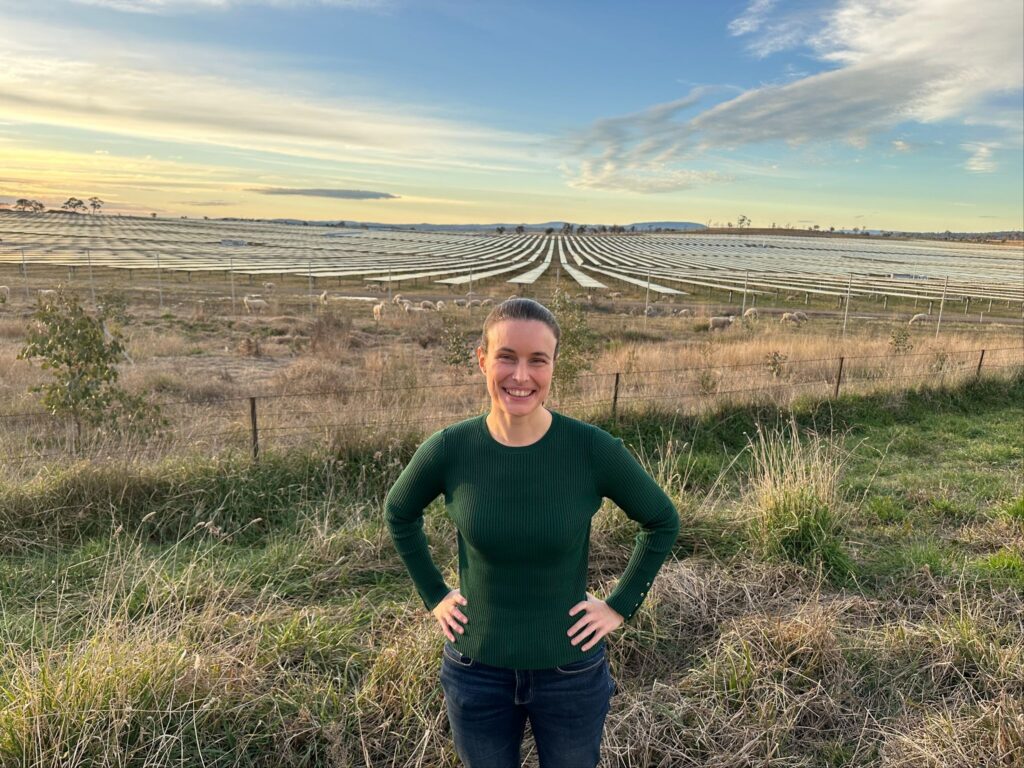
Dr Amanda Cohn is a NSW-based politician but before her days spent in the halls of parliament, she worked as a regional-based GP and spent a decade as an emergency services volunteer, responding on the frontlines of the climate crisis.
“From operating radios during Black Summer, to driving rescue boats during floods, it got harder and harder to continue, knowing that our elected representatives in parliaments were making decisions that were making things worse,” Cohn tells Women’s Agenda.
“My key concern is that neither major political party in Australia is willing to stand up to their fossil fuel donors and stop new coal and gas projects. I joined the Greens.”
With her background in health, Cohn knows that public health services, especially in the regions, are already stretched to their limit. That’s before a climate-fuelled disaster hits. She’s also concerned that reproductive healthcare is still seen as non-essential healthcare in too many cases, and this leaves women vulnerable when disasters disrupt access to services.
“Social infrastructure is critical infrastructure, from community health and mental health services to neighbourhood centres,” she says.
“They need permanent core funding to be resilient and embedded in communities long-term, not ad-hoc grant programs for short-term services which we typically see from state and federal governments.”
This series on Care, Connection, Kindness and Climate Change is editorially independent but made possible thanks to the support of Wendy McCarthy AC. You can learn more about this support here.