
We recently celebrated Women’s Agenda’s 14th birthday, which left me reflecting on how different the issues we cover now are from those we covered back in 2012.
Australia’s first female prime minister, Julia Gillard, was still in office as we started publishing in 2012, and weeks away from delivering her misogyny speech.
Alan Jones was months from declaring women were “destroying the joint” when we launched — and is now on trial after pleading not guilty to charges involving alleged indecent assault and sexual touching by six men between 2003 and 2020.
Tony Abbott was yet to become prime minister, not to mention then Malcolm Turnbull and Scott Morrison to mark a decade of Coalition rule – before the return to a Labor Government in 2022.
*** Can you help? We’re investigating how”The crisis stack” affects women and families, and what more can be done to address it. Take our five-minute survey here. ***
And in 2012, Donald Trump was far from being seen as a legitimate presidential candidate, let alone as one who would become one, serve a term, and then come back for a second term.
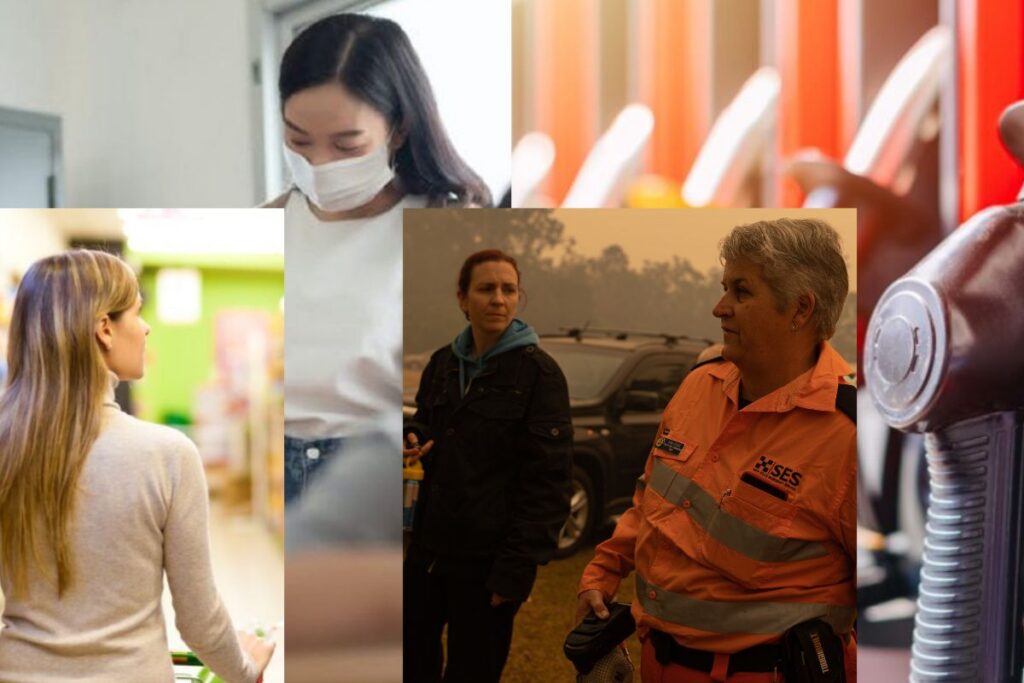
But the big change we’ve noticed is far more subtle. It’s in the compounding impacts on women of the various crises that have emerged or intensified over the past 14 years.
Think about it: there’s been the uptick in climate-related disasters, global conflict, a pandemic, AI, the rise of the far right, and this thing we call the manosphere. Social media’s shifted from a place to connect and raise your voice to one of misinformation, disinformation, and a channel for populist movements.
Every year, we seem to find ourselves reporting on more emerging issues and their added impacts on women – whether that be around AI bias (as we started exploring in 2016), the pandemic (from 2020), to how social media and AI is being weaponised against women, the gendered risks of AI jobs displacement, the consequences of the rise of the far right (especially through 2025) and the ongoing fuel crisis (2026).
We start covering these crises, while the previous ones don’t ever completely go away. Even when a crisis does technically “end”, like lockdowns and the added care and schooling responsibilities that fell on women, the consequences of the crisis still linger.
This means that, once established, emerging crises may not end simply come to an end. Rather, they can stack on top of each other.
So how do compounding crises widen gender gaps and contribute to further structural penalties facing women? Has it been worsening from year to year?
And how do those costs further compound for Indigenous women, for women with disability, for women who are victim survivors of family violence?
We don’t have these answers, but it’s something we hope to better understand.
Along with our partner Good Shepherd, Women’s Agenda is working to better address these costs in a report to be launched later in the year.
To help, we’ve launched a survey asking women across Australia how they’re faring amid the current crises we’re facing.
The survey takes around five minutes, is confidential and will help us put figures on this idea of dealing with multiple macro challenges at any one time, on top of any personal challenges you might have going on. We want to find out how “the crisis stack” affects women and families, and what more can be done to address it.
So, if you can, help us figure this out. Help us make some noise about the compounding crises and their impacts on women and families — noise that we promise to continue into our 15th year and beyond.
Take the survey here.