
Students in public schools across New South Wales will soon be limited to as little as 15 minutes of screen time per day, under new guidelines designed to encourage more “pen and paper” learning and address a backward slide in academic results.
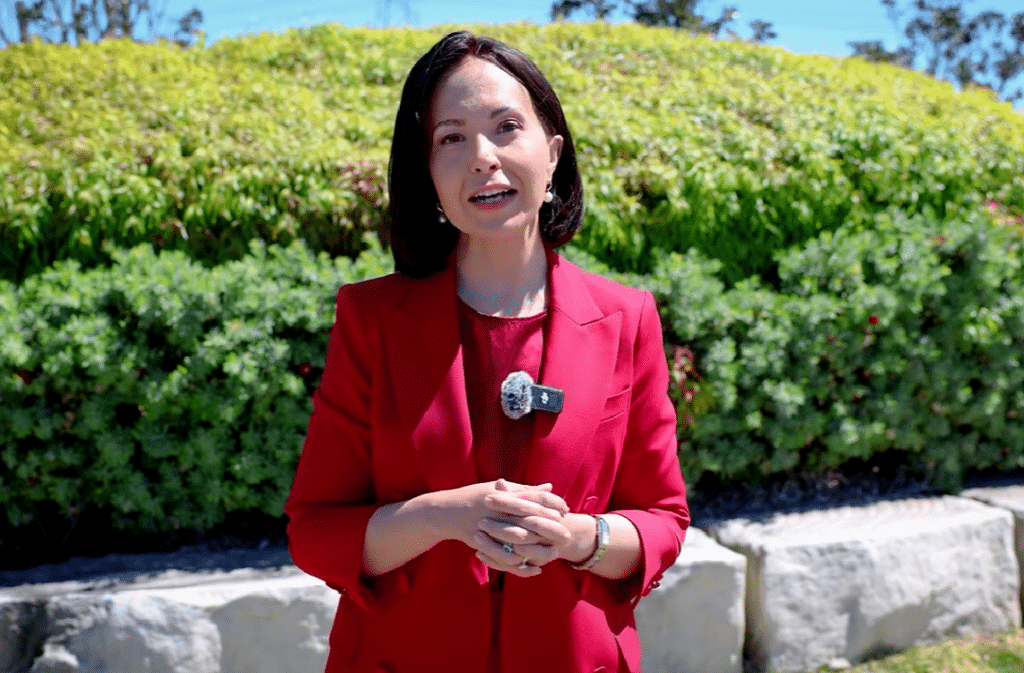
The move, announced by NSW Education Minister Prue Car (pictured above), follows recent OECD student results that showed Australian high school students having record-low scores in mathematics and reading.
From the beginning of 2027, public schools will be advised to limit Kindergarten to Year 2 students to 15 minutes a day on laptops, tablets or desktop computers. Year 3 and 4 will be allowed up to 30 minutes and Year 5 and 6 students will get 45 minutes.
High school students will have time allowed based on their subjects, with up to one-quarter of the time per subject for years 7-10 and half the time per subject for years 11 and 12.
Students will be required to write with a pen and paper for at least one hour per day, under the changes.
“Our government’s research is telling us that excessive screen use is a problem, and that parents want screens to be used intentionally. That means screens should not be the default,” Car said.
“When the research is telling us teenagers are spending as much as seven hours a day on screens, and we are seeing reading and writing skills going backwards for a whole generation of children, we have to act.”
According to the OECD’s Programme for International Student Assessment (PISA), school students in Australia are nearly twice as likely to spend more than two hours a day learning using digital devices, compared to the OECD average. Currently, reading and maths scores for 15-year-olds in NSW are going backwards.
The new screen time limits will be recommended from the beginning of next year and will be mandatory from 2028.
Chief Paediatrician at NSW Health, Dr Helen Goodwin said too much screen time can impact children’s health and development.
“A healthy day for children and young people includes a mix of being active, getting enough sleep, and building active social connections with their peers and family,” Dr Goodwin said.
“We know that too much time spent on screens impacts these important daily activities that support healthy growth and development.”

Screen time caps and the rising manosphere
The screen time cap in public schools comes just days after the federal government announced it would soon implement reform to give users more choice about whether they want to have a social media algorithm or not. It also follows rising concerns about the impact of the manosphere and increasingly levels of sexism and misogyny displayed by male students towards their female peers and teachers.
Last month, a landmark national survey by Monash University found that 78 per cent of teachers have observed or experienced sexism or misogyny in their schools, with one in three encountering it frequently.
Teachers described an escalation in sexist and misogynistic behavior directed towards them by students that frequently echoed the language and attitudes of manosphere influencers.
The study showed 95 per cent of teachers believe that at least some of their students access manosphere content.
One teacher who participated in the study said: “I’ve noticed a real shift in the attitudes of some boys at school — there’s a growing sense of disrespect towards women and girls that feels different from what I’ve seen before. It’s not just teasing or immaturity; it’s often fuelled by online influencers and social media messages that normalise misogyny and dismiss women’s voices.”
“I see it in the way some boys speak to female teachers or classmates, and in how they react when challenged. It’s worrying and exhausting, especially when some parents don’t see it as a problem.”
While the screen time cap in schools has not been positioned by the NSW governement as a way to reduce the impact of the manosphere in classrooms, it may go some way to limiting children’s exposure to this online material during school hours.
The NSW government has already implemented a ban on mobile phones in public schools.