
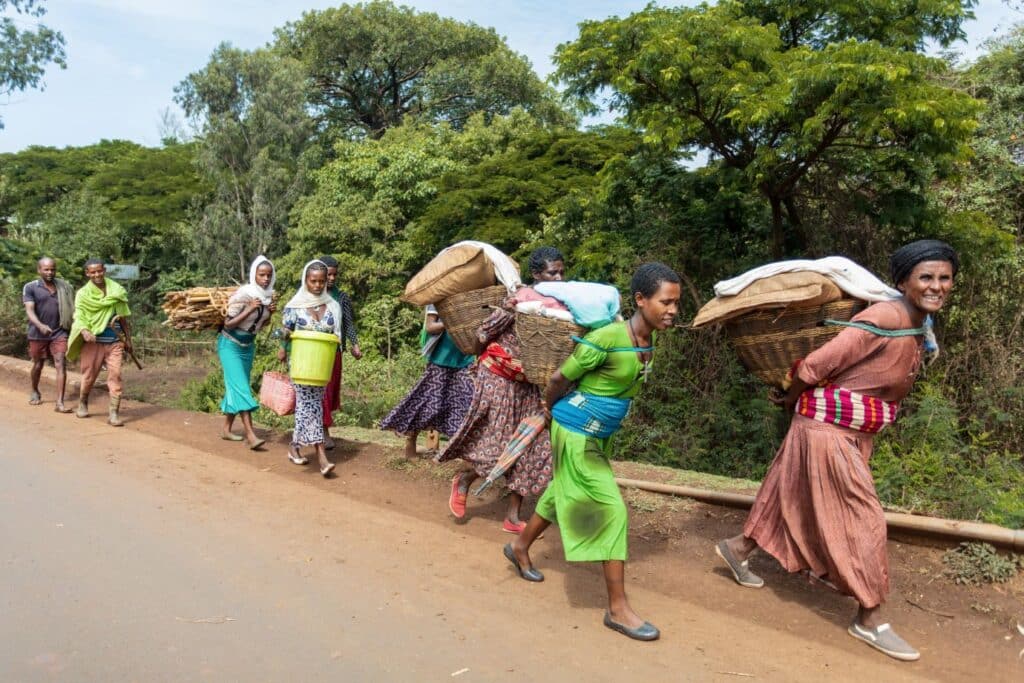
Climate shocks, rising prices and escalating global conflict are leaving women hungrier, poorer and less resilient than before, a major new report has found.
These compounding crises are hitting women in developing countries year after year at the same time humanitarian relief and support is drying up.
CARE’s report, Women Respond, found three in four women say these compounding crises are making it harder to earn money, while two in three say a lack of food is the biggest crisis they face. More than half of women are currently facing drought.
The women surveyed came from Burundi, Colombia, Ethiopia, Niger, Mali, Syria and Vietnam. Global aid cuts were felt across all seven countries, with more than 80 per cent of women saying the cuts were hurting local economies, health services and aid support.
The study surveyed members of Village Savings and Loan Associations (VSLAs), self managed groups predominantly made up of women whose members save together and access small loans.
At the end of 2025, one in two women reported using savings to cope with crises, one in four were borrowing money, and one in 10 were selling assets to meet basic needs.
“These savings are meant to help women invest in businesses, strengthen their livelihoods and build a more secure future for their families,” said Kalkidan Lakew Yihun, CARE’s Program Coordinator, Women and Girls Respond and one of the report’s authors.
“Instead, more women are having to use them to put food on the table and meet other basic needs. Women are doing everything they can to adapt, but after crisis after crisis, many are running out of ways to cope.”
Women are going without food
Reducing food intake is one of the most widely reported ways that people are coping with crisis, the report found.
In Mali, 96 per cent of women surveyed struggle to eat enough food. In Niger, 55 per cent of women are eating less than they used to, and among those women, just one per cent still eat three meals a day.
In Burundi, women said they used to earn on average $39 per month, but this has fallen by more than half to $18.
Women in these countries are also facing a growing burden of managing their households as money and resources become tight.
“People often say, ‘Men build the house, women build the home,’ but when crisis hits, that home gets really heavy. Taking care of cooking, cleaning, and managing food all falls on me,” said a woman in Vietnam
“We completely cut back on family expenses: food, health, education, etc., and we even sold furniture and other household items to cover basic costs,” a woman in Syria said.
How women are responding
Despite facing these growing and compounding crises, women are finding ways to respond. Whether it’s finding new ways to earn income, or advocating for more support and services from the government, women are taking it into their own hands. But this can only go so far.
“Women are doing everything they can with the resources available to them,” said Kalkidan Lakew Yihun.
“Savings groups are an important safety net, but they cannot replace the broader support communities need. After facing repeated crises, women need the resources and opportunities to recover and prepare for what comes next.”
The findings from this report were taken during 2025, which means the global outlook is expected to worsen amid new pressures that have emerged in 2026. For example, the El Niño is expected to be one of the strongest on record and will bring more extreme weather, drought and crop failures. Global supply chain disruptions and more reductions in humanitarian assitance are also having an added impact.
Want more stories like this sent straight to your inbox? Join the free Women’s Agenda Daily newsletter and support independent, women-led journalism.