
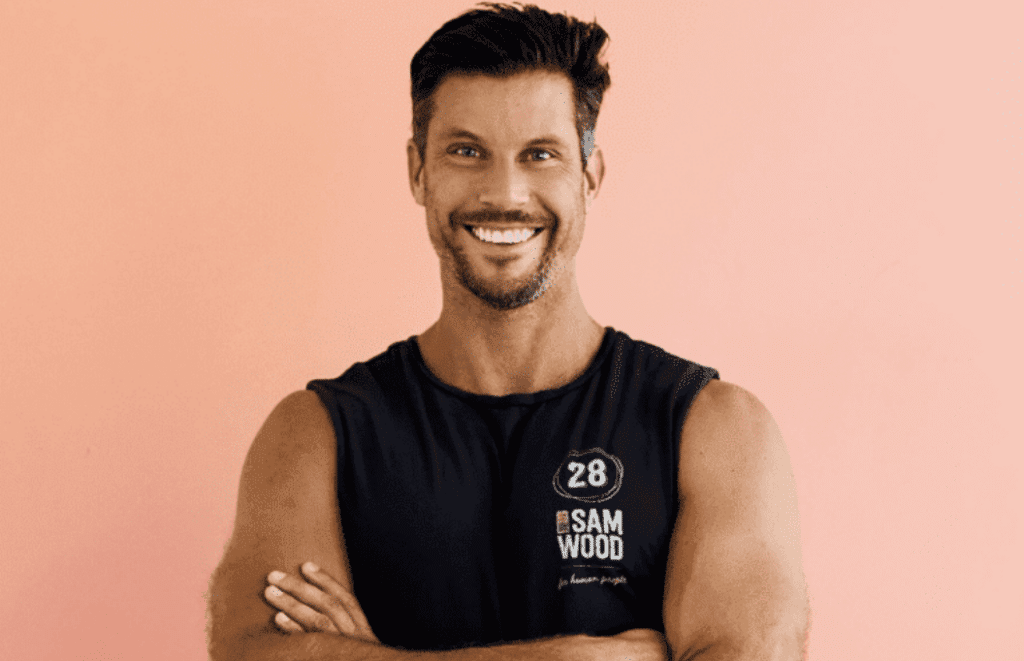
Sam Wood, Australia’s dreamboat and the man once selected as the country’s most eligible bachelor is now splashed across headlines in connection with stomach-churning allegations of domestic and family violence.
After his brush with reality fame in 2015, Wood got to work building a health and fitness empire alongside his wife Snezana Markoski (his chosen partner on The Bachelor), and by all public appearances, he became the kind of man with everything.
He made millions from selling health and wellbeing, much of it to women, built a stream of successful businesses, accrued seismic wealth, maintained a Pinterest-perfect marriage and had four gorgeous daughters.
But over the weekend, he was charged on two counts of assault occasioning bodily harm (domestic violence) and strangulation in a domestic setting, with police called on Saturday night to a home in Noosa, Queensland.
Wood remains behind bars on remand. His lawyer has confirmed he plans to request bail on Thursday and said outside court that his client would defend against the charges.
While Wood has not been convicted, the story made me think about the way we understand domestic and family violence, and how difficult it seems for us to reconcile an allegation of violence with the public image we’ve constructed of the person accused of it.
Somewhere in our consciousness, we’ve constructed an image of what a “violent man” looks like, when the image we should have is, frankly, anybody.
We imagine someone angry and outwardly aggressive, someone whose life is visibly chaotic, someone from a particular suburb or socioeconomic background. We imagine that if a woman were experiencing violence at home, it would be utterly obvious to everyone around her.
It’s not.
Police were called to Noosa in this case, one of Australia’s wealthiest and most recognisable holiday destinations. Wealth doesn’t protect a family from domestic violence, just as poverty doesn’t cause it. A nice house, a successful career, a stack of money or a prominent social profile tell us exactly nothing about someone’s relationship.
I was reminded of this on the weekend when I was talking to a friend who had taken her 12-year-old son to hospital to get stitches last week. While she was there, she overheard a pregnant woman speaking to a doctor. She was 11 weeks pregnant and, my friend understood, had come in to be checked after her husband had shaken her violently by the pelvis and punched her.
My friend told me afterwards that she couldn’t stop thinking about the woman.

Of course she couldn’t.
Despite all the stats we’ve been given about domestic and family violence, despite the rapidly growing public conversation, and the “national crisis” we hear about, there is still something in many of us that assumes it isn’t really happening around us.
That’s easier than accepting that it’s actually happening every second, of every day, in all corners.
And if we are fortunate enough not to have experienced violence ourselves, we will certainly know women who have and are.
Cases involving wealthy or famous men are harder for us to palate. They force us to acknowledge how little a person’s public identity actually tells us about what happens in their private life. In the increasingly parasocial world we inhabit, where we spend years watching, following and feeling connected to people we’ve never actually met, that feels more challenging.
It’s why, so often when allegations are made against someone “we like”, we look for reasons to dismiss them, explain them away or defend the person we think we know. Just ask Amber Heard or Angelina Jolie.
But we don’t know them. Not even a bit.
And we have to start countering our broader instinct to instantly determine whether the woman is sufficiently credible, likeable, damaged or believable for us to accept that something terrible could have happened to her.
I think part of the reason we do this is because it makes the world feel safer.
If violent men are obviously violent, then perhaps we can spot them; keep our daughters away from them, protect our friends. We reassure ourselves that we would know if something was wrong.
But if domestic violence happens in a wealthy neighbourhood, in a successful family, between people who appear happy, or involving a man who has spent years building a public reputation around health, wellbeing and being an all-round good guy, then we have to accept something much more uncomfortable: we don’t always know.
Domestic and family violence doesn’t have a postcode, a dress code or a net worth.
It doesn’t always look like the thing we have been taught to look for, either. It can involve physical violence, of course. But it can also involve coercive control, financial abuse, intimidation, threats, sexual violence, isolation and the gradual erosion of a woman’s independence and confidence. Sometimes it’s visible. Often, it’s not.
The woman my friend saw in hospital is the part of this story I keep coming back to.
I don’t know who she is. I don’t know whether anyone in her life knows what she is experiencing. But I do know that she was 11 weeks pregnant and sitting in a hospital after, according to what my friend overheard, being violently assaulted by the person who was supposed to be her partner.
And my friend’s reaction was not unusual. She couldn’t stop thinking about her because, for a moment, the statistics we hear about domestic violence became a real woman sitting in a hospital room.
I think we need more of those moments of brutal recognition. Because there is always the possibility that one day we will be the woman sitting in that hospital room.
The allegations against Sam Wood may have triggered a collective gasp across Australia, but maybe they shouldn’t. Because domestic and family violence will never look the way we expect it to. And good guys on Instagram aren’t always so good behind closed doors.
Want more stories like this sent straight to your inbox? Join the free Women’s Agenda Daily newsletter and support independent, women-led journalism.