
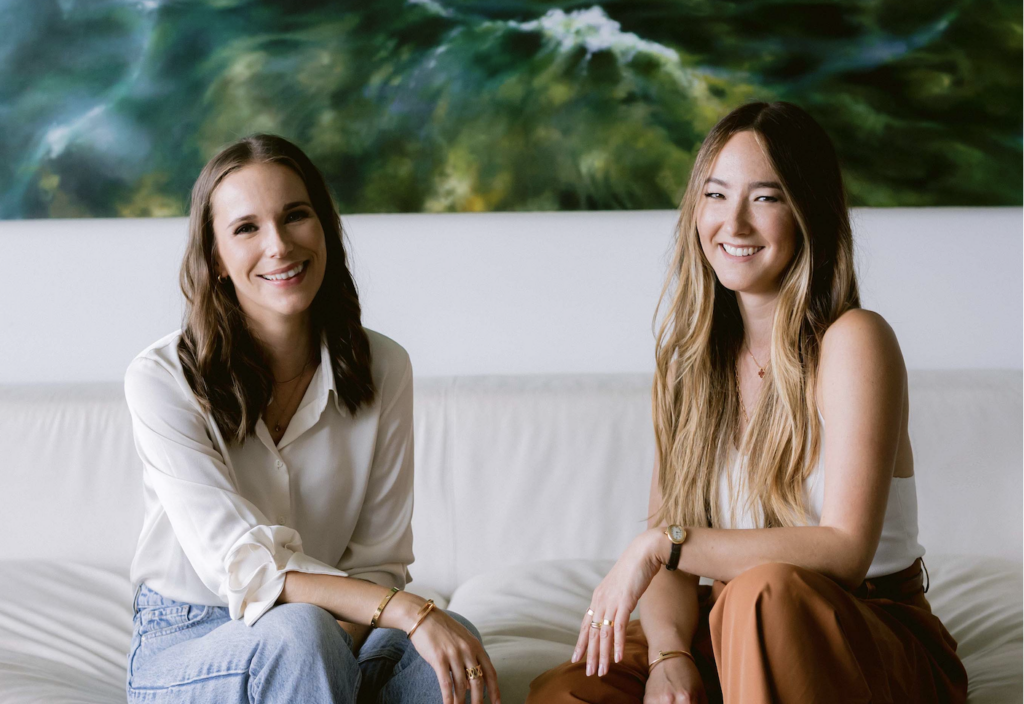
For years, Julie Kim and Sophie Seymaux sat at the top of one of the world’s most recognisable luxury brands, helping shape strategy and growth for Cartier across Oceania.
From the outside, they had the kind of senior leadership roles that many professionals spend decades working towards. They also had global careers and the prestige that comes with one of luxury retail’s biggest names.
But after years investing their energy into building someone else’s vision, the pair began asking themselves a different question.
What if they built their own?
That question became SKALE, a luxury growth consultancy helping premium and luxury brands scale across Australia and New Zealand. Just over a year into the business, Kim and Seymaux are discovering that entrepreneurship bears little resemblance to corporate leadership. For starters, there’s a lot more vulnerability involved, more resilience and, perhaps most importantly, far more faith in yourself.
In this profile, the co-founders reflect on taking the leap together, building a business founded on trust, navigating self-doubt and redefining what success looks like when your name is on the door.
You both built successful careers in some of the world’s biggest luxury brands before starting SKALE. Was there a particular moment when you looked at each other and thought, “Let’s back ourselves”? What gave you the confidence to take that leap?
Sophie Seymaux: I think both of us always knew entrepreneurship would become part of our lives one day. We had both poured everything into our corporate leadership careers. We worked incredibly hard, loved what we did, and were fortunate to build careers with some of the world’s most respected luxury brands. At some point, the question naturally became: if we’re willing to invest this much energy building someone else’s vision, why not channel it into building our own?
For different professional and personal reasons, we had each started thinking about what might come next while we were still Directors at Cartier Oceania. When we realised we were both in exactly the same mindset—and, more importantly, at the same stage of readiness—I casually said to Julie, “What if we started a business together?” She immediately lit up at the idea. Looking back, everything unfolded organically, which only reinforced that it was the right decision for both of us.
The interesting thing is that our decision wasn’t really driven by confidence. It was driven by a desire for growth and change. If anything, I probably wouldn’t have had the confidence to do it alone. Doing it together simply felt like the obvious choice—the one that made complete sense.
Julie Kim: For me, it was more of a now-or-never moment. In a way, it’s “easy” to stay at a top luxury Maison like Cartier. The demands of an international luxury brand aren’t easy, but staying is. The business continued to challenge and engage me as I had the opportunity to progress my career into the next positions at exactly the time I was ready for them. With how quickly 10 years with the house went, I could completely see myself there for another 10.
At the end of the day, major life decisions don’t have to make sense on paper. When you know, you just know.
Starting a business with a co-founder requires an enormous amount of trust. What have you learned about each other over the past year that you never knew when you were colleagues?
Sophie: Julie and I had the privilege of working together for five years before launching SKALE. Our director roles meant we had already experienced high-pressure environments side by side, so we knew each other’s work ethic, strengths, communication styles, triggers and boundaries. That was an incredibly valuable foundation for a business partnership that many founders don’t find.

What I’ve discovered over the past year is really a confirmation that we make the perfect team. Everything I admired about Julie as a colleague has only become more evident as a co-founder.
Starting a business also strips everything back. We’ve uncovered far deeper triggers and vulnerabilities than we ever experienced in our corporate careers. Fortunately, we’ve been remarkably aligned on the big decisions. When we do see things differently, trust, transparency and genuine care for each other always bring us back to common ground.
Julie: Sophie is everything I’m not, in the best way. We’re incredibly different, which is what makes us powerful together. Fundamentally, we have the same values, which simplifies things.
Since starting SKALE, Sophie is entirely lit up from within and she brings that to everything we do. I always knew I trusted her, but as a business partner, the depth of trust you develop with someone is beyond being friends or colleagues. Sophie is like family at this point.
Founding a business often looks exciting from the outside, but it can also be lonely and incredibly demanding. What has tested you most?
Sophie: Building SKALE actually hasn’t felt lonely at all. Since launching, I’ve met more inspiring and diverse people than at any other point in my career.
That said, starting a business from scratch, with no safety net, is incredibly demanding. One of the biggest adjustments has been learning that when you’re selling a professional service, you’re also selling yourself. There’s no longer a global brand behind us; we’re the ones standing in front of every conversation, every pitch and every opportunity.
What has kept us going is a shared belief that we’re building something for the long term. The uncomfortable moments never disappear, but they’re consistently outweighed by the excitement of a great client conversation, a new partnership or seeing our vision resonate.
Julie: Founding a business is a rollercoaster. There are the most exciting moments paired with the most difficult all at the same time. At times it feels like I have spent 15 years working tirelessly to establish my career and now I am back at square one. That’s a hard pill for the ego to swallow.
Having a business partner who knows you well, knows what you’re going through and is right beside you along the way helps shift perspective and maintain trust in the process.
As women taking on an industry dominated by global luxury giants, have there been times you’ve felt underestimated?
Sophie: There have absolutely been moments of frustration, rejection and self-doubt. That’s part of building any business.
Being women in this space can sometimes add another layer, particularly when we’re navigating power dynamics or encountering larger-than-life egos. We’ve learned not to force relationships that don’t align with our values.
Our first year has been about proving ourselves—earning trust, building credibility and consistently delivering results. Rather than seeing our youth as a disadvantage, we’ve tried to turn it into a strength by staying agile, curious and willing to learn.
Julie: I actually think we’ve only gotten more confident as time has passed. If you put yourself out there and do something different, you are going to get criticised—that’s the reality.
The top luxury houses have actually been the most receptive because they know our credentials and what we’ve achieved professionally. Then it simply becomes a conversation about whether what we offer is what they need.
How has your definition of ambition evolved?
Sophie: Growing up with parents who both built corporate careers, I naturally associated success with reaching leadership positions in the most respected companies. For a long time, ambition meant climbing the ladder and earning the next promotion.
Starting SKALE completely changed my relationship with ambition. It hasn’t diminished—it has shifted. Today, ambition is much more about creating something that reflects our own vision, values and ideas.
Success is no longer measured by the title on my business card. It’s measured by the impact we create, the trust we earn and the business we’re building for the long term.
Julie: Previously, success was more about dollar figures and growth. Now I’m more focused on doing good business.
By that, I mean creating win-win scenarios, rewarding employees properly, giving back, going above and beyond for clients and working with good people that I genuinely connect with. When you’re running a business, it becomes your life. So running a good business also means creating a good life.
If you could go back to the day you decided to launch SKALE, what advice would you give yourselves?
Sophie: First, I would order us both a double shot to get ready for what’s to come.
Then I’d tell us not to overthink. The things we spent the most time worrying about were rarely the things that became real challenges. Instead, the biggest opportunities came from conversations and ideas we could never have planned for.
Most importantly, I’d remind us to trust our judgement. Those instincts we built over years in leadership didn’t disappear when we left corporate life—they’ve become one of our greatest assets.
Julie: I’d tell us to have patience. Everything will happen when it happens. Rome wasn’t built in a day, and neither is SKALE.
The challenges are all part of the process—embrace them because they’re just as important for growth as the wins.
I’d also say the only limits you have are the ones you’re placing on yourselves. Open up to the possibilities. Opportunities are endless—you just have to see them.