
Victoria is, by any measure, a national leader in advancing women in politics. The state Labor government boasts 56 per cent women in caucus, 64 per cent of its ministers are women. Both major-party leaders will be women, with Premier Jacinta Allan leading Labour and Jess Wilson leading the Liberals. It is, as milestones go, remarkable.
And yet, even here, a young woman putting her hand up to serve her community can find herself publicly intimidated, her credentials questioned, and her agency denied while the men around her look the other way.
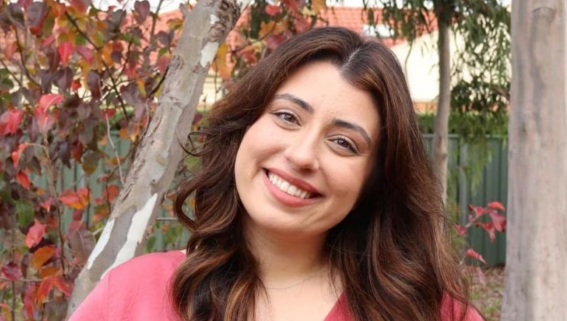
Katerine Theodosis is a young, intelligent, culturally diverse woman who put her hand up to be considered as a candidate in the upcoming state election for the Melbourne seat of Essendon. She followed the rules. She did everything right.
Last week, at a branch meeting where she went to introduce herself to the membership, she was allegedly approached by a former minister from the Cain/Kirner-era government. A man with a microphone in one hand, finger pointing with the other, who stalked toward her, standing over her as she remained seated, and subjected her to what multiple eyewitnesses described to Women’s Agenda as verbal intimidation. It took another woman to physically intervene, telling him his behaviour was unacceptable.
“I have never seen such behaviour,” one woman present told me. “It was just awful. The man was speaking in a derogatory tone, threatening and menacing.”
Another source was blunter: “If the candidate was a man, would they have been spoken to in such a way?”
We all know the answer.
The physical intimidation was only part of it. The other assault was on Theodosis’s credibility.
Almost immediately, the whisper campaign began. She doesn’t have the merit, they claimed. She’s being backed by men pulling the strings. She is, in other words, not a candidate in her own right. She is a puppet.
This is a particular and insidious form of misogyny. When a male candidate is supported by a faction, a union, or powerful figures in a party, as happens constantly in Australian politics, he is described as a strong candidate with broad backing. When a woman is supported by the same structures, she is dismissed as a front for someone else’s ambitions. She cannot be the protagonist of her own story.
Natalie Hutchins MP, Victoria’s former Minister for Women, put it plainly to Women’s Agenda: “Why is it there are always different questions asked of women candidates to male ones? Questions I’ve heard from men in so many preselections: Is she up to the challenge? Is she good enough? Does she have the merit? Is she tough enough? And most recently, is she local enough? I have not heard the same questions openly asked about male candidates in the same preselection process, and I have been in the Labour Party for 35 years, and I’ve seen a lot of preselections unfold.”
In Australia, women make up just over 49 per cent of the federal parliament, improved in recent years, but not without a fight. Victoria’s affirmative action rules, which underpin those 56 and 64 per cent figures, were hard won, contested every step of the way by people who argued merit should be the only criterion, as if the system, before those rules existed, had ever truly been meritocratic.

Hutchins observes that power often chooses its own reflection. “If parliament is to mirror the people it serves, the circle of who gets supported into leadership must expand and genuinely reflect the diversity, values, and ambitions of the communities they serve, we need to broaden the range of voices and experiences represented”.
Pamela Anderson, CEO of Emily’s List, said on the incident: “Labor’s affirmative action rules have been in place for 30 years, and 50 per cent is the floor not the ceiling. Affirmative action has worked, but I question whether the culture has fully caught up. As we achieve parity, women are still being told to ‘wait their turn’ or step aside — pressure that simply isn’t applied to men. Equality doesn’t mean slowing women down just as we’re making progress.”
What happened to Katerine Theodosis was not an isolated incident caused by one ill-tempered man. It is what patriarchal structures look like up close. A young, diverse woman followed the rules and was met with intimidation, character attacks, and the insinuation that she couldn’t possibly be here on her own terms.
To be clear, if people have legitimate grievances about a process, the answer would be to challenge the process, not to intimidate the person who simply followed it. Theodosis did nothing wrong. She stepped up. She put her hand up to serve her community, and she was met with the ugliest side of a political culture that still, in 2026, expects women to mould themselves to a system designed without them in mind, rather than demanding the system change.
Victoria’s November election will be a historic moment. Two women leading the two major parties. That matters. But history is made of more than moments. It is made of every branch meeting, every preselection, every room where a woman sits and a man looms over her. We keep asking women why they bother. The better question is, why do we keep making them prove they should?