

On May 17, women leaders will converge on Canberra for the annual She Leads Conference. Women’s Agenda is pleased to once again support this exciting women’s leadership event as Media Partner. We will be sharing articles over the coming weeks from some of the amazing women who will be speaking at the Conference. To find out more, or to register to attend, visit the She Leads website.’
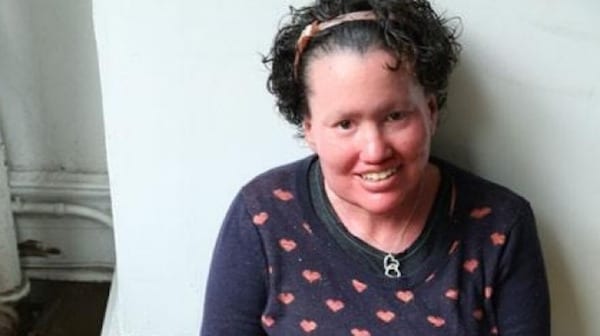
“Six years ago a lady threw me out of her store because she thought that my face would ruin her clothes.”
Many activists can pinpoint a seminal moment that drove them to stand up and advocate for what they believe in, and for Carly Findlay this was the moment that kickstarted her leadership journey.
“That was probably the first time I stood up as an activist. I wrote about it, and tried to take it to the Human Rights Commission. The online community really got behind me, and it made me realise how powerful my blog is.”
Findlay has been blogging for nearly seven years – originally spurred by the desire to influence the manner in which the media portrays Icythyosis (ick-thee-o-ses), a genetic skin condition that she was born with.
While Findlay is modest about her role as a leader, it is undeniable that her work as an appearance activist has driven change for countless others.
Like many contemporary activists, the internet has allowed Findlay to reach out to people from all over the world.
“I started using the internet in the library at school when I couldn’t do sport. This was before I even thought that my condition was a big part of my life – it was an annoying part of my life, but it was before I identified as being proud or having a disability. I remember my librarian – she came up to me quietly one day, and said ‘you should do some research on ichthyosis online,’ so I did.”
Her award-winning blog has continued to be a source of humour, support, and information for others.
“A lot of people get in contact with me through my blog or through Facebook about life with ichthyosis – it might be a new parent, a teenager who felt alone until they read my stuff, or someone in their fifties that has never realised that there is anyone else out there with the condition.”
The beauty of online activism means that Findlay can reach people from all over the world.
“There was a case recently where a little boy from Australia experienced discrimination at the races. A mother in Sweden had a similar issue at a hospital with her child – so I put the parents in contact.”
In 2011, Findlay stumbled across the Centre for Appearance Research online. “I really liked what I saw – they helped young people come to terms with looking different, and provided resources on how to deal with questions.”
A month before finishing her Master’s thesis, Findlay was invited by the Centre to speak in England about her experiences and the need for greater diversity in the media.
“Speaking at the Appearance Matters Conference was probably my first realisation that I had the power or means to influence people.”
In addition to her day job, blogging and speaking, a significant part of Findlay’s work has been about connecting people affected by Ichthyosis. Last year, she organised Australia’s first Icythyosis Meet, bringing 70 people together at Melbourne Zoo to share their experiences, learn and support each other in a non-medical setting.
She has also facilitated the popular Icythyosis Awareness Month blog project, giving others the chance to have their voice heard without the sensationalism or pity that often accompanies writing in the mainstream media.
Findlay’s advocacy has also introduced her to the pitfalls of online activism, including trolling and the expectation of free work. “It’s particularly prevalent in the disability community. There’s a lot of “Would you volunteer your time?” or “we’ll pay you in a gift voucher”, or “we won’t pay you at all!”’
After speaking at an International Women’s Day event, Findlay was stunned when it became apparent that organisers had no intention of paying her, particularly as the event was about fair pay! “I spoke out about it, and we got paid after that. But it’s really disappointing.”
The original catalyst for Findlay’s activism – changing the perception of Icythyosis, is still a work in progress. “Every time that I go on Twitter there are people saying ‘Do not Google Icythyosis’.” There is clearly still a way to go, but Findlay isn’t the type to accept the status quo.
Carly’s blog can be found at carlyfindlay.blogspot.com To hear more from Carly, and to learn from a line-up of inspiring women leaders, register to attend the She Leads Conference on 17 May at QT Canberra here.