
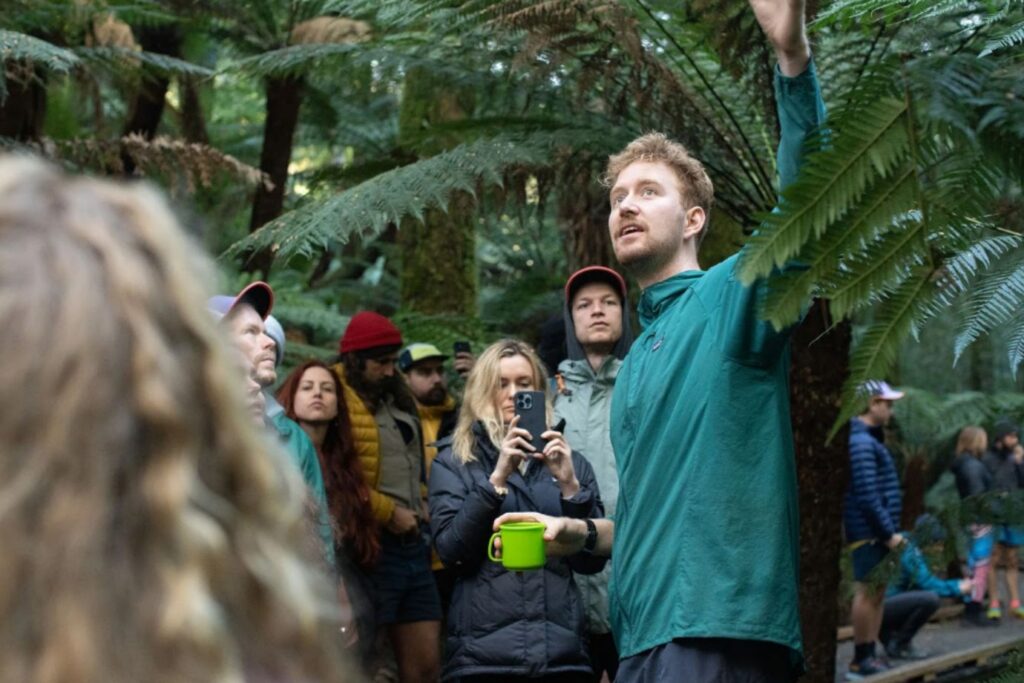
Sarah Rees has spent more than 20 years defending the Central Highlands’ Mountain Ash forests. She’s seen the water change, the trucks roll through, and a private investigator on her family. Here’s why she says Victoria’s $1.5 billion ‘transition’ demands a Royal Commission.
When ABC’s Four Corners aired ‘Timber Turmoil’, a story about the native logging industry, many Australians were shocked by what they saw: billions in public subsidies, murky financial arrangements, environmental destruction, and an industry kept alive long after its economic case had collapsed. But for a small few of us, there was no shock. Only a familiar ache.
I have spent more than two decades fighting for Victoria’s native forests, particularly the Central Highlands’ Mountain Ash forests – one of the most carbon-dense forest systems on Earth and the treed catchments that supply Melbourne’s drinking water. These forests are critical civic infrastructure; the source of Melbourne’s drinking water, climate resilience, biodiversity, public health and economic opportunity.
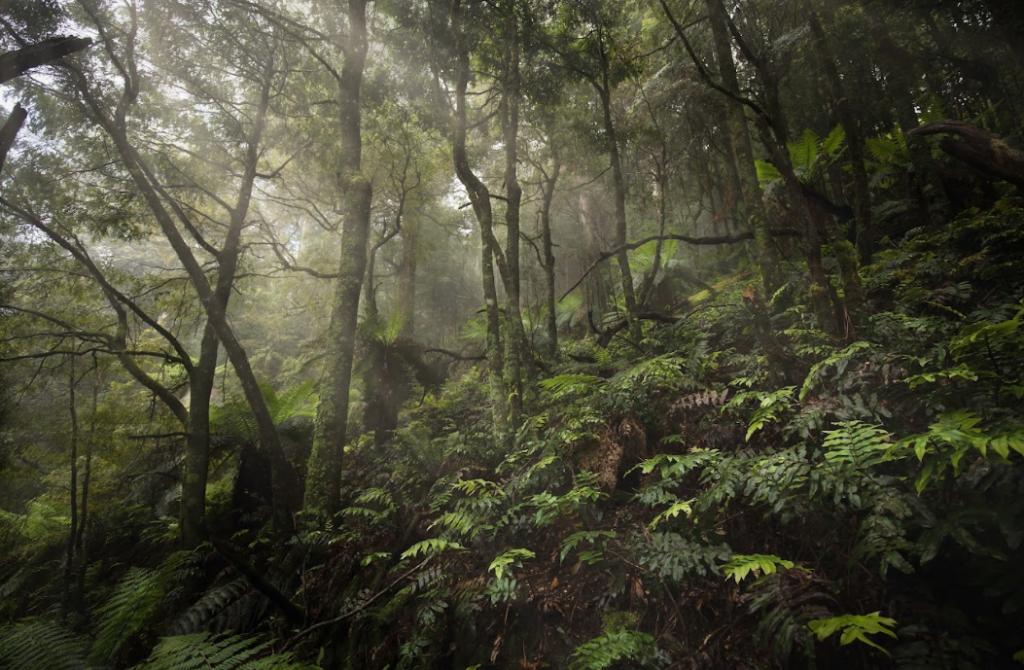
My interest in this fight began somewhere far less sophisticated than a campaign office or policy meeting. Over a decade ago, I was volunteering at my children’s kindergarten, when one day, I noticed the drinking water had changed. Marysville’s water, which had once tasted mountain-fresh and alive, suddenly reeked of chlorine. Something upstream must have changed, I thought. That moment changed my life.
There’s a saying: the standard you walk past is the standard you accept. I couldn’t pour that water for the children when I would not drink it myself.
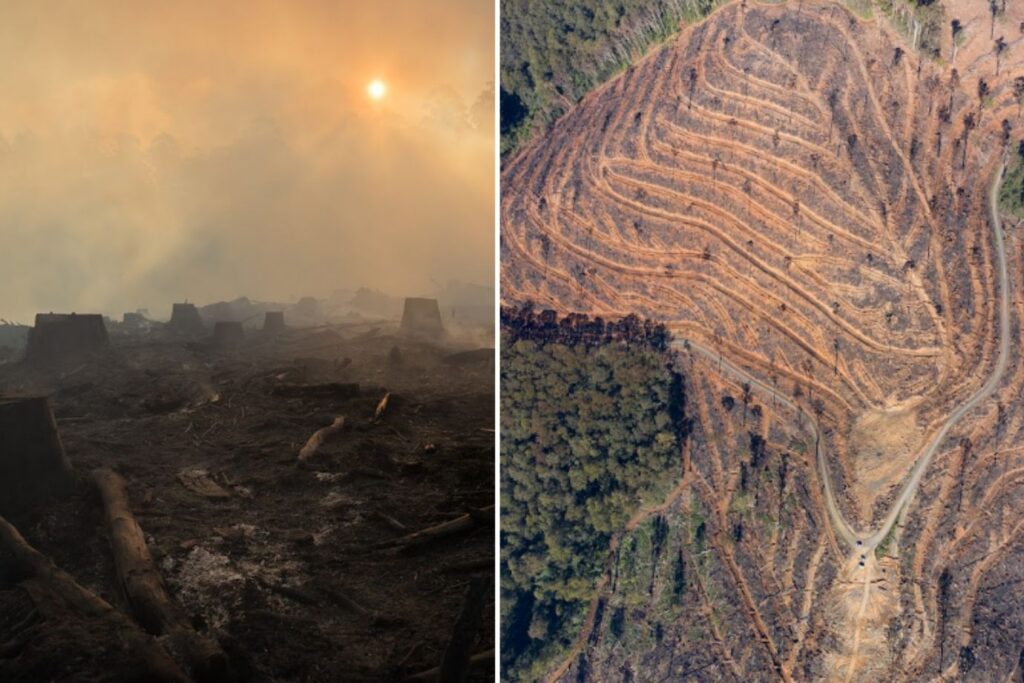
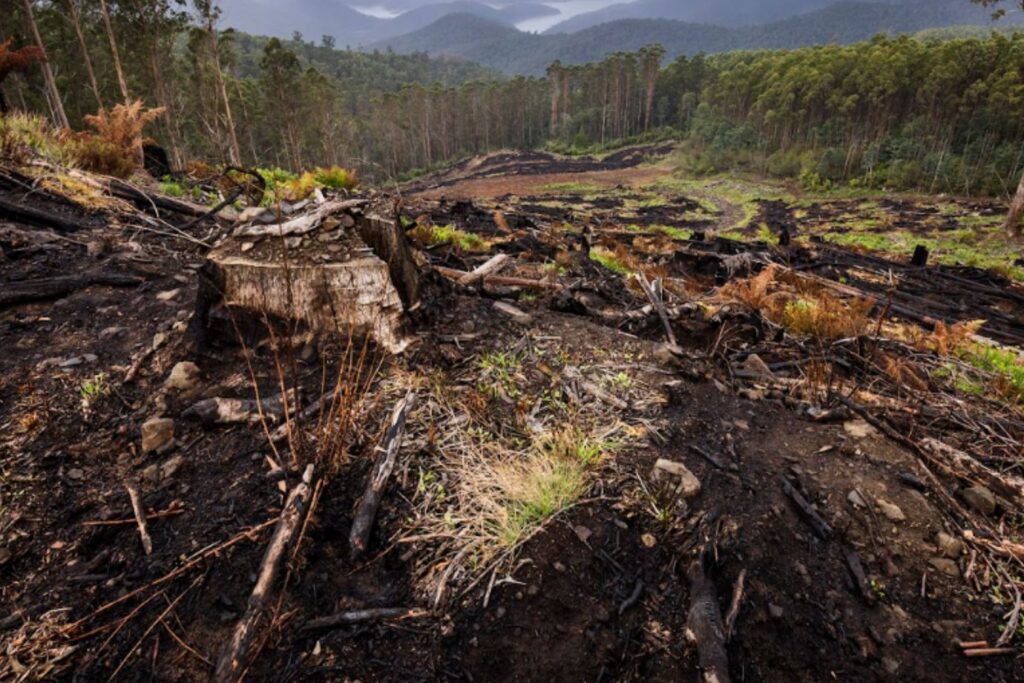
Walking through the catchments of Marysville, logging coupes opened where standing forest had been. B-double trucks loaded with trees rolled through our sleepy town, engine brakes shaking sculptures in the little gallery I ran. The truth came into focus: this was why the water was changing. As the forest was torn open, exposed soil bled into the streams that fed our town.
The more I studied water catchment hydrology, ecosystem health and native forest logging, the clearer it became that what happens in our forests ends up in our homes, our bodies and our children. And the economics just didn’t add up. Living ecosystems that had stood for over a century, storing water and carbon, were being turned into Reflex copy paper with a shelf life of merely months.
Targeting, ridicule and unlawful surveillance.
Taking up the fight through blockades, national media and town hall meetings – in a timber town built on the opposite ambition – was not without danger. I learned about political systems, conservation policy and forestry law between family life and running my creative business. The more I learned, the less confidence I had in the government’s stewardship of this extraordinary ecological infrastructure.
As a country woman challenging deeply entrenched interests, I quickly learned that disagreement rarely stays at surface level. It becomes personal – targeting, ridicule, intimidation, the slow erosion of confidence. The pressure is relentless, designed not so much to defeat your argument but to exhaust you into silence.
Unlawful surveillance of my family and I occurred. Private investigators were hired by the government’s forestry agency, VicForests, to monitor advocates challenging powerful interests. A former military operative was engaged to track my movements between events, my office and my home. Despite official confirmation this occurred, there has been no apology from either the Andrews or Allan governments. I was advised by IBAC that the matter would be treated as a public disclosure complaint, granting me protection from costs should I pursue it further.
The economics tell the truth.
For decades, we have been sold a false choice: jobs or forests. It is nonsense. The economics tell a story politicians have ignored for too long. Ecosystem accounting for Victoria’s Central Highlands found that water supply, tourism and carbon storage generated far greater economic value than native forest logging ever did. Tourism alone supported around 3,500 jobs in my region, compared with just 430 to 660 jobs linked to native forest logging, many of them insecure. More than 87%of timber taken from these forests was chipped for pulp and paper, not used in high-value building products. The science was clear: protecting forests created more value than cutting them down.
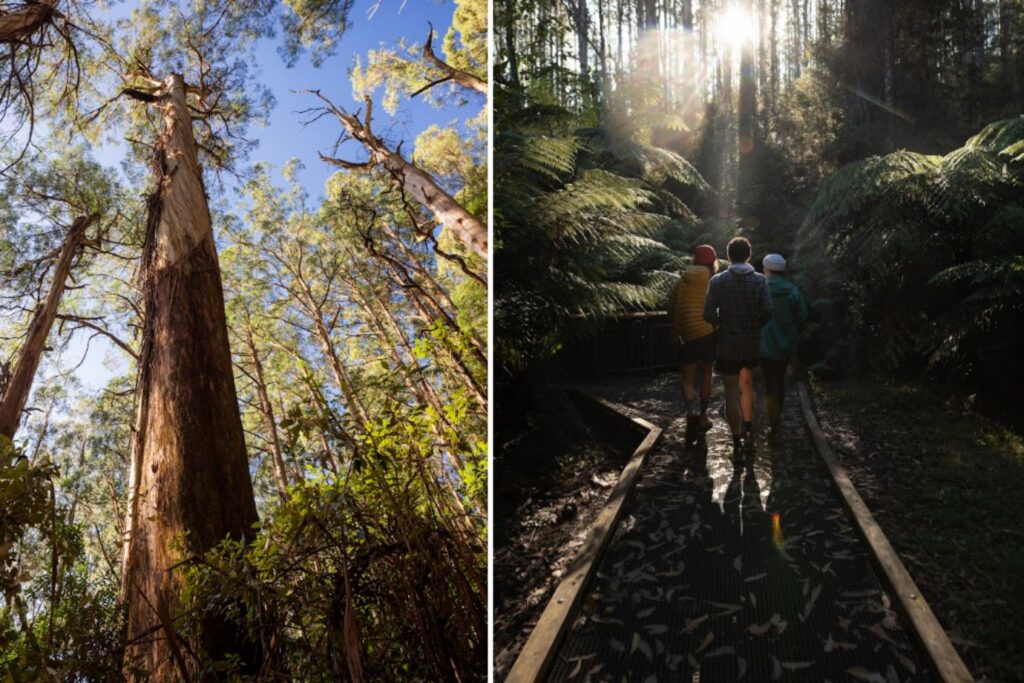
Over time, a groundswell emerged. Communities mobilised. Traditional Owners, scientists, economists and families pushed back. Even global brands such as Patagonia helped carry the message, applying commercial pressure where politics had stalled. Eventually, the Andrews government ended native forest logging in Victoria. Or so we were told.

A Royal Commission is needed now.
Victoria has now spent approximately $1.5 billion transitioning out of native forest logging, including substantial public payments to mills. Yet Four Corners revealed native logs are still being imported from Tasmania into Victorian processing facilities, aided by freight subsidies and opaque commercial arrangements. Taxpayers have effectively paid to stop logging here while subsidising destruction elsewhere. That isn’t transition – it’s displacement.
The absurdity is that Australia already has plantation resources capable of supplying most of our wood and fibre needs, yet much of that output is exported rather than directed towards domestic transition. This is both a policy and market failure.
The Victorian Auditor-General’s Office has made clear that the government cannot reliably demonstrate whether its forestry transition spending achieved what it intended. Australians deserve to know where their billions went. Did it genuinely support transition, or become a public slush fund that allowed some processors to maintain dependence on native forests in other states?
That is why we need a Royal Commission – not another narrow review, but a genuine inquiry with the power to follow every dollar through government agencies, processors, freight subsidies and political influence.
Four Corners pulled back the curtain. What it revealed was not simply industry failure, but a failure of governance and imagination. Australia now has a choice: keep subsidising decline, or invest in something better.
What does better look like?
The Great Forest Bond is one example. Linked to the proposed Great Forest National Park, it is a world-first sustainability bond to the tune of $230 million. Developed with one of the country’s senior bond designers, it channels investment into forest repair, biodiversity recovery, tourism infrastructure, water security and fire resilience, while creating durable jobs in restoration, park management, science, education, and nature-based tourism. Noteably, these are industries with far greater participation from women and young people (with women making up only around 15% of the native forestry workforce). And, investment in restoration, tourism, education and park management can create up to two jobs for every one displaced.
The real question is this: what kind of economy do we want? One built on extracting and degrading public assets, or one built on restoration, care and long-term prosperity?
Forests remember what governments try to forget. The question is whether we are finally prepared to listen.