
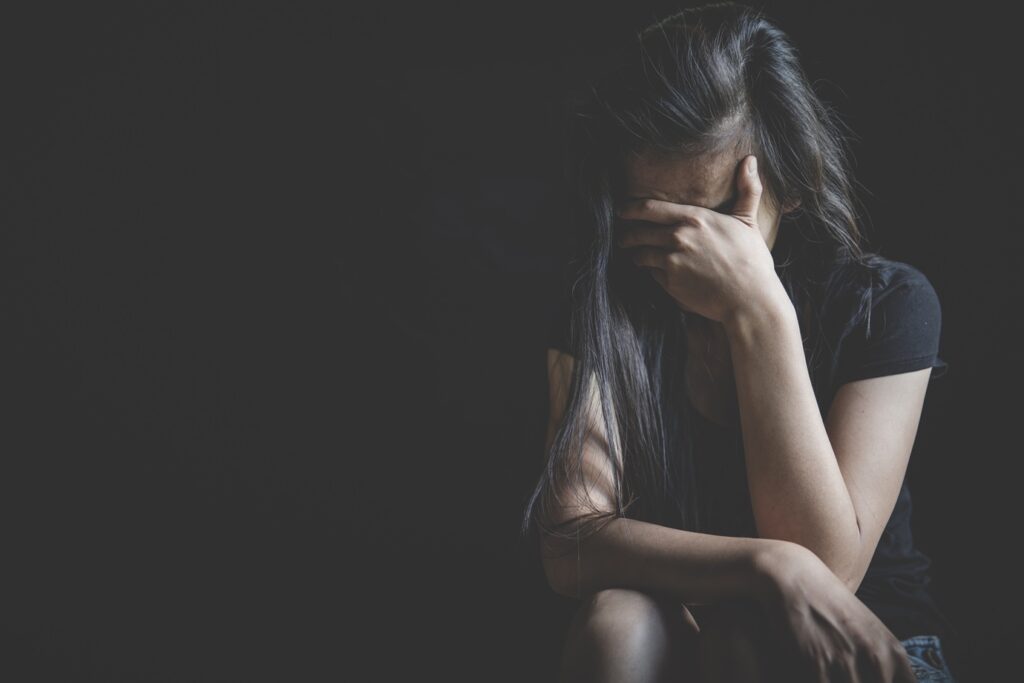
At 43 years old, I work full time, raise children, pay taxes and continue showing up professionally every day. I lead teams, attend meetings, answer emails and try to build a future after catastrophic injuries permanently changed my body and my life.
Apparently, this is also considered compelling evidence that I am coping well. The reality is slightly different.
I now live with chronic pain, nerve damage, significant mobility impairment and permanent physical disability. Every specialist involved in my care agrees my injuries are lifelong and that I require ongoing support to continue functioning, parenting and working.
And yet, somehow, I exist in a strange gap inside the Australian system: Too disabled to function without support. Not disabled enough to receive it.
I have spent the last two years learning there is very little space in our systems for women like me. Women who are still trying to work, to parent, to contribute. They’re still trying to hold onto some version of the life they had before trauma rearranged everything.
What people do not see is the cost of remaining “functional.”
Women become extraordinarily skilled at appearing fine while quietly falling apart.
We answer emails from waiting rooms, attend meetings after medical appointments, organise school lunches while trying not to cry from nerve pain and apologise for being difficult while advocating for the most basic care.
And then systems look at us and think: “Well, she’s still functioning” rather than “she seems slightly unhinged, exhausted and on the verge of collapse… but technically still functioning.”
Because functioning and suffering can very much exist together.
Yesterday, I attended hospital in severe pain with a referral from my GP recommending assessment and support. I arrived already feeling defeated. Nobody wants to be the woman crying in an Emergency Department trying to explain pain that cannot be neatly seen on a scan.
What stayed with me most from that experience was not just my own treatment, it was what I watched happen around me.

Beside me sat two men. One was being treated for a possible kidney stone. Another required a catheter. Throughout the day, I watched both move through the system with constant care, reassurance and active clinical support.
Nurses checked on them regularly, staff reassured them they were doing well, pain relief was offered and adjusted and plans were explained clearly. There was warmth, attention and ongoing engagement.
And genuinely, I am glad they received that care. Everyone deserves that level of compassion when they are vulnerable and in pain.
But sitting there, I could not ignore the contrast. I arrived with catastrophic orthopaedic injuries in my history, chronic nerve pain, significant disability, escalating symptoms and a GP referral specifically recommending hospital assessment. I explained that my pain had become increasingly difficult to manage, that my mobility was deteriorating and that I was struggling to cope.
And yet by the end of the day, the message I received felt painfully simple:
Your X-rays look fine.
The acute specialist teams only see admitted patients.
Here are ten Endone.
See you later.
No plan, no pathway and no meaningful discussion about what happens next for someone trying to survive chronic pain while continuing to work and raise children. No addressing of my fear.
I am scared about what happens when pain stops being manageable, scared about how long I can continue functioning like this and scared that one day my body will simply stop cooperating altogether, and by then I will have pushed myself too far trying to prove I was still capable.
I left feeling less like a patient needing care and more like a problem needing to move on. The hardest part is not always the injury itself, sometimes it is the repeated humiliation of having to prove your suffering over and over again.
The endless forms, assessments, reports, explaining, evidence gathering. The strange experience of reducing your entire life into documentation that proves you are struggling “enough.”
I have spent over a year navigating the NDIS and related systems while specialists across orthopaedics, neurology, rehabilitation and general practice all confirm the same reality: my impairments are permanent, my function is impacted, and support is required.
And still, the burden remains on me to convince the system I deserve help. There is something profoundly dehumanising about trying to stay independent while simultaneously needing to repeatedly prove you are not coping.
The irony is that support is exactly what would allow people like me to continue contributing. I do not want to stop working. I do not want to become fully dependent. I do not want to give up my career or my future.
I want enough support to continue participating in society without destroying myself in the process. But our systems seem built around extremes. Either you are completely incapacitated, or you are expected to cope alone.
There is very little understanding of the middle ground: The people using every ounce of energy to remain productive while their bodies continue failing underneath them. And many of those people are women. Women navigating separation, parenting, cost of living, caregiving, perimenopause, careers, trauma and physical decline.
Women who become disabled in the middle of life, not at the beginning or the end. Women who continue showing up because financially, emotionally and socially, stopping is simply not an option.
What is the actual expectation for people like us?
That we stop working completely before we deserve support?
That we lose our jobs, our homes or our independence first?
That we collapse publicly enough to finally meet some invisible threshold of legitimacy?
Because from where I sit, the current system seems to reward deterioration more than prevention.
If you can still drag yourself to work, still answer emails, still sit upright in meetings while silently calculating how much pain medication you can safely take and still sound coherent, then apparently you are considered manageable.
And the truth is, many of us become very good at managing ourselves right up until the point we break.
There is also a particular kind of grief that comes with becoming disabled in the middle of your life.
You remember who you were before. You remember moving through the world without planning every step, every staircase, every carpark, every chair, every outing, every workday and every recovery period afterwards. You remember what it felt like to trust your own body.
And then one day you become someone who celebrates things other people never even think about like getting through a supermarket or making it through a work day.
And somehow, while carrying all of this, you are still expected to become an expert administrator of your own suffering. Even when all you want to do is scream for help.
And through all of this, there is something else I need to say.
I would not still be here without the women in my life.
The women who sat beside hospital beds, who advocated for me when I was too exhausted, medicated or overwhelmed to advocate for myself. Who challenged doctors when something did not feel right. Who helped me understand medical language while I was still trying to process trauma and shock.
The women who answered late-night phone calls from Emergency Departments while I cried in pain and panic, the women who pulled me back from the edge when I genuinely did not know how much more I could carry, the women who reminded me that being overwhelmed did not make me weak, the women who kept showing up, over and over again, even when I had very little left to give back.
To my sister, my friends, my mentors, the women leaders around me.
Thank you.
Thank you for holding me together while I tried to keep functioning. Thank you for helping me survive systems that often felt cold, dismissive and impossible to navigate alone. Thank you for seeing me as a whole person when I had started to feel reduced to medical reports, assessments and evidence documents.
There is a quiet army of women carrying each other through this country every single day. Our systems rely on this labour more than they acknowledge.
And while I am deeply grateful for every woman who has helped carry me these past two years, I also know this: Care should not depend entirely on whether a woman is lucky enough to have other women around her willing to catch her when the system does not.
Because right now, it feels like the reward for continuing to work through disability is simply becoming invisible to the very systems you are helping fund.
I am still here. Still working. Still contributing.
But I should not have to break myself to prove I deserve care. This is not sustainable.
And it is not humane.