
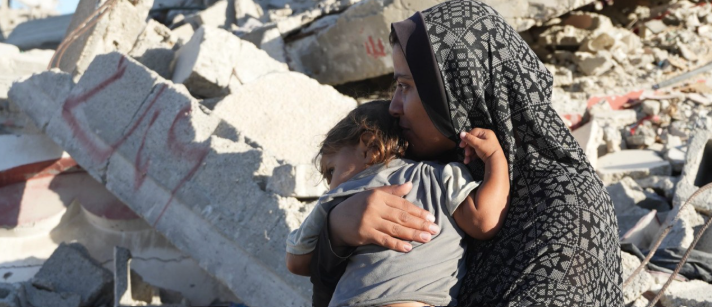
More than one in 10 women with infants in Gaza suffer from difficulties with breastfeeding, a recent UN report has found.
Ongoing military activities, food insecurity and poor living conditions are debilitating mothers.
Those in northern Gaza are especially at risk with high rates of malnutrition detected among pregnant and breastfeeding women.
Non-profit Save the Children says some mothers are resorting to feeding their children water mixed with ground chickpeas or tahini.
Some are even forced to stop breastfeeding early on.
Save the Children’s Regional Director for the Middle East Ahmad Alhendawi is urging Israeli authorities to fully open additional crossings into Gaza and to lift restrictions on the delivery of humanitarian aid and commercial goods.
“More than 10 months after the ‘ceasefire’ agreement, no mother should be struggling to feed her child because food, essential services and the support families need to survive remain out of reach,” says Alhendawi.
“Pregnant and breastfeeding women must have access to nutritious and diverse food, quality healthcare, clean water and sanitation, alongside the specialised nutrition support they need.
“At the same time, Member States and donors must urgently increase and sustain funding for humanitarian operations in Gaza to ensure lifesaving nutrition, health and breastfeeding support can reach every mother and child who needs it.”
There are active programs offering women in the region skilled breastfeeding counselling and practical support but access to trainers is severely limited.
Humanitarian organisations are also struggling to deliver lifesaving nutrition, maternal healthcare and cash assistance due to chronic funding shortfalls.
Marwa, a 30-year-old mother of five, says non-profits like Save the Children have provided critical access to support that she wouldn’t otherwise be able to afford.
“There are people who can buy this necessary stuff for infants but my financial situation is difficult,” she says.
“I used to combine breastfeeding with formula feeding for my children but now with the guidance of Save the Children, I am exclusively breastfeeding my three-month-old infant.
“Save the Children has provided me with nutritional supplements every two weeks to support me in continuing to breastfeed my child.”
Infants who are not breastfed in emergency situations like Gaza are at greater risk of illness, dehydration, malnutrition and death.
Mervat is a Gaza Health and Nutrition Technical Advisor for Save the Children.
“Breast milk is an infant’s food security,” she says.
“It provides safe nutrition, immune protection and a reliable source of nourishment when access to food, clean water, health care and essential supplies is disrupted.
“Breastfeeding is one of the most important life-saving interventions for infants in these contexts but mothers cannot overcome the barriers created by displacement and humanitarian crises alone.
“They need timely, skilled breastfeeding support to protect their own health and to give their infants the best possible chance of survival.
“Protecting and supporting breastfeeding can mean the difference between life and death for the youngest and most vulnerable children.”