
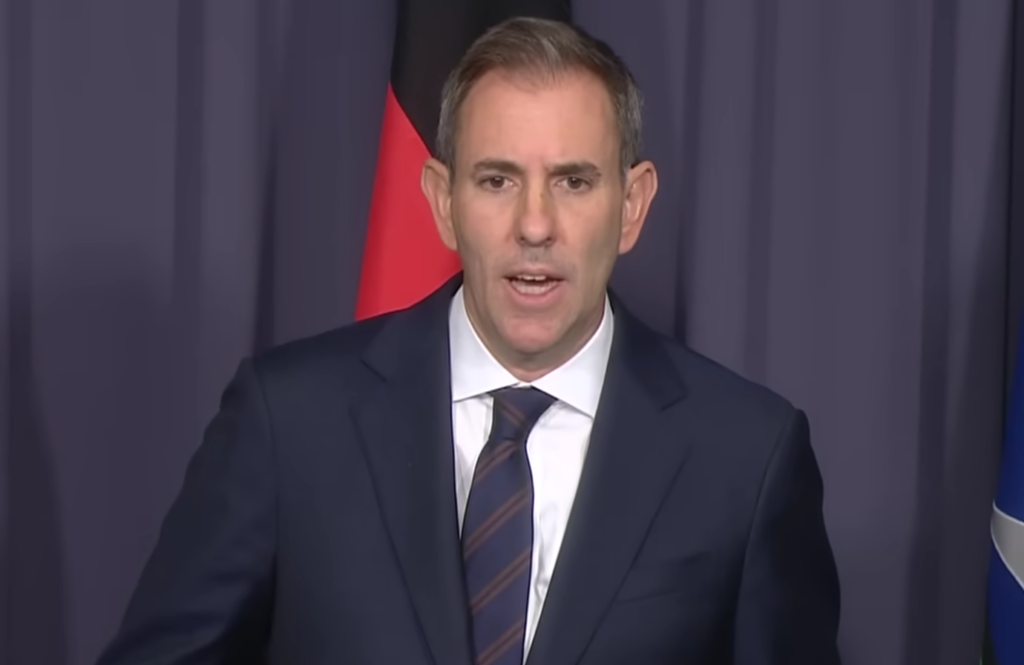
Leading advocacy groups are ramping up pressure on the federal government ahead of the budget, calling on Treasurer Jim Chalmers to scrap negative gearing and the capital gains tax discount for property investors.
In a joint statement signed by organisations including Everybody’s Home, Better Renting and the Antipoverty Centre, advocates have said the government cannot meaningfully address housing affordability while continuing to provide an estimated $20 billion a year in tax breaks to property investors through negative gearing and the capital gains tax discount.
They have urged Chalmers to scrap both policies entirely, and use the billions of dollars in savings to fund more public housing.
The call comes as several media reports this week indicate the government is considering scrapping the 50 per cent capital gains tax discount for property investors and returning to the pre-1999 inflation indexation method.
“We all know Australia is in a housing crisis. Rents are unaffordable. Homelessness is rising. Public housing waitlists stretch decades,” the statement from the advocacy groups reads.
“And every year, the federal government hands $20 billion in tax breaks to property investors through negative gearing and the capital gains tax discount at the direct expense of the people who need housing most.
“As global economic uncertainty stretches so many of us well past breaking point, the case for tax reform has never been stronger or more urgent.”
The groups who signed the letter include House You, Everybody’s Home, Antipoverty Centre, Better Renting, Think Forward, Foundation for Young Australians and Tomorrow Movement.
The groups say they “reject half-measures” like reducing the capital gains tax discount, or limiting negative gearing to one or two investment properties, saying they “maintain handouts” to the wealthy few.
“Our organisations represent renters, those in poverty, people forced into homelessness and housing precarity, young people, communities locked out of secure housing and everybody who believes we all deserve a safe, secure, accessible place to live,” the statement says.
“We are united: the only reform equal to the scale of the crisis is to urgently end handouts for property investors, with the tax revenue directed to providing high quality, beautiful public homes.”
The statement from the advocacy groups comes as rising rental prices and low vacancy rates are pushing more renters and low-income earners into poverty.

These pressures are being felt acutely by women across the country.
We know that women are more likely to work in lower-paid, insecure jobs and take more time out of the workforce to care for children and family members. This means women are less able to absorb rent increases.
Single mothers, older women and women and children escaping family and domestic violence are among the most vulnerable.
Earlier this year, analysis revealed the Albanese government is spending more on tax breaks for property investors than on social housing, homelessness services and rent assistance combined.
The Productivity Commission’s Report on Government Services shows around 190,000 households are on the public housing waitlist, while 18.3 per cent of Commonwealth Rent Assistance households are in severe rental stress, paying more than 50 per cent of their income on rent.
The homelessness crisis is also getting worse, with 27.4 per cent of people using homelessness services experiencing persistent homelessness, up from 22 per cent five years ago.
More than 28,000 Australian children sought help from a specialist homelessness service in June 2025, with more than half under the age of 10, according to figures Australian Institute of Health and Welfare data. In 2023-24, 13,300 unaccompanied children accessed specialist homelessness services in Australia. Of these children, 63 per cent were girls.
The federal budget is due to be handed down on May 12.