
As the Liberal Party grapples with its low support among women, young people and multicultural communities, an internal commission has released a discussion paper this week looking at options to renew the party’s membership base and gain electoral support.
Gender quotas have once again been mentioned as a tool to select more women candidates and increase women in the Liberal Party’s parliamentary ranks. It comes as the Coalition trails behind One Nation in most recent major polling and after its historic losses to Labor at the 2022 and 2025 federal elections.
The Liberal Party Commission was established under former Liberal leader Sussan Ley in a bid to uncover how it can win back the hordes of voters it has lost in recent years.
Queensland Senator James McGrath, who chairs the commission, wrote that the core question is how can the Liberal Party make itself a “fit-for-purpose political machine” in the 21st century. The discussion paper notes that by the next federal election, at least one in five voters will have been born after 2000, meaning they have no memory of 9/11, the Howard government’s time in office or a world without smart phones.
The discussion paper acknowledged its parliamentary team (and membership base) did not represent the average Australian, which is broadly defined as a 38-year-old woman. “She’s concerned the Liberals don’t look like her or speak to her aspirations,” the paper says. Meanwhile, just 33 per cent of Liberal parliamentarians across the country are women.
“The problem faced by the Liberal Party in attracting and selecting female candidates in winnable federal electorates has been well documented and debated,”the paper says.
“This is not just a representation issue – it negatively impacts the Party’s ability to win votes.”
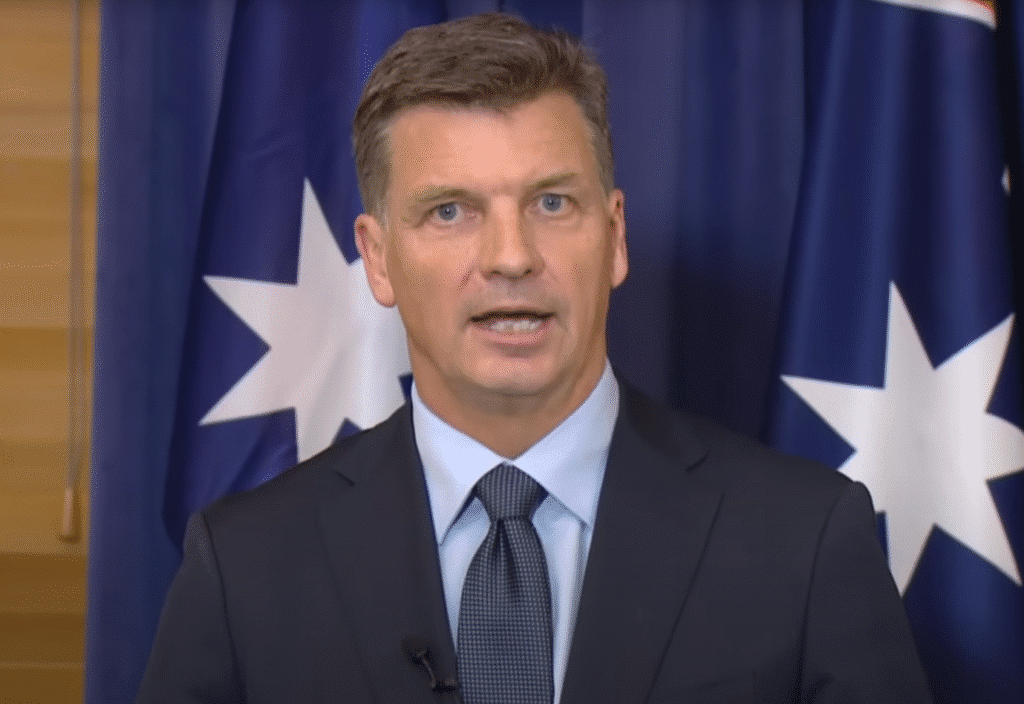
None of this is new. The party’s issues with women have been well-documented for several years and there have been a number of internal pushes to introduce quotas, none of which have ever been successful. Current Liberal Party Leader Angus Taylor has previously said he does not support gender quotas, although he has acknowledged something needs to be done.
The paper offers six options to boost women’s representation, including quotas that require a proportion of winnable seats to be filled with female candidates, or giving bonus weight to female candidates, among a handful of other ideas.
Among young people, the party isn’t seen as a credible option on a number of issues, particularly on housing and climate change. It notes more young people are now renters and are pessimistic about the future of home ownership. The Liberal Party is still seen as resistant to climate action.
“These brand perceptions among youth are now structural. They cannot be dismissed by saying voters will ‘age into’ voting for the party,” the paper said.
So where are women’s political preferences sitting right now?

With a political chasm left wide open by the Coalition, we’ve seen women who may have once voted for them shift elsewhere.
Some women, especially those in major cities, have shifted their support to ‘teal’ independents, others have shifted to Labor, and some have gone to the right, flirting with One Nation as an option.
In April this year, Pauline Hanson actually became the most popular party leader among women voters, ahead of the Prime Minister Anthony Albanese, while One Nation became women’s leading first-preference party. This surging support for One Nation has now turned around, according to more recent polls, with many predicting the party has peaked.
This turnaround came after Hanson’s National Press Club address, where she questioned paid parental leave and then was forced to walk back her comments. She also spoke about getting rid of multiculturalism, defunding the ABC and SBS, her disdain for climate action, and also took aim at pay rises for early childhood educators.
While Hanson’s address may have scared some voters away, analysts predict One Nation will maintain support of about a quarter of the electorate unless the Coalition gets its act together.
Meanwhile, another group of voters disillusioned with the major parties may be looking to a different alternative altogether. Some women might be curious about the newly launched Community Strong Australia party, helmed by former ‘teal’ independents Allegra Spender and Zali Steggall. The pair say the party is designed to bring the community model of representation to a broader segment of voters, and provide some hope in a political landscape that feels increasingly divided. For now, the party is made up of just two people and has a long way to go until it is competitive with the likes of One Nation or the major parties.
Labor remains the most likely party to win the next election according to polling, but it is also clear the government is struggling to cut through with many Australians.
The Liberal Party has spent years commissioning reviews and discussion papers, acknowledging its shortcomings and debating how it can reform. It’s all feeling a little tired.
In this term of parliament, the party has not put forward a credible economic plan, vision or alternative for voters to look to as a real option.
If gender quotas are once again on the table, alongside calls to reconnect with younger and more diverse Australians, the question now is whether the Liberal Party is still capable of reinventing itself before those voters move on for good. Many of them already have.