
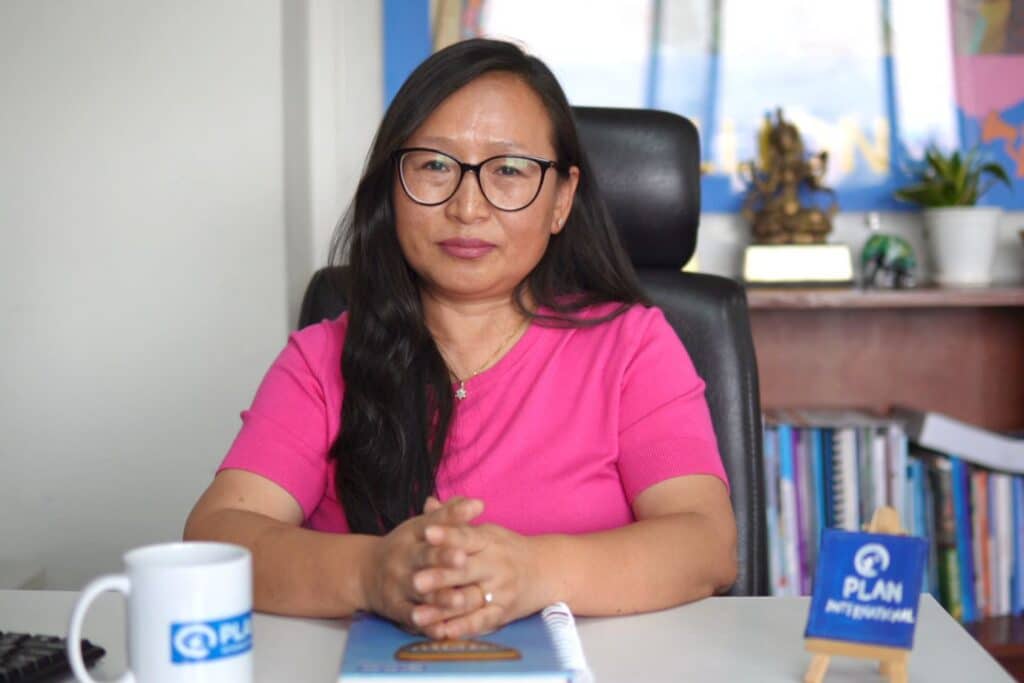
As Australia and the Pacific prepare to co-host Pre-COP next month, Plan International Nepal Acting Country Director Srijana Gurung writes on the losses no country can adapt its way out of, and who should be paying for them – including Australia.
On the morning of 26 August, the water rose in half an hour. It didn’t take long for the messages and shocking photos to begin flooding in to Kathmandu, where I was starting work for the day.
A glacier gave way high in the Himalayas and sent a wall of rock, ice and water down the Bhotekoshi and into the Trishuli valley. Bridges that had stood for decades were gone. Whole markets wiped out. In Nuwakot, one of the districts hit hardest by the tsunami of mud, a colleague described recovering a body from the mud beside him as he spoke to us on the phone. He had spent that morning trying to find out whether his wife had been on the bridge when it collapsed. Families were asking him about children who had left for school and had not come home.
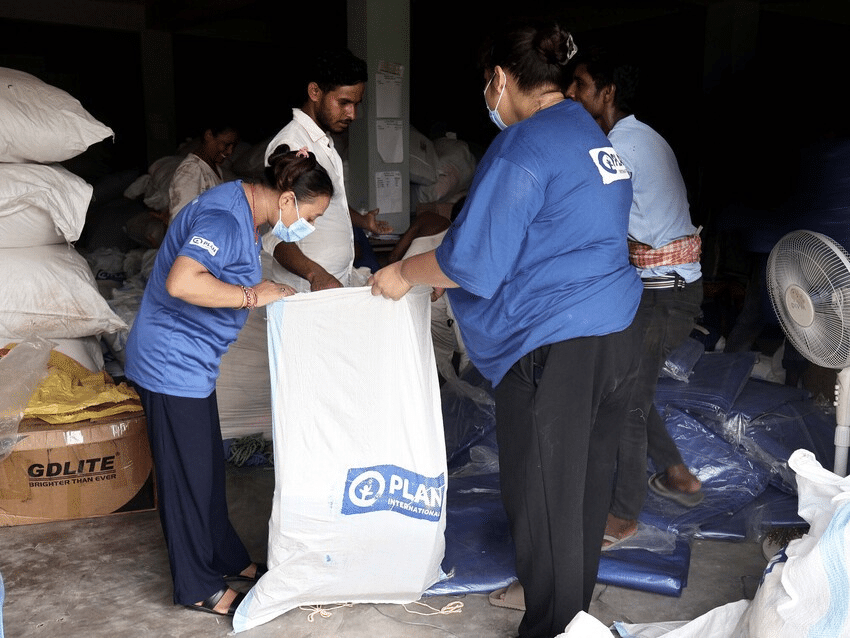
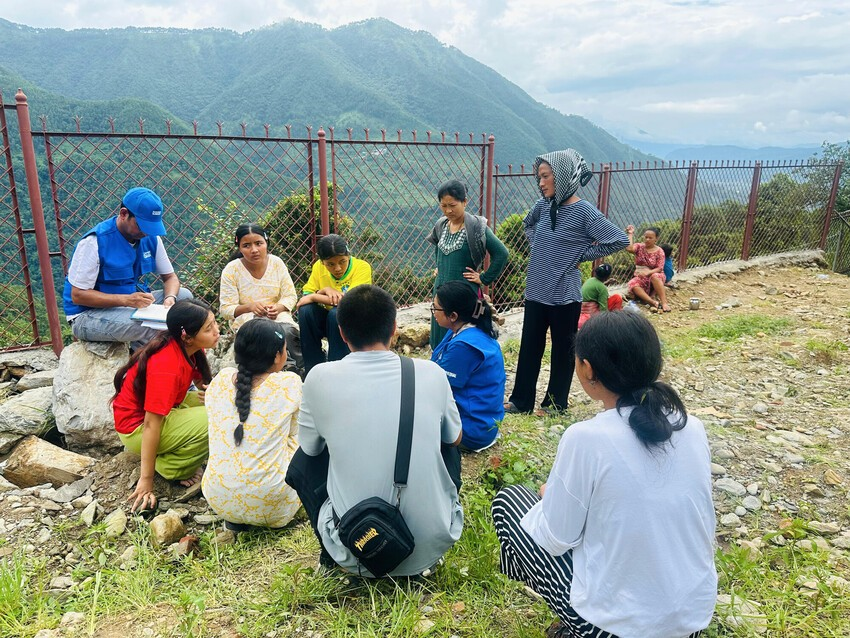
Two days later, I travelled with my emergency response team at Plan International Nepal to join our teams delivering life-saving support to the impacted communities: desperately needed water, tents and mattresses, warm blankets, soap and hygiene products, clothes, generators, ready-to-eat food items like rice and lentils. Generators and solar batteries. The need is staggering.
When we reached a town called Bidur in Nuwakot, my heart shattered. The first thing that hits you is the sound: the constant whirl of helicopters kicking up dirt as they take off and land on search-and-rescue missions. Then you are hit by the strong, acrid smell of bodies and debris. Then you see it all: outside the rescue hub, lines and lines of desperate families search for survivors, waiting in suspense every time a rescue helicopter returns, caught between hope and fear for their loved ones. Some received the news they were hoping for, but too many are still waiting, facing the heartbreaking uncertainty of not knowing. Entire villages flattened under a sea of mud and rubble. Survivors starting to sift through whatever remained of the places they once called home.
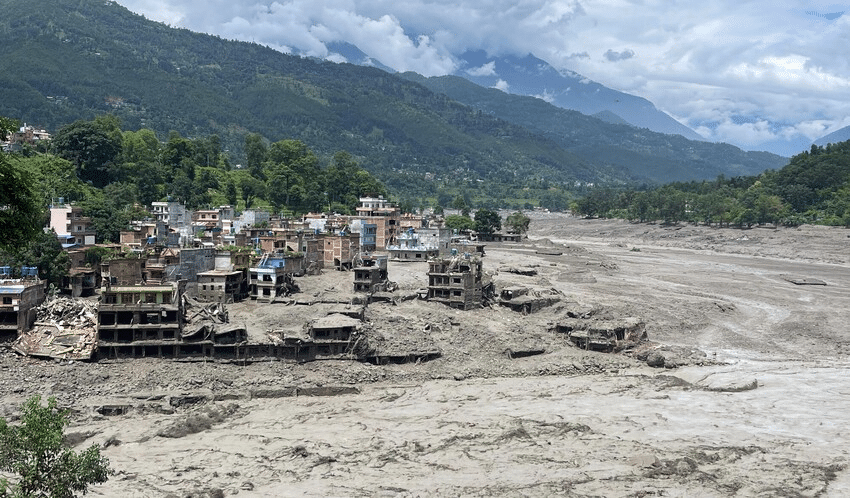
More than 1,300 people are now confirmed dead. Thousands are still missing. UNICEF estimates that more than 22,000 children have been affected, including 9,350 girls. Dozens of schools are damaged or destroyed, and each was a place where a child was safe for six hours a day. Many children are separated from their families and some may never see their families again. For girls and young women navigating crowded holding centres alone, this places them at significant risk of exploitation, trafficking and violence.
The recovery from this disaster will be long, and we know families will be facing an extraordinary loss to livelihoods, poverty, and health impacts. Children face long periods of time out of school. And when that happens, we often see families making impossible choices to survive: sending their children out to work, or marrying their young daughters off. When a school closes after a disaster, the single most effective barrier to child marriage is removed. Approximately one in three young women in Nepal were married before the age of 18.
For humanitarian organisations, responding to a disaster of this magnitude in extremely difficult terrain is an operational test. With ground access cut off and communications down, standard response playbooks quickly fall apart. Leading a humanitarian response in your home country also carries a heavy emotional weight, it stops being “someone else’s crisis” and becomes deeply personal and urgent.
Plan International Nepal has been on the ground since day one, working in Rasuwa, Nuwakot, and Dhading to provide shelter, food, clean water, and sanitation. Australia has shown incredible generosity, with the Government and the public already donating more than $16 million to the response through the Emergency Action Alliance. This is incredible, and it truly lifts our spirits in such a dark time. But I want to be honest about something. The response cannot stop at relief, and relief is the only part of this that any government is currently funding.
Investigations into the exact trigger of this flood continue, and I will not pre-empt them. But anyone living here will tell you that floods and landslides are arriving more often and hitting harder than they used to, and the science behind that trend is not in dispute. Hindu Kush Himalayan glaciers disappeared 65 per cent faster in 2011 to 2020 than in the previous decade. Glacial lake outburst floods are projected to triple by the end of this century. This is not a freak event. It is the beginning of a pattern. Last week, UNEP delivered a stark warning: the world is soon to cross the 1.5°C threshold.
Nepal has contributed around 0.01 per cent of the world’s historical carbon emissions but we are bearing the heaviest brunt of a crisis we did not create.
There is a term for what is happening here, and governments agreed to it three years ago. Loss and damage. Adaptation matters enormously: early warning systems save lives, and one headteacher in Nuwakot received a warning and got 900 children up a hillside ten minutes before the water arrived. But there is a point at which adaptation cannot prevent the loss. When a bridge has vanished. When a family’s land is under a metre and a half of silt and mud. When a child has lost a year of school. When a girl is then married off at 14, and goes on to have a baby when she is still a child herself. A life forever altered. That is not a risk to be managed. It is a harm already done, and a cost somebody has to carry.
A fund now exists for exactly this, the Fund for Responding to Loss and Damage. Its first funding round was overwhelmed. Countries requested around 2.8 billion dollars. There was 250 million available. Governments have pledged a little over 800 million in total, and a bit more than half of that has actually been paid in. Set against need measured in hundreds of billions a year, this is not serious finance. It is a gesture.
Nepal’s finance minister has estimated rebuilding could cost as much as five billion dollars, up to a tenth of its economy. International pledges so far stand at a fraction of that. Nepal has now turned to the Fund for Responding to Loss and Damage, asking the world’s new climate fund to prove it can deliver when catastrophic loss and damage strikes.
I do not think most people understand how simple the ask is. Not the money, which is substantial. The ask itself. Fill a fund that already exists. Pay for the schools in Rasuwa and Nuwakot that will need rebuilding. Pay for the counsellors who will sit with children who watched their villages disappear. Pay it as grants, not loans, because no country should borrow with interest to repair damage it did not cause. And stop burning the coal and gas that produce more of it.
In November, Türkiye hosts COP31, with Australia serving as President of Negotiations. And in just a few weeks, leaders and decision-makers will descend on Fiji and Tuvalu for the Pre-COP climate events – which Australia is supporting logistically and operationally – that help countries build consensus ahead of the main negotiations in Turkiye. Delegates will not lack for information. They have the satellite images. They know what this climate disaster costs a country like Nepal, and they know what the next one will cost, whether it’s in the Solomon Islands, Somalia or Syria.
In Nuwakot I visited a holding centre where more than half of survivors were girls without any guardians. Children on their own, faced with the terrifying uncertainty of whether they would ever see their families again, when they would have a home, or when they might be able to resume their education. They did nothing to bring this about this climate disaster. They should not be the ones paying the bill.