
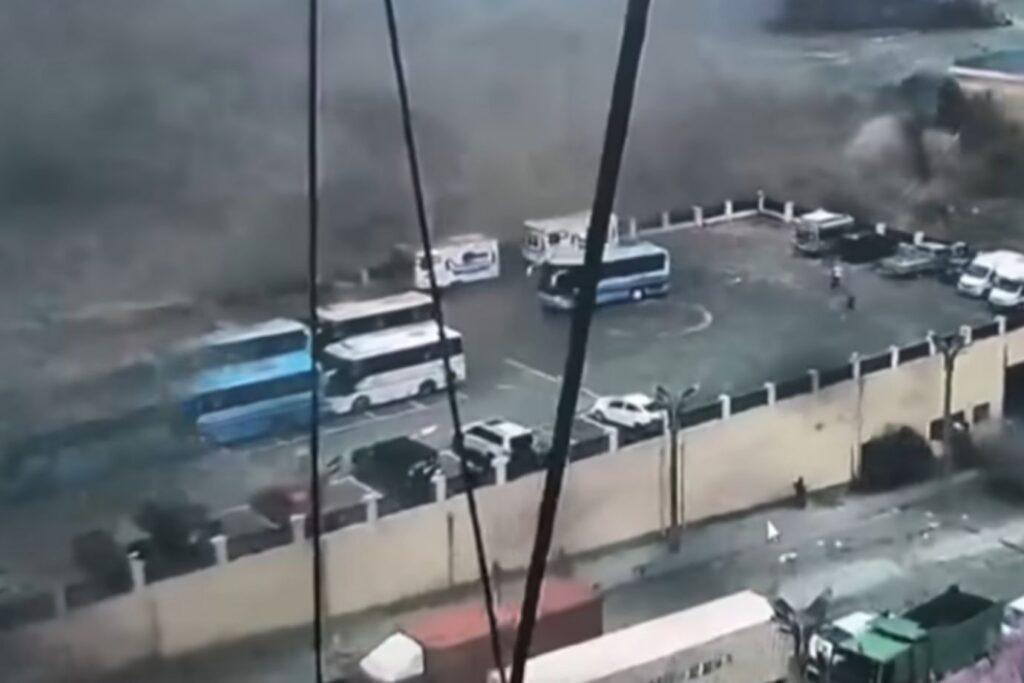
Flash floods and massive landslides on the Nepal-Tibet border this week have caused widespread damage, leaving at least 353 people dead and more than 826 missing.
At least 317,000 people have been affected by the floods, with 40,000 displaced from their homes. These figures are expected to rise as access improves and assessments continue.
On Wednesday, a huge wall of mud and rock collapsed into a river on the Himalayan border, triggering a flash flood that has since destroyed houses, roads, and border crossings.
International citizens were amongst those missing, and foreign minister Penny Wong has confirmed on Friday that at least 39 Australians are still unaccounted for.
Preliminary data suggests that there is more than $1.3 billion USD in infrastructure damage across the country. Vital roadways connecting Nepal to China have also been destroyed, as have many bridges, phone lines, and hydropower projects. Ongoing access constraints and damaged transport routes are also hampering rescue operations and assessments.
The floods have disrupted tourism, transport, agriculture, local trade and cross-border commerce, leaving many families without homes, businesses or sources of income.
According to UNICEF, at least 17,000 children are affected, with 18 schools completely destroyed and 20 others damaged in districts like Rasuwa and Dhading.
Despite days of recovery efforts, the disaster may not be over.
Chinese authorities have warned that an artificial lake formed after the catastrophic flash flood faces a “high risk of breaching and sending flood waters downstream”.
According to state news agency Xinhua, inflows into the lake could reach around 3 million cubic metres over the next three days amid continued rainfall, increasing the risk of a breach that could cause further damage in downstream communities.
Nepal has also warned of new flooding risks, with rising water levels in other parts of the country an ongoing threat.
For communities already devastated by the initial floods, the possibility of another surge leaves little opportunity to stop, recover or return home.
While the crisis has been devastating to thousands of people, the impact of the tragedy will not be equal.
Women and girls will disproportionately struggle in the recovery of the floods due to deeply ingrained patriarchal structures, and heavy workloads.
ActionAid Australia CEO Michelle Higelin believes that women and families will face significant challenges ahead, as they attempt to recover from the destruction.
In a statement, she said “For women who have survived these catastrophic floods, the days and weeks ahead will be incredibly difficult. They may have lost their homes, livelihoods and everything they own, while still carrying the responsibility of caring for children, older family members and others who depend on them.”
For women and girls living in temporary shelters or displacement, the loss of their homes can also mean a loss of safety, privacy and security.
“Children, pregnant women, older people and people with disabilities will also face significant challenges accessing shelter, healthcare and other essential services,” Higelin said.
For women already carrying the responsibility of caring for their families, destruction of community needs can make that burden even heavier. The loss of livelihoods can also leave families with fewer resources as they begin the long process of rebuilding.
ActionAid has been working with local communities and partners in Nepal for more than 40 years, and its team is already responding to the disaster by delivering urgent assistance to women and families at risk.
Local women are at the heart of the response, with ActionAid saying they know their communities best, understand who is most vulnerable and can help make sure no one is left behind.
“Emergency assistance now is critical to helping women and families survive the aftermath and begin to rebuild their lives,” Higelin said.