
It’s gender pay gap data day! The day when the gender pay gaps of more than 10,000 Australian employers go public, and employees, customers and shareholders start asking questions.
Once again, shockingly large gender pay gaps can be seen across many Australian employers, including across brands and services that almost entirely market to women.
But today’s release of data from the Workplace Gender Equality Agency shows some progress in the numbers.
It also shows that transparency can be a powerful motivator for action, as employers seek to address the gender pay gaps they have—or at least to explain what’s going on —and therefore take notice of what’s driving the issue (such as male-heavy leadership).
This is the third year in a row the gender pay gaps have been released, now covering 6 million workers across Australia.
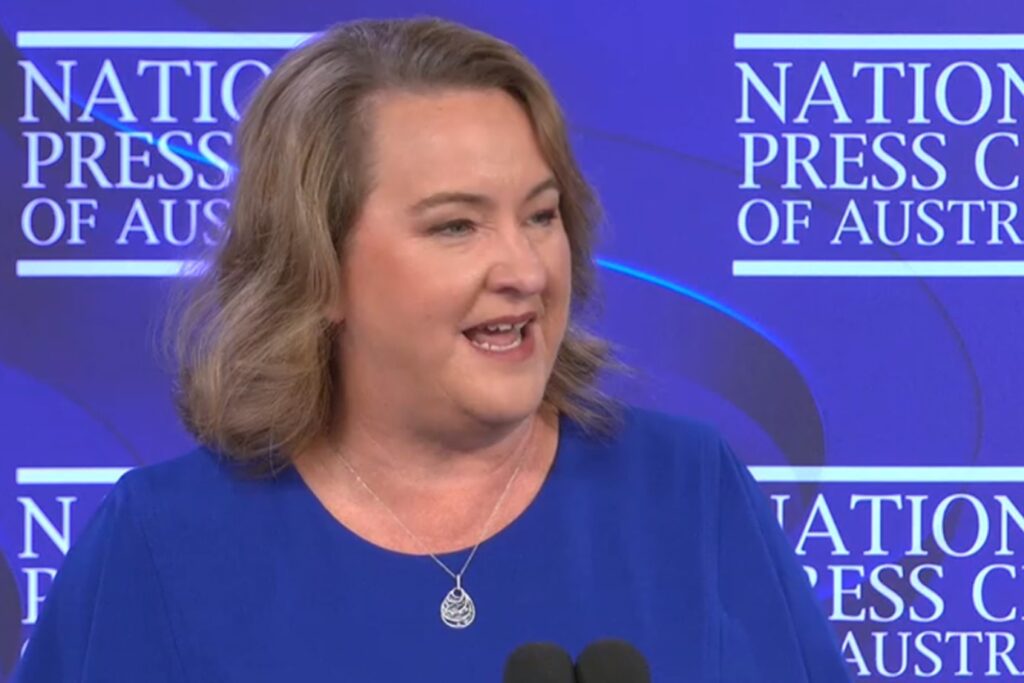
I spoke to the CEO of the Workplace Gender Equality Agency, Mary Wooldridge, who highlighted some of the progress they’ve seen over the past year, including a reduction in the proportion of employers with gender pay gaps, more women in higher-paying roles, and fewer women in lower-paying roles, leading to more balance in how people are remunerated. (The full conversation is on The Women’s Agenda Podcast).
Wooldridge said the improvements being made are being driven by a combination of forces.
Publishing employer pay gaps brings a public spotlight to the issue — to leaders, employers, investors, stakeholders, and customers.
Meanwhile, a requirement that WGEA reports go directly to boards of directors appears to be leading to more conversations at the top, especially with the requirement for companies to publish gender equality targets commencing in April.
Wooldridge believe that conversations occurring in the boardroom are particularly encouraging for the progress we could see in the future.
She said she speaks with HR teams who are reporting greater access to C-suite and board-level conversations on gender pay gaps “in a way that they haven’t had before.” The chairs of large listed companies have also told her the visible data is changing the nature of their discussions.
“Senior directors, chairs of large listed companies, are saying to me, this is making a difference. We’re having conversations at a depth and breadth that we’ve never had before,” she said. “The WGEA reports provide a basis for a broader conversation, and that’s exactly what we were hoping to achieve.”

While Wooldridge believes the motivation to address gender pay gap is more than just about reputation, the public accountability is making a difference.
The data is accessible to anyone, the media, investors, customers and current and future employees who are asking questions about what employers plan on doing about their gender pay gaps.
Meanwhile, over the past year, a Trump-led anti-DEI wave has swept the globe, affecting US-based companies with offices in Australia, as well as Australian companies that have taken the lead in avoiding specific words like “diversity” in their company reports.
With these rollbacks, I worried that momentum could slow on closing gender pay gaps.
But Wooldridge doesn’t believe this has happened in a way that’s impacting the progress.
She said compliance with WGEA reporting has actually increased, with more companies reporting this year than last.
But she notes they’re “perhaps not shouting it from the rooftops in the same way” but “still doing the work”.
Still, significant gaps persist in specific industries.
We’ve covered many of these separately on Women’s Agenda, where, once again, major women’s retail brands like City Chic (68.4%), Forever New (52.2%), Lovisa (52.2%) and Decjuba (48.8%) continue to have some shockingly large gender pay gaps.
There are also large gender pay gaps across financial services, sports clubs and some areas of healthcare.
In areas like imaging, pathology and reproductive services, small numbers of highly paid male specialists sit alongside predominantly female support staff, driving dramatic gender pay gaps.
For example, Sydney Ultrasound for Women has an average total remuneration pay gap of 79.2 per cent. The ‘for women’ in its name isn’t lost on me, nor is the fact that 97 per cent of its workforce is women.
Wooldridge cautions that in some industries, pay gaps may need to worsen before they improve as employers invest in pipelines — recruiting more women at junior levels and building them up through the ranks. “Not every increase in the pay gap is bad if there’s intent behind it about addressing gender inequality over time,” she said.
As well as leaders, employees and customers should keep asking questions about the gender pay gap data they see within organisations they engage with.
Transparency is the start of the process. Next come the questions. And customers, investors, and leaders should be asking as many such questions as the employees directly impacted by these pay gaps.