
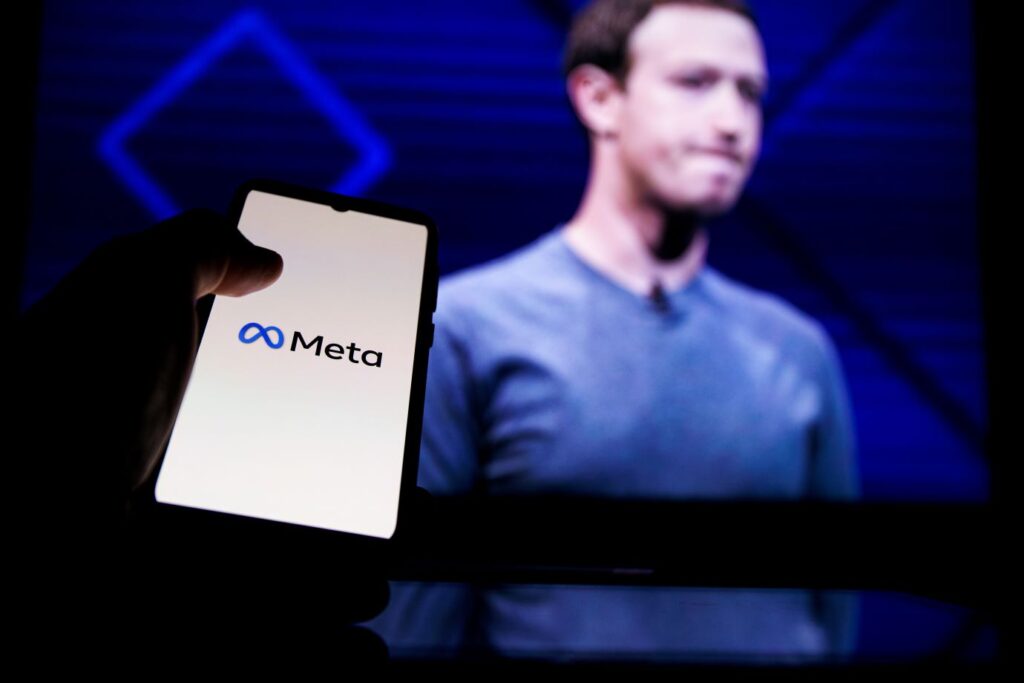
Meta’s latest rollout of new features on Instagram is set to cause even further damage to the privacy of women and girls in Australia and globally.
This week’s rollout of Muse Image offers an AI image-generation model that integrated directly into Instagram, and enables people to generate images from public photos. Just tag a username and Meta AI will use that user’s public photos “to build a visual that’s ready to post”.
It’s creepy, just as it is totally unnecessary.
By default, public accounts are automatically opted into this feature – meaning other people can leverage your content to generate these new AI images. That content might be photos of yourself, or it could be photos of your kids, or even those photos from your local sports team that get shared online to promote and celebrate a great win.
A quick note: to opt out of this feature, hit to the three-line menu on your profile and go to “sharing and reuse“, and on to ‘allow people to reuse your content on Instagram and with AI features on Meta’ – and toggle to the option OFF.
Meta notes in a “help” document on the feature that users simply tag another Instagram account to create posts, reels or stories that reuse “part or all of your published photos, videos or reels”
“In addition, people may be able to create content with your Instagram content using AI features at Meta. Depending on the settings of the other user, this means your reused content may be discoverable in search engine results.”
The feature works by allowing Meta to use the photos from any public profile as visual references for AI to generate a new image incorporating that person’s likeness into the content.
A user will not be notified about content created using these AI features to access their photos and likeness.
Sure, there are plenty of tools readily available that let users manipulate content they find from social media contacts. But it’s the ease, speed and simplicity of doing so that’s concerning here. The suggestion that this is a fun and beneficial thing to do is especially infuriating — as if using another account’s content to create AI-sloppish content will create a better experience for the billions of people on the platform.
Further, if you set your account from public to private, you’ll need to wait 24 hours before the posts and reels manipulating your content will be removed, according to Meta’s own Help materials.
The feature has been described as “another invasion of consumers’ privacy” by J.B Branch, the Public Citizen’s director of federal AI government and technology policy at Public Citizen.

“People should not wake up to discover their face has become raw material for someone else’s AP experiment.
“Instead of asking for meaningful consent, Meta quietly defaults users into the system and buries the opt-out in account settings. It’s a playbook we’ve come to expect from a company with a long history of putting its business interests ahead of the public.”
The Meta update has also seen the Australia-based eSafe Kids issuing a warning to early years services, schools, clubs, organisations and parents, noting that Meta’s updated terms and conditions now allow users with public accounts to have their photos, reels and likeness remixed or used for AI image generation by anyone.
Indeed, there are numerous privacy, cybersecurity and safety experts issuing warnings on Instagram at the moment, urging their followers to turn the feature off.
I’d be happy to be proven wrong, I can’t see how the vast majority of accounts used for AI manipulation won’t be those owned by women and girls. And I can’t see how Meta couldn’t expect that to also be the case.
After all, the evidence says as much. When it comes to the deepfake material online, 98 per cent of it is made up of pornographic videos and 99 per cent of that imagery depicts women and girls. The International AI Safety Report 2026 noted that AI-generated sexual content, including non-consensual intimate imagery, overwhelmingly targets women and girls.
But that’s not all when it comes to Meta’s determination to further rewrite the rules on what we see online — and how it gets there.
It is also testing a prototype of “super sensing” AI glasses that would use cameras and audio recording to capture every movement and interaction of a wearer. It’s an all-seeing, all-hearing device that would continuously collect video and audio every few seconds. Just the kind of thing we don’t need in 2026 but will no doubt be presented as a must-have tool for productivity.