
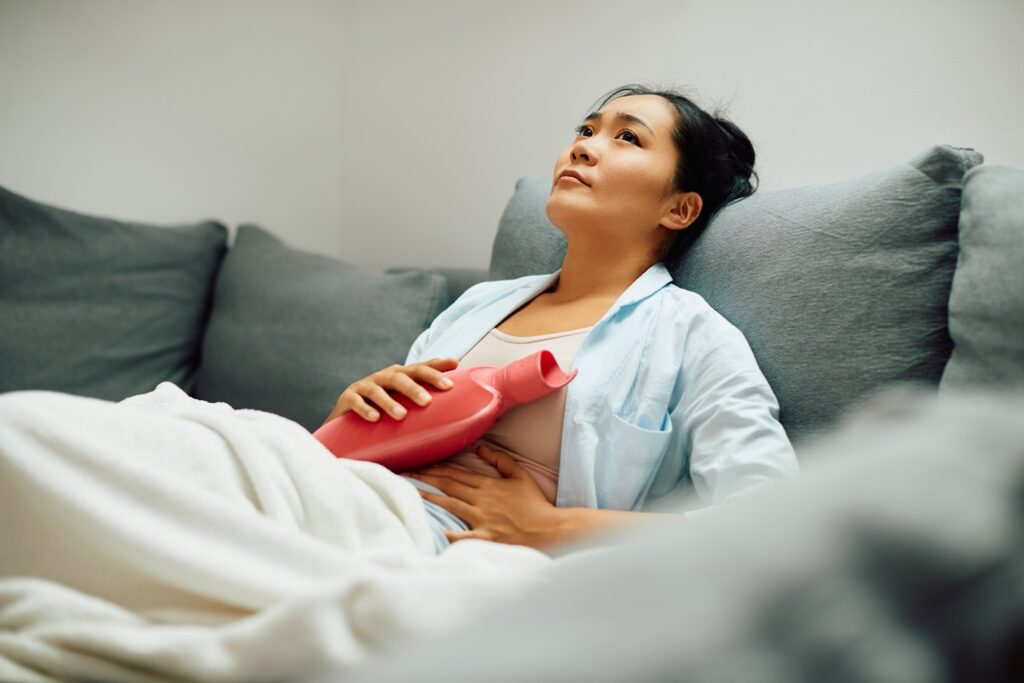
The long-standing normalisation of women’s physical pain has created a ‘grin and bear it’ mentality. Women mask pain that directly affects how they work and live. This isn’t an intrinsic tolerance; it’s a learned response to norms that treat women’s pain as expected, inflated, and inconvenient.
Women’s pain has historically been normalised as part of their ‘biological duty’. So, when women speak up about pain, they are often dismissed instead of taken seriously. The recent Victorian Government’s Inquiry into Women’s Pain report, Bridging the Gender Pain Gap, confirms this: 71% of women respondents reported dismissal by healthcare professionals when seeking help for their pain. Many women described being told it was in their heads, or that they were exaggerating its severity.
The same norms follow women into the workplace. Australian workplaces are still designed around a male-centric model. Many overlook women’s pain as valid reasons for workplace adjustments or personal leave.
These experiences are laid bare in Deloitte’s latest Women @ Work survey. The survey shows how physical health challenges shape women’s daily experience at work, capturing the views of 7,500 women globally and 500 in Australia, across industries, demographics, and seniority.
It reveals that many Australian women are working through pain related to universal female life stages: more than one in three (37%) who report menstrual health challenges work through high levels of pain. A similar proportion work through pain related to menopause, and one in five (20%) work through fertility-related pain.
Overall, 20% of all women who experience challenges with menopause say it has undermined their confidence in their ability to do their job. It is extraordinary that 1 in 5 women, at an age and stage in life where they are experienced and arguably contributing their best, experience a loss of confidence in their ability to do their job as a result of pain.
This is a loss for them as individuals, and a massive loss in economic value to business and the economy. Women experiencing pain are not always supported in taking leave or seeking adjustments to their work arrangements. Just 17% of women had a supportive response when they disclosed their menstrual pain to their employer as a reason for taking time off.
This collective mentality that minimises women’s pain must be changed, and not just because it is the right thing to do – it’s also a business imperative. According to a recent study, lost productivity due to menstrual pain costs the Australian economy $14 billion annually in lost work hours and spillover effects. Employer support for women’s health challenges is a key predictor for the retention of working Australian women, according to the survey. When employers acknowledge and act on women’s pain, they strengthen inclusion and protect talent.
Some workplaces have taken steps to address women’s pain. A small number of Australian employers hold a Menopause Friendly Accreditation. This badge means they provide tailored supports such as menopause leave, inclusive spaces, and education. A handful of other businesses offer dedicated menstrual, menopause, fertility and/or reproductive leave.
Following the Inquiry into Women’s Pain recommendation to ‘improve workplace policies that better support women with pain’, there remains more to be done. While tailored leave policies and awareness practices are gold standard, other practical steps can be taken.
Businesses should consider how their physical workplace accommodates those experiencing pain. Quiet spaces, appropriate lighting and temperature, and practical supports like heat packs or portable fans can all contribute to a more inclusive and productive working environment.
Equally, offering flexibility in where work is done, where possible, matters. The Women @ Work survey finds that only one in five Australian women (21%) who experienced menopause health challenges reported being able to access workplace accommodations, including a flexible schedule.
As employers increasingly reinstate office attendance mandates, leaders must understand the value of hybrid work options in offering privacy and comfort for pain management – especially when women don’t feel able to disclose it.
On a final note, none of this is to catastrophise women’s pain. The point is not that pain is new, but that the response from business must be. As women continue to ‘grin and bear it’, workplaces should play their part in evolving the norm. Reframing women’s health challenges as a shared organisational issue, with tangible impacts on engagement and retention, is critical to building workplaces that are genuinely inclusive.