
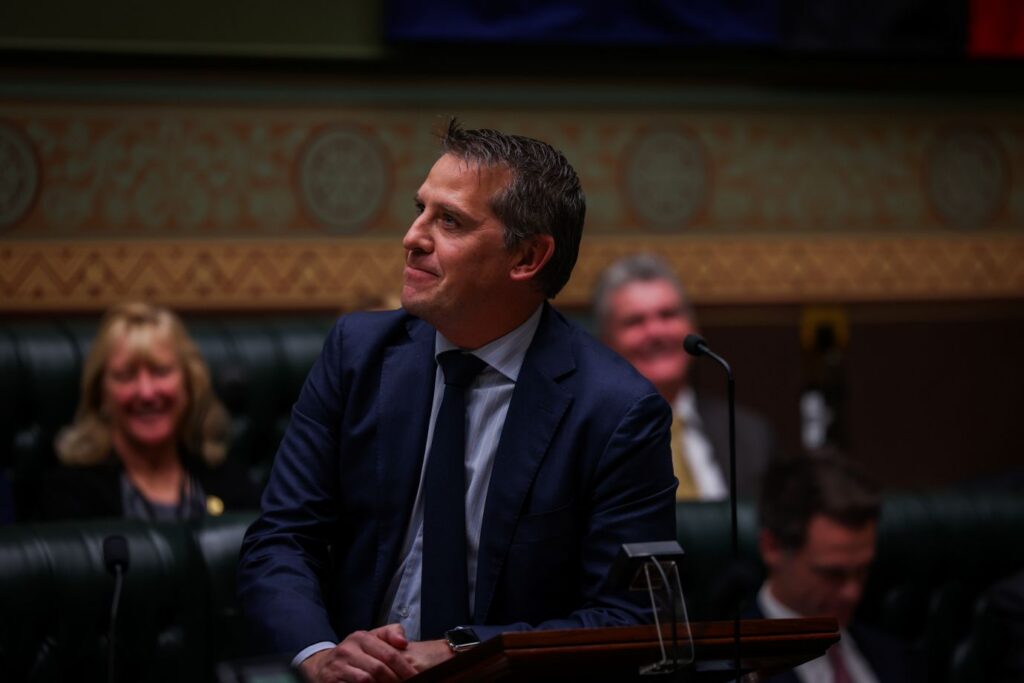
NSW Health Minister Ryan Park says a key focus of the Minns government’s ADHD reforms was breaking down the barriers women face in getting diagnosed and treated.
That’s why he pushed to allow more than 1,100 GPs, rather than psychiatrists alone, to issue repeat ADHD prescriptions. Additionally, 311 GPs have also commenced training to soon be able to diagnose and treat ADHD.
The reforms are designed to bring change to a system that has required children and adults to see a specialist for diagnosis of ADHD, as well as ongoing management and prescription medication. Often, this has meant paying exorbitant costs, needing to travel or being stuck on a waitlist for months at a time.
“Having spoken to women in this scenario, I’ve heard many stories about them going through life with really challenging obstacles… and not being able to get an adequate diagnosis to allow them to manage it,” Park tells Women’s Agenda.
“One of the reasons why I pushed so hard for these reforms is because I wanted to break those barriers down. I didn’t want there to be misdiagnosis. I didn’t want there to be underdiagnosis, particularly [for women] who probably struggled at times for many, many years.”
Park also acknowledges the long history of girls and women feeling dismissed by the system, with their underlying ADHD often going unrecognised.
Research has consistently shown women are more likely to be missed or misdiagnosed, often being treated for anxiety or depression instead.
“What we know is, in a lot of cases, history shows us that women were misdiagnosed, or clinicians may not have taken their symptoms as seriously as boys,” Park said.
“Women, in my view, have faced a bit of a stigma around the diagnosis, and that’s a challenge.”
Ryan said he hopes the reform eases some of the stress that women can face in accessing care.
“It means that for busy women who are often not only working professionally, [but] involved in community groups, helping to run families, it’s also trying to break the barrier of getting to a psychiatrist down and having someone that they, in many cases, often have a relationship with, and that’s their GP,” he said.

The NSW government reform is also targeted at expanding access for people living in regional and rural areas, with 44 per cent of the GPs now issuing repeat prescriptions located outside of metropolitan Sydney.

“There are already barriers to healthcare [if you are] simply living in regional, rural, or remote NSW, because of the tyranny of distance,” Park said.
“[This is] compounded, in my view, for women, because women are often already doing multiple other tasks and jobs, and time to access treatment, diagnosis, and care can sometimes be put on the back burner.”
As for women who are caring for a child or children who may have ADHD, the reforms should help to ease the logistical and mental burden which so often falls on mothers when it comes to accessing diagnosis and support.
“What we know is that the burden gets left to women. So, what I wanted to do was to look at ways in which I can reduce that burden,” he said.
“The burden in trying to access healthcare is significant, because when [you’re] working, you’ve got to arrange appointments, then there’s often delays to getting into specialist appointments, then there’s the financial costs that for families at the moment is real.”

Park admits it’s not been an easy reform to execute. Indeed, some criticism has centred on the idea the reforms may lead to overdiagnosis — but Park says his intention has always been to expand access to care for people who really need it.
GPs, Park says, should be recognised as the highly-trained health professional they are. There are also significant clinical hurdles GPs must complete to be able to take part in the program.
“I’ve got to make sure healthcare is safe, but at the same time I’ve got to make sure that it’s available and is cost effective, and therefore there aren’t as many barriers for people to access it,” Park said.
For women seeking help for their symptoms, Park says the first step is booking an appointment with a GP. He also recommends writing down your symptoms, how long they’ve been occurring, and the impact they’re having on daily life, to help give doctors a clear picture of what you’re experiencing.
“If you can go in there as a patient, and as a woman, and be as thorough as you can and descriptive as you can, the likelihood of you getting fast-tracked for a diagnosis and treatment is far greater, and the less chance that is likely to occur of a misdiagnosis.”