

An adapted program is putting mental fitness at the centre of community football, supporting girls and young women to build resilience and keep connected to the game.
The Challenge W, recently launched at Beaumaris JFC, adapts the Ahead of the Game mental health program and tailors it specifically for girls and young women for the first time.
Ahead of the Game was originated and developed by men’s health charity Movember, with the AFL funding and leading the adaptation of the program to also meet the needs of women and girls in community football.
Rather than treating mental health as something to address only when problems emerge, the workshops teach girls practical psychological skills like managing setbacks, building confidence and strengthening social connections, alongside their football.
The program also acknowledges that girls experience sport differently. Body image pressures, declining self-esteem, and social changes all contribute to girls leaving community sport at far higher rates than boys, research shows.
The first workshop for girls was recently facilitated by St Kilda AFLW players Serene Watson and Olivia Vesely, who drew on their own experiences in elite sport to guide participants through the program.
“I wish I’d had a program like this as a young girl,” Vesely shares with Women’s Agenda.
“I hope it gives the girls a huge amount of confidence. We go through six different skills, and I hope that they can take at least one of those skills away and use it in their day-to-day life, in their own challenges, whether it’s footy or outside of footy.”
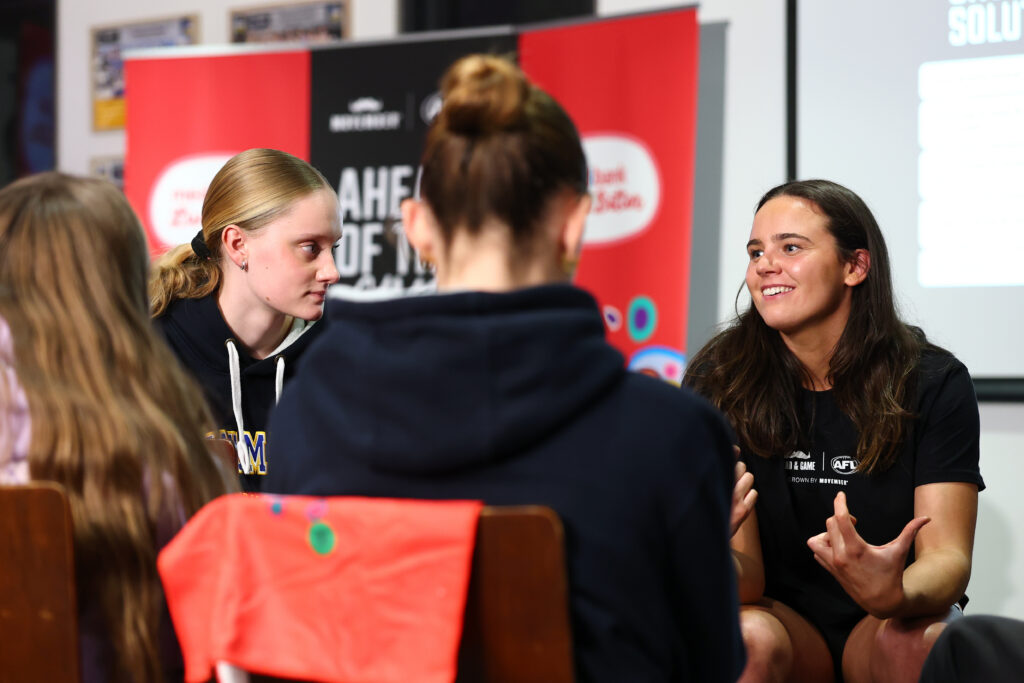
Vesely said it’s a goal of the program to support girls to feel safe to be themselves on and off the football field.
“I also hope it allows them to feel like they can challenge themselves and do hard things,” Vesely says.
“It’s about knowing it’s ok to fail at hard things because they have the tools to be resilient, and they know they can bounce back.”
The Challenge W program centres on a fictional young player, Sarah, who navigates the trials of on-field challenges with her teammates. The story traces how the psychological skills she builds on the field, like handling setbacks with thinking and emotional skills, building team connection, and bouncing back, also translate directly to her life off field.
“When young people see themselves in a program, they are able to connect with mental health and mental fitness messaging so much more,” the AFL’s Head of Mental Health and Wellbeing, Dr Kate Hall explained.
“Young people actually have really good mental health literacy. But it’s not just about knowledge. It’s about connecting with the information in a way that really makes a young person want to practice new skills or change their behaviours.”
The evidence-based program is designed to approach mental health fitness and resilience skills like physical fitness skills, Dr Hall says.
“If they were to treat those skills like their physical fitness skills, and practice, and train, and give each other high fives and slaps on the back when they achieve those psychological skills… they know they’re building this repertoire of strength,” she says.
“Footy has this wonderful opportunity to protect mental wellbeing. It’s not just about waiting until there are signs of mental ill health, and that’s what the Challenge W does. It relies on team relationships and all the social networks that naturally come through footy.”

As proud supporters of the NAB AFLW, Medibank has extended its support to back the new adapted program to support more women and girls to learn mental fitness skills and build their mental health knowledge.
For Dr Shona Sundaraj, Group Medical Director at Medibank, the strength of the Challenge W pilot program lies in how it supports girls to learn about mental fitness and resilience in a group setting.
“There’s a real connecting experience that people have when they play team sports, and that shouldn’t be isolated to boys and men. Sport enables you to see wins and losses, successes and failures, and it enables you to see the people around you as a team…it’s a bit of a metaphor for successes and failures in life, isn’t it?” Dr Sundaraj said.
At a time when so much of girls’ lives are curated online, Dr Sundaraj says community sport provides a genuine connection opportunity, which is becoming increasingly rare.
“There’s a beauty in coming together and being able to achieve something together as a group. Being in the presence of others is a really important way to develop those connections,” Dr Sundaraj said.

Keeping girls in the game for longer
The program arrives as concern grows about the number of girls walking away from organised sport during adolescence. Whether driven by body confidence, mental health challenges, menstruation, competing commitments or changing friendship groups, many girls leave community sport just as its social benefits become most valuable.
Dr Hall believes football clubs can become a crucial source of stability during that transition. Remaining involved in sport, she argues, doesn’t just improve physical health, it strengthens mental wellbeing over the long term.
“We think that community sport can be the bridge as young people are then navigating into adulthood… their friendship groups change rapidly during that time, whereas their local community football club may be the only stability,” Dr Hall says.
“It’s not just through this program that young women will have good mental fitness skills for life. It’s actually remaining connected to our sport [that] will also continue to build their mental fitness for lifelong mental health.”
The power of AFLW role models
With AFLW players like Serene Watson and Olivia Vesely on board as facilitators, the Challenge W is creating a space where girls can feel supported as they develop their mental fitness skills.
For Vesely, a real highlight of the first session was witnessing how the girls responded to the female representation in the program, which helped them foster vulnerability among the group.
“We had under-12s to under-16s, and they were open and more willing to share with each other, and they were more empathetic of what the main character was going through,” Vesely said.
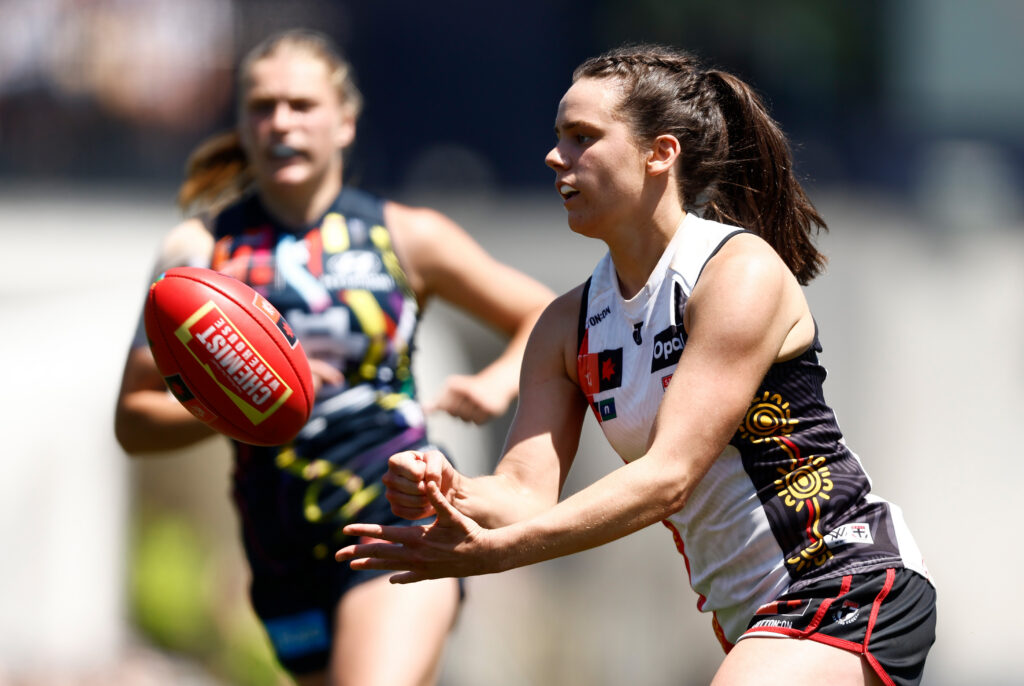
Dr Hall says simply having AFLW players in the room is key to the success of the program.
“When we bring our AFLW players in, who can I tell you are some of our best facilitators, because of their lived experience of navigating their high-performance careers, but also all the other challenges that they’ve had that are so relatable,” Dr Hall said.
“They’re genuinely some of the most impressive humans you’ll ever come across, not just in footy but in life.”
You can find out more about Ahead of the Game here.