
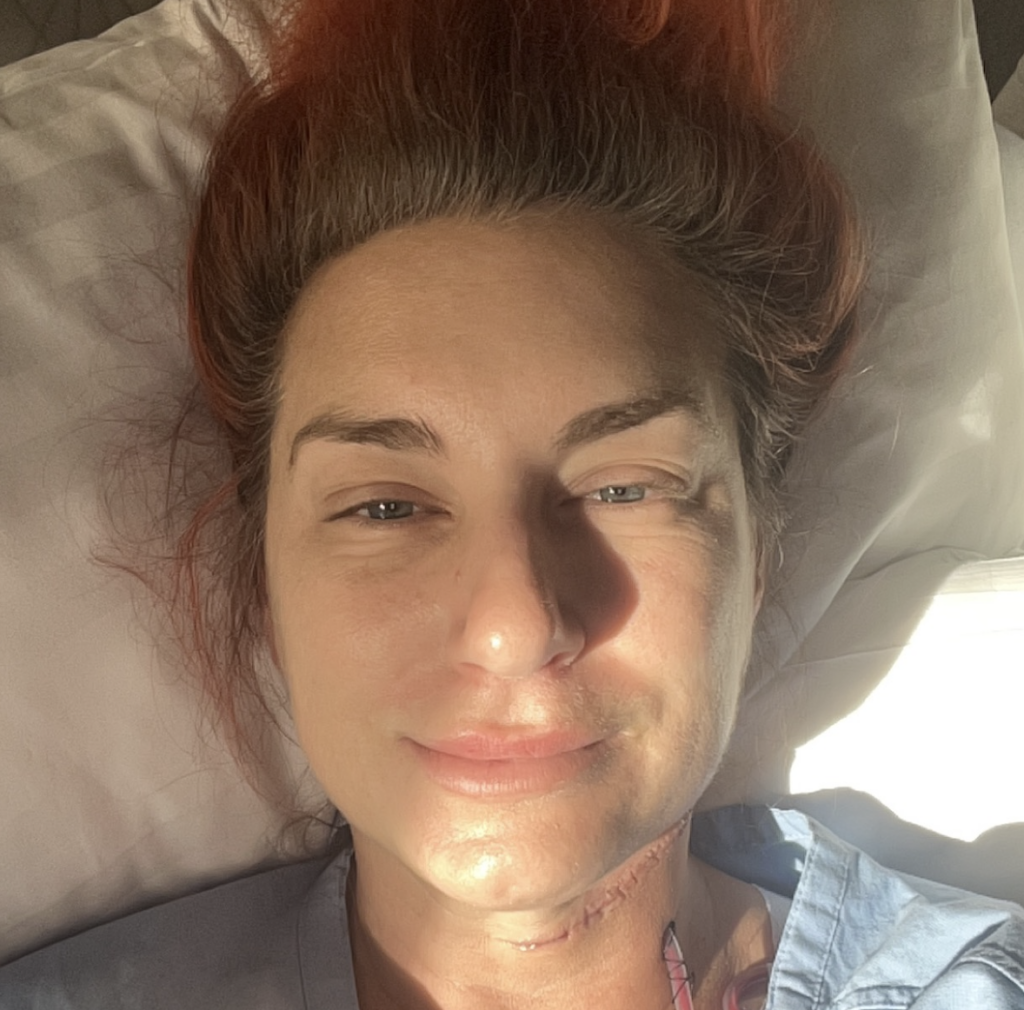
In 2024, I found myself lying in a hospital bed after surgery for aggressive head and neck cancer. My body was exhausted, my voice was altered and the speaking and leadership career I had built on stamina, service and certainty suddenly felt fragile and far away.
This wasn’t the first time I had felt profoundly broken. I had known burnout before from my executive HR role during COVID-19, but this silence, this full stop to my life, was unlike anything I had ever faced. I felt completely shattered and fearful of the future. Everything felt profoundly uncertain.
In the quiet that followed, I realised something. I had spent years helping others build sustainable organisations, supporting my family and giving my clients my absolute best, yet I had quietly neglected myself again and again. Each time I pushed through, I told myself it was temporary, and each time I ignored the signs until exhaustion caught me once more. I had mistaken achievement for worthiness, service for self-sacrifice and strength for suppression.
The case for self-kindness
It was during my recovery, through many slow barefoot walks in nature, through moments of stillness, through the deep self-kindness that healing demanded, I began to understand something I had always intellectually known and tried to put into practice many times but had never truly learned how to embody. I had to build a new way of being that was sustainable, grounded and capable of lasting impact – both personally and professionally.
This is what I now share and teach. What I came to see was that kindness was not the opposite of my ambition; it was the fuel for it. Kindness created the foundation that allowed me to rebuild my life, my leadership and my sense of purpose, this time anchored in balance rather than burnout.
This personal transformation, combined with the patterns I have witnessed across leaders and workplaces, became the foundation of my framework. I don’t speak about this work from a distance. I live it. I’ve had to learn it the hard way, return to it when I’ve forgotten it, and practise it again and again in the middle of real life – leadership, pressure, responsibility, uncertainty and the moments where it would have been easier to harden or push through.
This work isn’t something I step into when I’m on a stage or writing. It’s how I choose to lead, relate, recover and come back to myself when things feel stretched. It’s shaped how
I make decisions, how I hold boundaries, how I stay connected to my values and how I keep my heart open without burning myself out. This framework exists because I needed it not as a concept, but as a way to survive, to lead well and to stay human at the same time.
The problem we are really trying to solve
The unsustainable cost of constant doing is one of the most challenging issues facing modern leadership. We have formulated processes that incentivise overcommitment and self-neglect, and we have normalised a pace of life and work that the human nervous system has never been equipped to sustain.
Burnout is so pervasive that it is usually understood as a personal failure rather than what it is: a sign of organisational and cultural systems that have lost balance. We invest in wellbeing programs, but all too often we fail to recognise
the root causes of exhaustion. We are disconnected from ourselves and from other people, and our values are often at odds with our behaviour. Our society holds busyness up as a mark of commitment and productivity when in fact, these patterns often start to
sever us from our purpose, our relationships and our sense of self.
I am all for changing that. Life can be unpredictable and challenging. I have no rose-tinted
glasses on when it comes to this. However, self-kindness equips us to navigate these moments without losing ourselves. By starting to measure kindness not as a sentiment but as a strategic capability, we begin to reconstruct ourselves; the way we show up in our
homes, our communities, our organisations and, ultimately, in the world. We surface the invisible and we give people permission to be whole humans, not depleted machines struggling to meet impossible expectations.
Edited extract from The Kind Way by Sophie Bretag.