
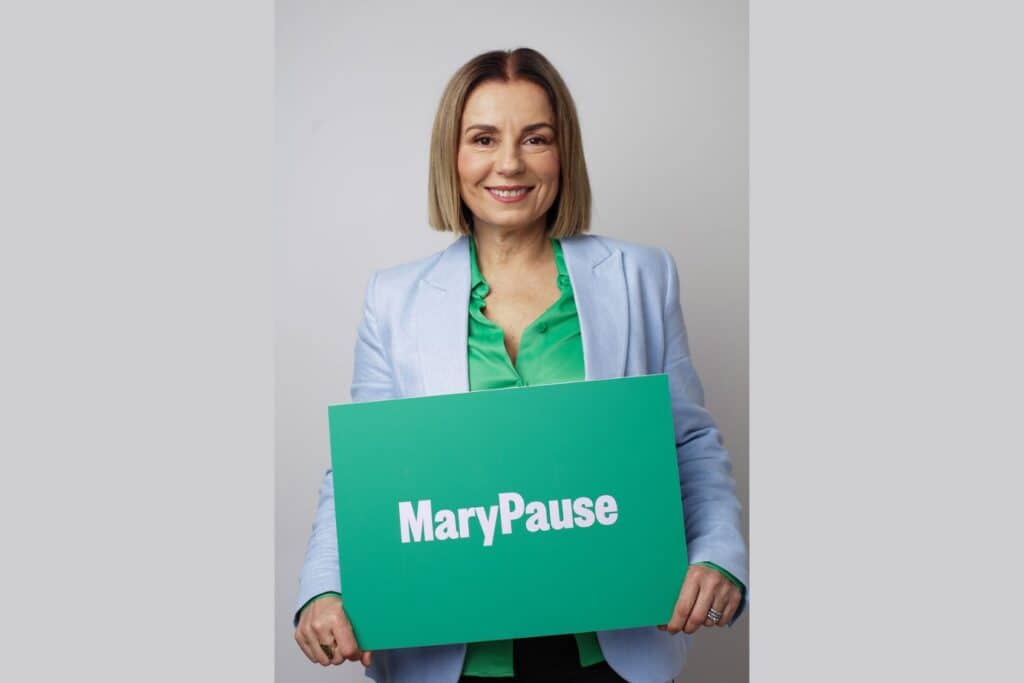
When comedian and actress Mary Coustas told her GP she thought she was in menopause, the doctor wasn’t convinced. Mary was in her late 50s and lower than she had ever been, despite everything she had been through in the past — and the GP suggested antidepressants.
“I don’t think I’m depressed,” Mary, who shot to fame for playing her iconic character Effie in Acropolis Now, told her doctor. “I think I’m depleted.”
It took years to work out what was happening, and in the end, she says, she worked it out herself.
By her age, she had already been through depressive periods. Losing her father young and her daughter in her mid-40s, she also battled infertility and barriers to work because of her cultural background. When this started feeling worse than any of that, Mary knew it was something deeper.
Mary says she skipped the warm-up many women get in their 40s. She was focused on IVF, doing 23 rounds in that decade, and became a mother at 49. About a year later came the symptoms: anxiety, heart palpitations, broken sleep, and what she describes as “the weight of the world on my chest”.
She stresses it wasn’t a lack of support. “It was something outside of that. And I didn’t know what it was.” It felt “whole-bodied”, she says, “an inside job”. The realisation that followed was oddly comforting: for the first time in her chaotic, unusual life, her problem put her in the majority. “I am in 100 per cent of women.”
The pandemic made Mary’s symptoms harder to read. Everyone around her was anxious and isolated, she says, so what she felt seemed to be mirrored in the world. Only when things returned to normal, and Mary didn’t, did she start looking for answers.
Menopause was the unanswered question that addressed everything she was feeling, and she doesn’t want any woman to have to advocate the way she had to for help.
To support other women, Mary wrote a book, then co-founded Unpause, a telehealth platform built around doctors who understand menopause and midlife women’s health. The app sends symptom data to the medical team, so they can adjust doses and move appointments up if a patient isn’t sleeping. Mary says she wants it to be “the first nationally known menopause brand”.
Asked why women are still dismissed, she says women don’t advocate for themselves enough, and that GPs have short consults and, in her view, little training, as she’s seen in her own experience. “You go in there, and you say, look, I don’t know why, but I’m depressed. Okay, here’s an antidepressant.”
Mary also uses humour. Her show Frigid to Feral follows a character who discovers she’s perimenopausal, and Mary deliberately didn’t sell it as a menopause show so men would come too. “I use comedy as my penicillin,” she says, “if you don’t find the funny, you’re screwed in life.”
As we mark Menopause Awareness Month, Mary doesn’t want the conversation to be tokenistic. She doesn’t want “let’s do it this month and let’s forget about it till next October.” She also makes a workplace case: employers lose talent when women leave work early, she argues, and Unpause has partnered with Teachers Health Group to reach teachers, nurses and midwives, all of whom are essential to the workforce.
Her advice to women is blunt: “Push your doctor. If it’s not the right doctor, find another doctor.”
Menopause was a hot topic at the 2026 Women’s Health & Wellbeing Summit, featuring guests like Dr Fatima Khan, Dr Clara Chow and Dr Helen Frazer. You can watch the entire summit on-demand by subscribing to the free Women’s Agenda Daily newsletter