
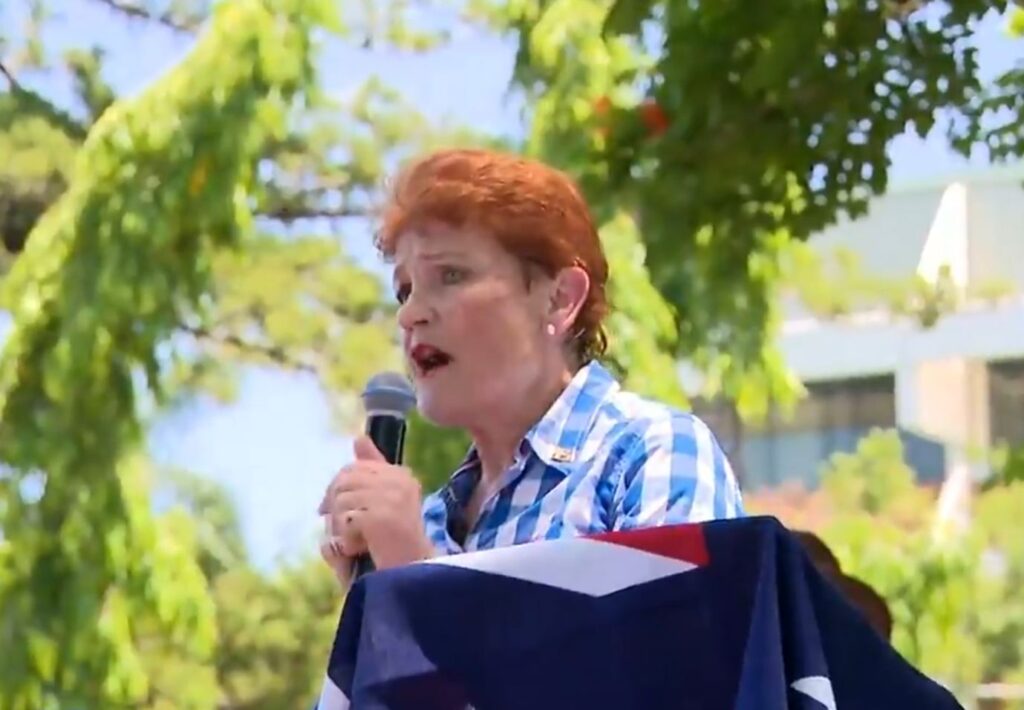
More than one in five South Australian voters supported One Nation at the state election last weekend.
They voted for a party with a slim policy platform and a state leader who once compared same-sex marriage to bestiality, and branded women who have an abortion as “pro death”. Cory Bernardi has also blamed single-parent households for “criminality” in boys and “promiscuity” in girls.
The SA surge comes as One Nation is still treated by much of the mainstream media as a sideshow, almost as a form of entertainment, with no need for sustained analysis of the party’s platforms.
And yet, One Nation clearly offered some appeal to a large segment of the SA voter base, and could very well do so again at the upcoming state and federal elections.
We need to better understand why, and interrogate the One Nation record and policies the party is offering in ways that go deeper than basic slogans. Especially with an opposition at the Federal level that’s more content with tearing itself apart than offering any kind of meaningful alternative government.
And we must also consider just what’s at stake for Australians from populist rhetoric that lacks substance. Especially when it comes to matters of domestic and family violence, on reproductive rights, as well as laws that aim to enhance gender equity, among other things
We can’t be complacent on these issues, as populist conservatism takes hold, sucking up hard-fought gains on gender equality and reproductive rights in its wake. While there is more progress to be made, we may find ourselves entering an era of preservation, just as was observed in global talks on gender equality last week.
Indeed, we also need to consider and seek to protect threats to basic demographic institutions when it comes to a surge in populist parties.
A victorious Pauline Hanson declared over the weekend that One Nation MPs will be leaving a bunch of “landmines” for the reelected Labor Malininski Government that garnered the vast majority of seats across the state.
It’s a telling statement.
What happened to constructive government and seeking to progress things rather than metaphorically blowing things up? How has the purpose of winning a seat in government become more about destruction than it is about effective and substantive policy reform?
In the days leading up to the election, Greens MLC Robert Simms asked pointedly: “If Cory Bernardi’s One Nation wins the balance of power in the Upper House, what will this mean for women’s rights, LGBTI rights and workers’ rights in our state?”
We may just be set to find out.
The lesson for all of us should be to stay vigilant against populist forces that are taking in large segments of the population, including by considering what is at the heart of the appeal. We may not like what we discover, but we can’t ignore the reality.
The next pit stop for Hanson’s planned Australia-wide domination is in the seat of Farrer on 9 May, with a by-election triggered by the stepping down of Sussan Ley, after Angus Taylor successfully ousted the Liberal party’s first female leader. The result could see the party now losing yet another seat from its already decrepit base.
Recent polling suggests the One Nation candidate, David Farley — who once compared Julia Gillard to livestock ready for processing — is the current race leader, followed by independent Michelle Milthorpe and the Liberal candidate in third spot.
It’s also an election race carrying its own backstory about women: given it was triggered by a party that ousted its first female leader after giving her just nine months in the job. Just imagine: the seat of the first leader of the Liberal party going to a man who once called the country’s first female prime minister a cow.
Here, the lesson of Farrer will be about more than just what has inspired a surge in One Nation support. It will be about who we decide is electable, and why.