
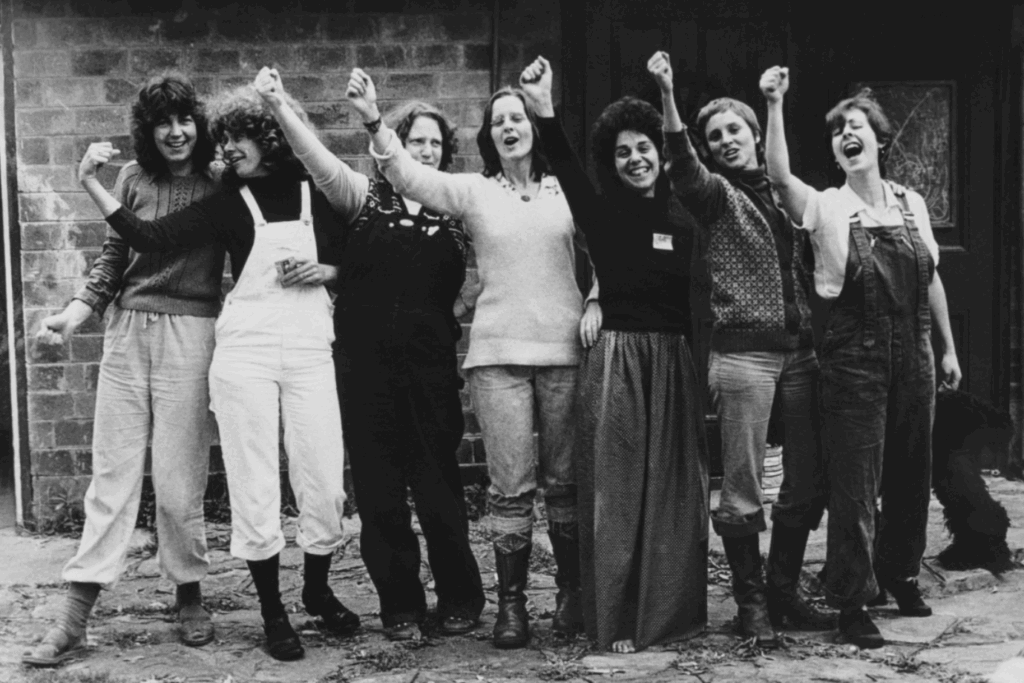
At the foothills of the Dandenong Ranges in Victoria sits Wheelers Hill, home to the Museum of Australian Photography (MAPh) and its current exhibition Protest is a Creative Act. Driving past the billboard one too many times curiosity finally got the better of me. I wandered in.
The title alone was enough to catch me. As someone who has joined my share of protests, I was struck by how timely it feels, especially in the current climate where the political and media rhetoric around protesting is increasingly hostile. The word “protest” has somehow become synonymous with “troublemaker.” Politicians and commentators are quick to condemn demonstrations as “divisive,” “disruptive,” or “dangerous.” Well—yes. They are. And that’s the point.
Protest has always been an essential part of democracy. It is how ordinary people remind those in power that their decisions affect real lives. It is the act of refusing to accept injustice quietly. It should be peaceful and non-violent, but let’s be honest it must also be disruptive. Change doesn’t come when everyone stays in their lane, politely waiting their turn. Change happens when leaders are forced to confront uncomfortable truths.
The Protest is a Creative Act exhibition captures this tension beautifully. Curated by Kelly Gellatly and Angela Connor, it brings together the work of women artists from the 1970s alongside contemporary voices. The themes are familiar and include reproductive rights, racism, environmental destruction and gender inequality. What’s confronting is how little has changed. As a viewed the exhibition, the grainy photographs from decades ago of marches, placards, women’s bodies claimed as political battlegrounds, echo eerily into the present.
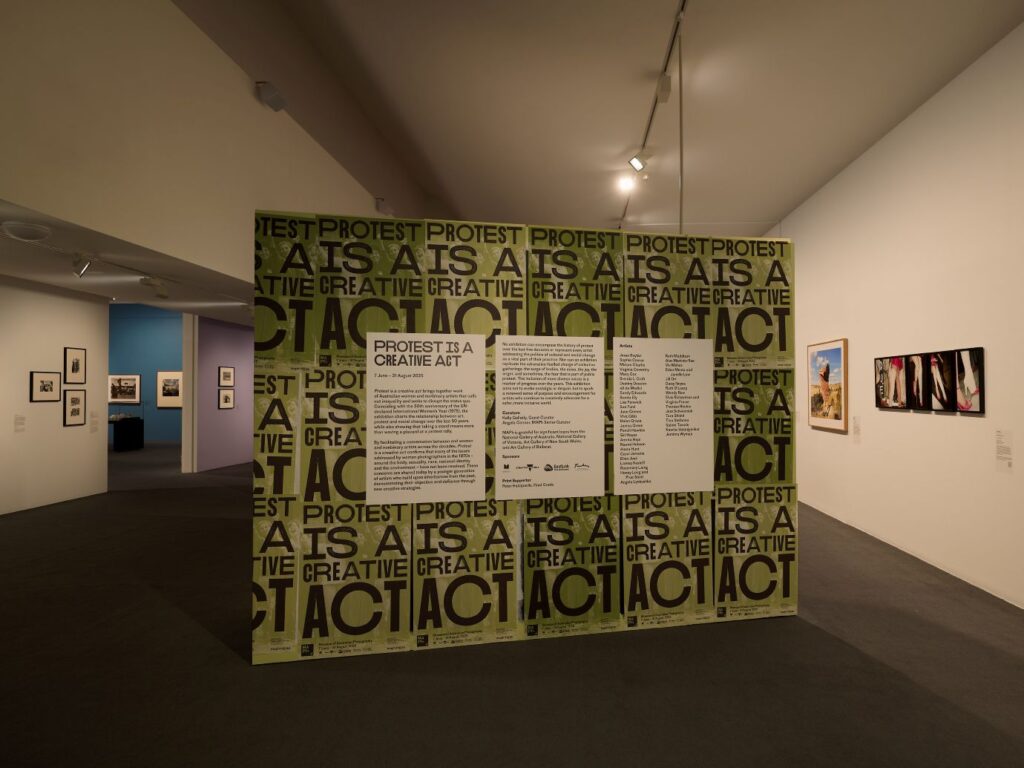
Courtesy Museum of Australian Photography
The younger generation of artists represented build on that inheritance. Some use performance, others digital media, installation, or satire. What unites them is a refusal to stay silent. The exhibition highlights not just anger and defiance but also the solidarity, humour, and creativity that sustain movements over the long haul. It is, in its own way, a protest against forgetting, against complacency, against the idea that things have already been “won.”
This exhibition couldn’t land at a better time. Consider the pro-Palestinian demonstrations that saw protesters scale the Sydney Harbour Bridge, the countless vigils and marches against family violence across the country or people boycotting different brands or companies. On the surface, these protests are about very different issues, and depending on your perspective, you may find yourself agreeing passionately with one and vehemently opposing another. But that’s not the point.
Whether we agree with them or not, all of these protests share something vital, they represent citizens demanding to be heard. And yes, they make people uncomfortable. They disrupt traffic, dominate news cycles, and stir heated debate. But should that invalidate those who gathered to voice their concerns? Absolutely not. Protest is messy. It can attract opportunists. It can spark outrage. Sometimes it even fractures communities. But to dismiss the act of protesting itself because it isn’t tidy, polite, or universally popular is to strip democracy of one of its most powerful tools.
Let’s not forget that almost every right we now consider fundamental was won through protest. Women’s suffrage. The eight-hour workday. The right to marry who we love. Anti-discrimination laws. None of these came from politicians suddenly waking up one morning with a change of heart. They came from people marching, shouting, sitting-in, striking, and demanding. And yes, making others deeply uncomfortable in the process.
For movements like women’s rights, the stakes remain high. Violence against women, pay inequity, reproductive rights, and representation are not abstract concepts they are lived realities. History shows us that protest has always been the lever that shifts these realities. Think of Vida Goldstein, who led the suffrage movement here in Australia and helped win women the right to vote in 1902 long before most of the world caught up. Or Jessie Street, who campaigned tirelessly for equal pay, maternity leave, and the inclusion of women in public life, as well as advocating for Aboriginal rights in the lead-up to the 1967 referendum. More recently, campaigners like Rosie Batty transformed the national conversation about family violence, using her platform to push governments to reform laws and policies.
Walking through Protest is a Creative Act, I felt both inspired and uneasy. Inspired by the creativity and resilience of those who came before us, and uneasy at how relevant their battles remain. The placards may be new, the hashtags fresh, but the underlying fights are stubbornly the same. That should alarm us. It should also galvanise us. The exhibition runs until August 31st at Wheelers Hill, and it’s worth the visit. Not because it will give you tidy answers because it won’t, but it reminds us that protest is not the problem. Protest is the point. Without it, there is no democracy worth defending because without rocking the boat, nothing moves.
Feature image: Sandy EDWARDS. Feminist filmworkers conference Minto 1979. Gelatin silver print. Courtesy of the artist.