
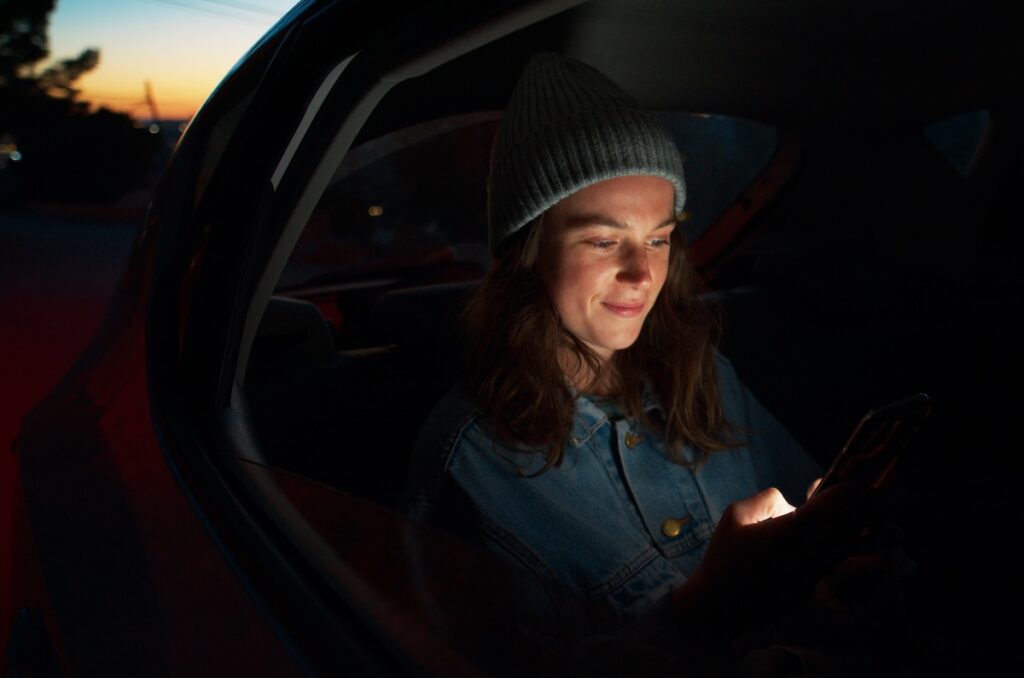
Every woman reading this knows the ritual. You request your Uber, step outside, and immediately begin the mental calculations. You check the driver’s name and photo. You screenshot the licence plate and send it to a friend. You keep your phone in your hand, location sharing on. You sit behind the driver, not beside them. You stay alert not because you want to, but because experience, instinct, and a lifetime of socialisation have taught you that you must.
In a workplace, we call this a ‘safety risk assessment’. For women in Australia and around the world, it is relentless.
This week, Uber announced the rollout of its “Women Preferences” feature, allowing women passengers to choose a woman driver and women drivers to opt in to match with women passengers. The passenger-facing feature, which is long overdue, is now live in the US, Germany, France, Saudi Arabia, Portugal, Brazil, and Spain.
But Australia is not on that list, an absence that deserves scrutiny.
In Australia, one in two women has experienced sexual harassment in their lifetime, and one in five has experienced sexual violence since the age of 15. Research found that 87 per cent of men felt safe waiting alone in the dark for public transport, compared to only 68 per cent of women. Australian media have documented rideshare drivers perpetrating sexual violence, and there have been cases of people posing as rideshare drivers to lure women into their cars.
The statistics from Uber’s own platform are sobering. Court records revealed that Uber received a report of sexual assault or misconduct in the United States almost every eight minutes on average between 2017 and 2022. Uber’s own Safety Report found that 81 per cent of survivors reporting the most serious assaults were women, and the vast majority of alleged perpetrators are men, whether behind the wheel or in the back seat.
The “Women Preferences” feature is therefore not a gimmick, it is a genuine structural response to a genuine structural problem. A major rideshare platform is finally giving women a way to reduce their risk exposure, rather than simply telling them to be more careful. Uber said that they have introduced this feature because “women asked for it”. For female drivers and riders, this is transformative.
Which makes Australia’s exclusion from the rider-facing rollout all the more frustrating.
Since 2022, Australian women and non-binary drivers have been able to toggle on a preference for female rider trip requests, which is a meaningful step, but only half the equation. Without the corresponding rider-side feature, Australian women passengers still cannot open the app and actively choose a woman driver. Given Australia’s well-documented rates of violence against women, there is no good reason for Uber to leave Australian riders behind. The company says it plans to keep expanding the program, and we should be holding them to that.
It is also worth acknowledging what this means intersectionally. For women of colour, women with disabilities, LGBTQIA+ women, and women in lower-income brackets who cannot always afford alternatives, the calculus of safety is compounded. Australian research has documented sexual violence, and homophobic, transphobic, and racist verbal abuse during rideshare journeys. A feature that reduces the need for constant vigilance has a disproportionate benefit for those whose margin of safety was already thinnest.
Which brings us to the lawsuit.
Shortly after Uber began piloting the program, two male drivers in the US filed a class-action suit alleging discrimination. Their claim is that the feature “reinforces the gender stereotype that men are more dangerous than women,” and that women drivers gain access to the full passenger pool while men compete for fewer customers.

Let us be clear about what this argument requires us to believe. It requires us to look at decades of data, thousands of survivor accounts, and the lived experience of almost every woman who has ever hailed a ride alone at night and conclude that the real injustice is that some men might receive fewer ride requests.
Acknowledging that men commit the overwhelming majority of sexual violence against women is not a stereotype. It is a statistical fact, borne out of crime data, survivor testimony, and Uber’s own reports. Not all men are violent of course they are not. But most violence against women is perpetrated by men. These two statements can coexist, and they must, if we are to respond to gendered violence with any intellectual honesty. The feature is also an opt-in preference, not a blanket ban. No male driver is removed from the platform.
For decades, the burden of managing the risk of male violence has been placed entirely on women’s shoulders. The “Women Preferences” feature doesn’t eliminate that burden, but it shifts some structural responsibility back to the platform. Now Uber needs to say it to Australian women too.