
Queensland’s newest electoral amendment bill proposes to strip thousands of imprisoned people of their right to vote if they are serving a sentence of one year or more.
At a time when Aboriginal deaths in custody are at their highest in over 40 years , when oversight is weakening, and when punitive politics is intensifying across the country, Queensland has chosen to further silence the very people most harmed by state power.
This is not a technical tweak to electoral law. This is a deliberate shrinking of the democratic circle, a decision to exclude the criminalised, the marginalised, and the already unheard.
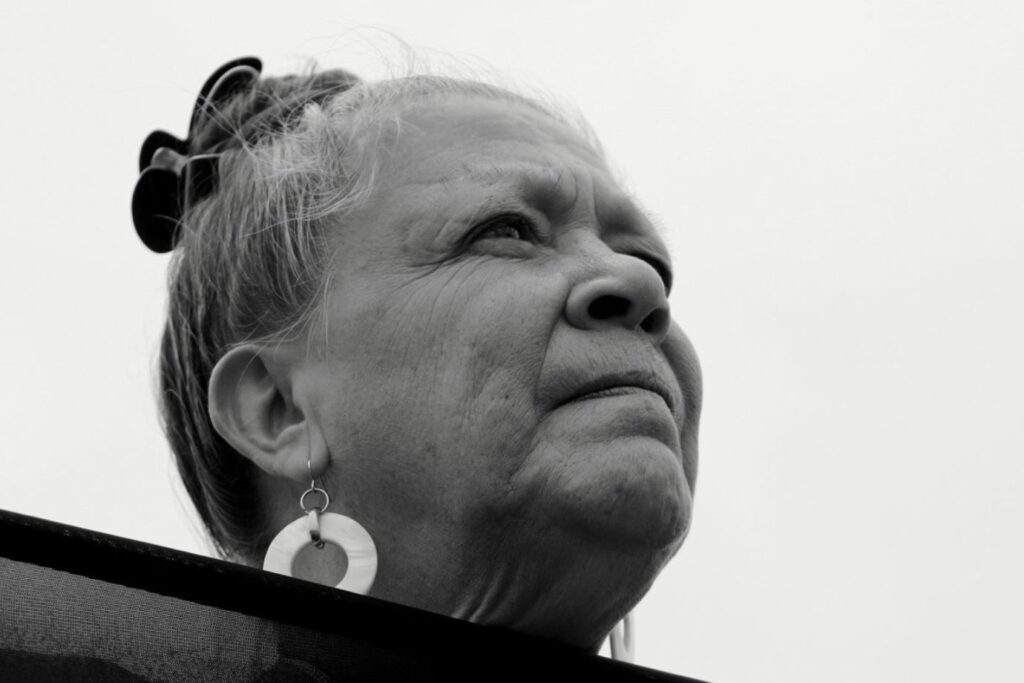
And it is a direct attack on the legacy of Aunty Vickie Roach.
What Aunty Vickie Roach fought for, and won
To understand the gravity of what Queensland is attempting, we must return to 2007, when the Howard Government passed one of the most extreme attacks on democratic rights in modern Australian history: a blanket ban preventing all prisoners, regardless of sentence length, from voting in Commonwealth elections. This was punishment layered upon punishment, a clear attempt to remove the poorest, most marginalised people from the political landscape entirely.
Aunty Vickie Roach, a proud Yuin woman, formerly incarcerated writer and activist, refused to accept it.
From inside a prison cell, she lodged a constitutional challenge against the Commonwealth. Her argument was as simple as it was revolutionary: If Australia is a representative democracy, then Parliament cannot simply erase certain citizens from “the people” who choose their government.
Her case – Roach v Electoral Commissioner – went all the way to the High Court.
Her victory established that:
- The right to vote is a constitutional guarantee, not a privilege for the state to withhold.
- A blanket ban on prisoner voting is unconstitutional and violates the system of representative government.
- Imprisoned people remain members of the political community.
- Disenfranchisement can only occur in narrow, proportionate circumstances, not as a tool of populism or punishment.
Aunty Vickie’s case marked the first time the High Court recognised an implied protection of the right to vote. It did what generations of politicians refused to do: it affirmed that imprisoned people are still citizens whose voices matter.
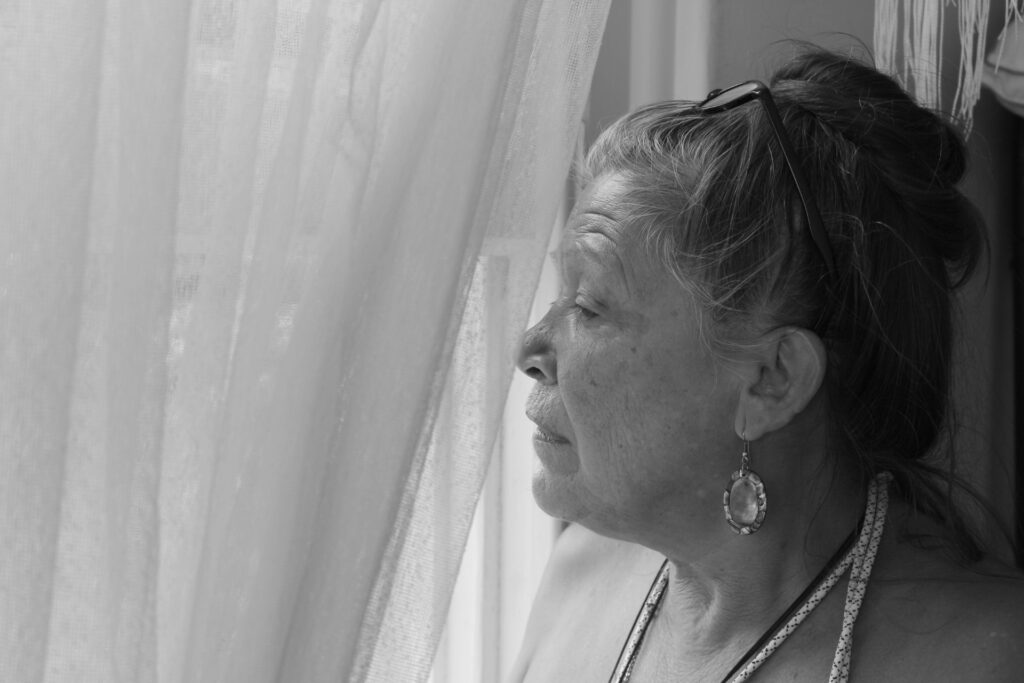
Her achievement cannot be overstated. She reshaped the democratic rights of a nation, and she did it while the state was actively trying to silence her.

Queensland is now trying to undo that work
The Queensland Government’s proposed ban, preventing anyone serving a one-year sentence or more from voting, is an unmistakable return to the punitive logic of the Howard era.
While the High Court allowed some narrow restrictions, it explicitly rejected broad, punitive bans designed to erase entire categories of people from democratic life. Queensland’s bill is exactly that: a sweeping disenfranchisement regime that will overwhelmingly impact Aboriginal and Torres Strait Islander people, who are already mass-represented in Queensland’s prisons.
This is not about “electoral integrity,” as the government claims.
This is about using imprisonment as a tool of political exclusion.
It is also an attempt to narrow the franchise precisely at a moment when the state and territories continue to face criticism over its treatment of criminalised communities, including soaring deaths in custody, overcrowding, youth prison crises, children being held in adult watchhouses, and UN inspectors being blocked from entering places of detention.
If the people most harmed by state violence are prevented from voting, who will hold the state accountable?
Disenfranchisement is racialised violence
Aboriginal people make up about 33% of Queensland’s prison population, despite being only 3.8% of the state’s population. To strip voting rights from prisoners is therefore to implement a system of political exclusion that disproportionately targets Aboriginal communities.
We already live in a nation where:
- Aboriginal people are more likely to be arrested, charged, refused bail, imprisoned, and placed in solitary confinement.
- Aboriginal deaths in custody continue without accountability.
- Children as young as ten are being criminalised and incarcerated.
- Governments respond to social issues: homelessness, poverty, disability, family violence, with police and prisons rather than care and resources.
Now Queensland wants to silence the very communities suffering at the sharpest edge of this system.
A democracy that silences the most policed, most punished, and most marginalised is not a democracy at all.
It is rule by exclusion.
Why we must defend prisoner voting rights now
Aunty Vickie’s fight was not simply about voting. It was about membership, who belongs, who counts, and who gets to participate in shaping this country’s future.
She showed us that:
- Prisoners are part of the body politic.
- Citizenship survives incarceration.
- Democracy must include the people the state would prefer to hide.
Queensland’s bill is a repudiation of those truths.
It seeks to punish prisoners not only with incarceration but with political erasure, to ensure that the people most affected by government decisions have the least ability to shape them.
At a time when the state is intensifying its grip over Aboriginal communities, increasing surveillance, expanding detention powers, and blocking external scrutiny, this attack on voting rights is not incidental.
It is strategic.
A final word
Aunty Vickie Roach changed this nation. She asserted, in the face of enormous hostility, that imprisoned people remain part of “the people,” the sovereign source of democratic authority in this country.
Queensland’s proposal dishonours that legacy and threatens to drag us back into a political era defined by fear, punishment, and racialised exclusion.
We cannot allow it.
If democracy means anything, it must include those the state cages.
If citizenship means anything, it must persist even in the darkest corners of incarceration.
And if we claim to care about justice, we must defend the right of imprisoned people to have a say in the laws and policies that shape their lives.
Aunty Vickie fought for us. Now we fight for her legacy, and for every person behind bars whose voice the state is trying to silence.
Feature photo: Aunty Vickie Roach. Credit: Charandev Singh.