
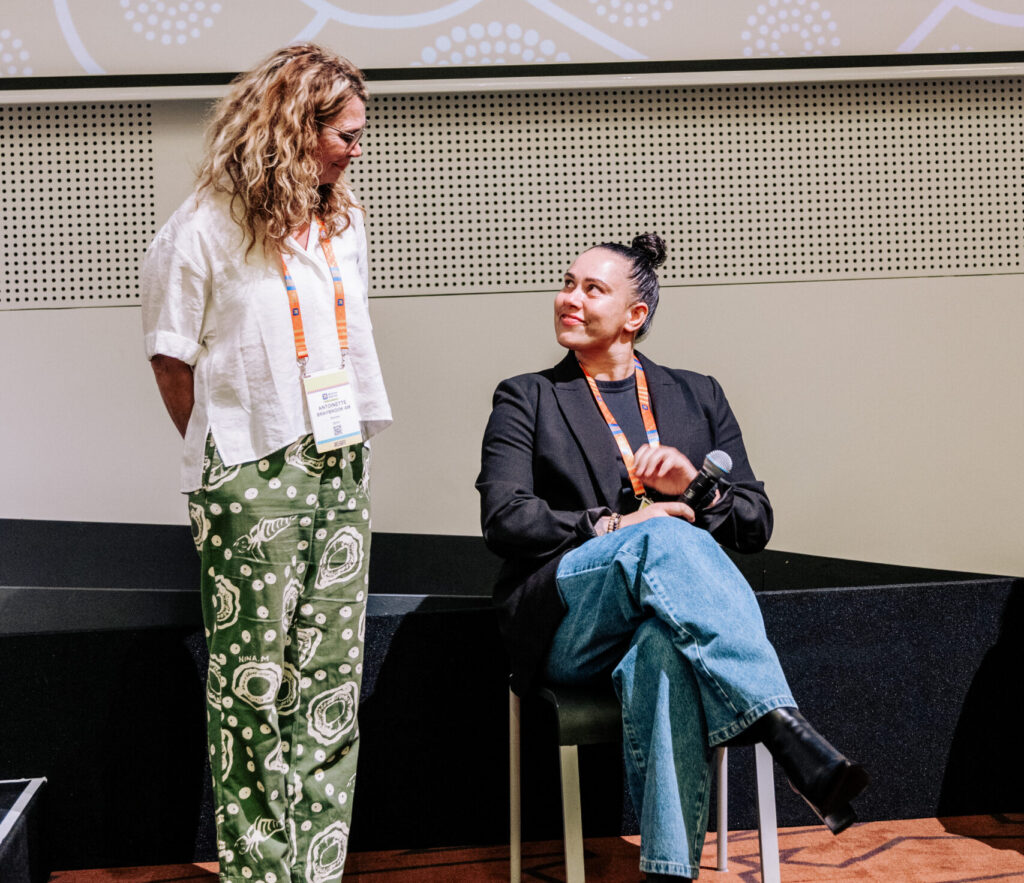
Djirra CEO Antoinette Braybrook writes on what it will take, together, to build the next fifty years, including Victoria’s first dedicated Aboriginal Women’s Centre.
NAIDOC celebrates 50 Years of Deadly this year, a purpose gifted by our people and grounded in fifty years of Aboriginal and Torres Strait Islander strength, leadership and achievement.
But for Aboriginal women, that strength, leadership and achievement didn’t begin fifty years ago. It stretches back tens of thousands of years.
First Nations women have always been powerful and respected in our societies. It is at the core of our culture. For millennia, we held high status. We were equal. We were leading. Then came the arrival of the First Fleet in 1788, the defining moment of invasion. It was from this point that our lives and our custodianship of Country intentionally ceased to matter to those who seized power.
Through it all, Aboriginal women resisted. They passed on that fighting spirit to us – so we can continue the fight to determine our futures, for ourselves.
Our matriarchs’ battles have become Djirra’s fight too. We join in common cause with the many who have demanded that Aboriginal women are at the centre of debates that affect our lives, and insist that our solutions are acknowledged and invested in. Djirra is a specialist Aboriginal community-controlled organisation based in Victoria that provides holistic services to Aboriginal women experiencing, or at risk of experiencing, family violence.
As the founding CEO of Djirra, I cannot count how many times I have spoken about the need to invest in Aboriginal women’s collective and individual self-determination. It can feel like too often, and yet it is never enough.
Our fight is not just on the frontline of women’s safety. It is also with the racist systems and structures that continue to flourish to our disadvantage.
Djirra is Aboriginal women’s self-determination in action.
This NAIDOC, Djirra celebrates the leadership, resilience and cultural strength of Aboriginal women. We honour the generations of women who, over the past fifty years and longer, have built organisations where none existed, challenged injustice, fought for the safety and rights of Aboriginal women and children, and advanced self-determination.
Over those same fifty years we have seen Aboriginal women leading change in our communities, in the justice system, in family services, in advocacy, and in parliaments right across this country. Nurturing the growth of Aboriginal community-controlled organisations and the resurgence of culture, identity and pride, Aboriginal women have driven change and helped build the foundations on which we stand today.
Their legacy is not only in what they have achieved, but also in what they resisted and then made possible through innovation, courage, and the wisdom of women.
In the first half of this year alone, I had the enormous privilege of being a part of two particularly momentous wins in our ongoing fight to ensure Aboriginal women and children are safe and together.
The publication of Our Ways, Strong Ways, Our Voices in February of this year, which includes a dedicated First Nations women’s safety plan, was a turning point for Aboriginal women and children here in Australia. A decade in the making, it came after relentless advocacy from Aboriginal women, including me, who have long argued that we were rendered invisible in the “mainstream” National Plan to End Violence Against Women and children, now in its fourteenth year of guiding national efforts to end men’s violence against women and children.
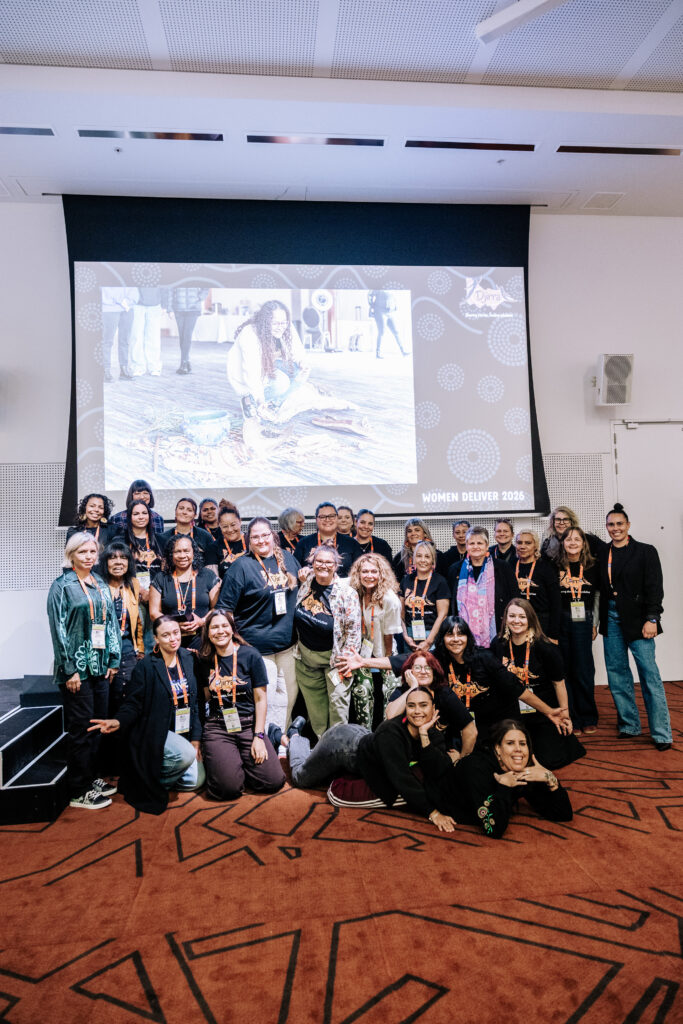
Just a month later, in April, I led a strong Djirra delegation at the international Women Deliver Conference 2026 on Wurundjeri Country in Naarm.
Our delegation brought together Djirra staff and Aboriginal and Torres Strait Islander women leading across states and territories in family violence and human rights. We were visible. We were present. We showed up with purpose. We asserted Aboriginal women’s leadership on a global stage. We called for action to end violence. We demanded investment in our self-determined solutions and we named the systemic inequality that continues to harm our women, our children and our families.
Djirra’s Women Deliver concurrent session, “Tackling Systemic Racism Against First Nations Women” featuring First Nations panellists Monique Chong, Wynetta Dewis, Hannah McGlade, Kirby Bentley and Kelly Faldon, raised the roof at the Melbourne Convention Centre. The session was packed, with over 250 people, as we took the audience on a journey from the heaviness Aboriginal women carry to our self-determined solutions, ending with an uplifting close featuring Kristel-Lee Kickett singing and the whole room dancing.
Now it is Djirra’s turn to look to the future, into the next fifty years, where we will write another chapter built on the foundations of our women’s strength.
The next chapter will incorporateeverything Aboriginal women have long fought for: a future where Aboriginal women and children are safe and together; a future where families receive support early, before crisis, child removal and lifelong harm occurs; a future where Aboriginal women are believed and supported, not punished and criminalised for the violence they experience; a future where women can access culturally safe services no matter where they live in Victoria, and a future where the next generation of Aboriginal women leaders is nurtured, supported and empowered to thrive.
That is why at the core of Djirra’s vision for the future, the next “deadly” fifty years, is an Aboriginal Women’s Centre, a first in Victoria. Not simply a building, but a commitment to move beyond responding to crises—and instead to invest in possibility.
Djirra’s Aboriginal Women’s Centre will be a place where Aboriginal women lead, where children grow strong in culture and identity, where voices are amplified, where families are strengthened, where healing, safety, justice and community come together, and where future generations can build on the strength of the women who came before them.
With the benefit of a Churchill Fellowship, I researched ways First Nations peoples around the world have translated cultural wisdom and practices into physical buildings and spaces to promote collective identity and healing. I saw what is possible when self-determination is built into systems, not added on later—and when physical spaces become conduits for all that we imagine for our future.
Our strength, determination and leadership have carried us this far, but we know the work is far from done. We will continue to lead the charge. And together, we are building our next chapter, building on women’s strength, and, yes, building Victoria’s first dedicated Aboriginal Women’s Centre that will embody and support the strength, leadership and achievement of our women well into the future.