
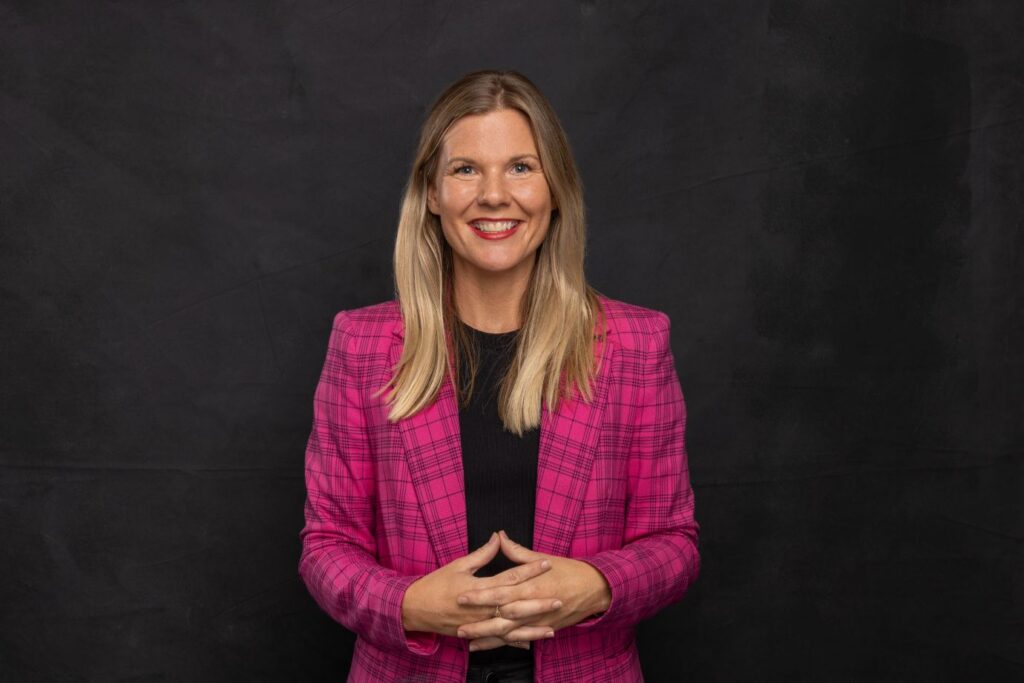
I’m forty years old. So far, my career has spanned group fitness instructing, medical imaging, general management, organisational development, leadership coaching, a non-profit board role, social enterprise, funeral business ownership, consulting and e-commerce. Which either sounds adaptable or deeply unstable, depending on your worldview.
On paper, I know it looks scattered. In reality, much of it happened concurrently, and each chapter built something the next one required. Communication in one role. Commercial judgement in another. Resilience almost everywhere. But more than skills, each role taught me something about myself.
It taught me what I was actually good at, what drained my energy, what sparked my interest, and how I genuinely wanted to spend my working life.
This began unintentionally. My career looks this windy because I was working out what I wanted to do while I was doing it. Increasingly though, this winding path is becoming not just common but necessary.
Skills no longer stay relevant for decades. The World Economic Forum’s 2025 Future of Jobs Report found employers expect nearly 40 per cent of workers’ core skills to change by 2030. Industries reorganise themselves mid-career, and entire job categories appear overnight. We are trying to build working lives with industrial-age assumptions in a world changing at software speed.
Meanwhile, Gallup’s 2026 State of the Global Workplace report found only 34 per cent of employees globally describe themselves as thriving. I used to think I was one of the unlucky ones because I never seemed to know what I wanted to be when I grew up. In hindsight, I was accidentally developing the exact capability modern work now demands. I was experimenting. I just didn’t call it that at the time.
Many others of my era continued on as we were conditioned to. Do your degree, keep your head down, work hard, wait for the next tap on the shoulder. The tap on the shoulder worked well in stable systems where you’d do good work, stay loyal, and eventually somebody senior would notice you and point towards the next rung of the ladder.
But modern careers rarely behave like ladders anymore. People move sideways, backwards, diagonally. They leave professions they trained years for. They build portfolio careers. They consult, contract, freelance, retrain, burn out, recover, start again.
For a surprising number of high achievers, this environment built around modern careers creates a peculiar kind of paralysis. It’s not that these achievers lack ambition, or that they’re inflexible. Instead, they have spent so long being rewarded for competence and conviction that they struggle to make decisions without a clear plan and external validation.
Sarah was one such high achiever struggling with decision-making. She was a capable, thoughtful and widely respected senior executive. When she came to see me for coaching, she was looking for her next career move, and she already had some ideas. Perhaps she should do an MBA, take on a non-profit board role, or look for one rung up on the ladder. CEO? Maybe politics. All logical next steps on paper.
“I’ve always been tapped on the shoulder for new opportunities, and I’m grateful for that. But I don’t know if I actually want what comes next. I’ve never had to think about what I actually want to do before,” she told me.
The uncertainty is unbearable for someone used to being in control. To deal with it, high achievers like Sarah will often approach the problem intellectually. More research, more qualifications, more external advice, more time spent trying to identify the perfect next move before taking any action at all.
So, we took a different approach in our coaching sessions. Sarah didn’t set goals, she set hypotheses. I’ll test doing a consulting project for a friend for two months to learn if it ignites a fire in my belly. I’ll go to a marketing conference to learn whether this is a skill set I’m keen to dig deeper into, and if these are the kinds of people I want to spend time with. I’ll have coffee with someone outside my current network twice a week for eight weeks to learn what else is out there.
There’s no success or failure with this approach, just an opportunity to learn. Her shoulder taps changed. New people noticed her, different opportunities found her, and her life cracked open to further opportunities. That may be the real value of experimentation in adulthood. Not constant reinvention, not reckless leaps, just the willingness to gather new evidence about yourself before the old story calcifies completely.

One of the biggest mistakes capable people make is believing clarity arrives before you move. Usually, clarity arrives well after the move. The people navigating modern work best are rarely the ones with the most detailed plans. More often, they are the ones willing to test possibilities before certainty appears. Small, deliberate experiments. Ask a genuine question, and learn from the answer. Most give you data on what you don’t want, and you stop. Some alter the direction of a life. But either way, movement creates information.
My own career wasn’t a master plan. It was a series of experiments that only became coherent in retrospect. And perhaps that is what modern careers are now. Less a carefully mapped ascent than an ongoing process of paying attention. The path rarely appears all at once. Usually, it reveals itself a few steps ahead of wherever you currently are.