Picture this, you’re a young woman who’s just landed a dream job in your field of study. You’re excited, and a little apprehensive; this will be your first time commuting back and forth between your suburban home and the office in the city’s CBD. You’re so excited, that you stay back later than you expected on your first day, and wind up catching the train home in the dark.
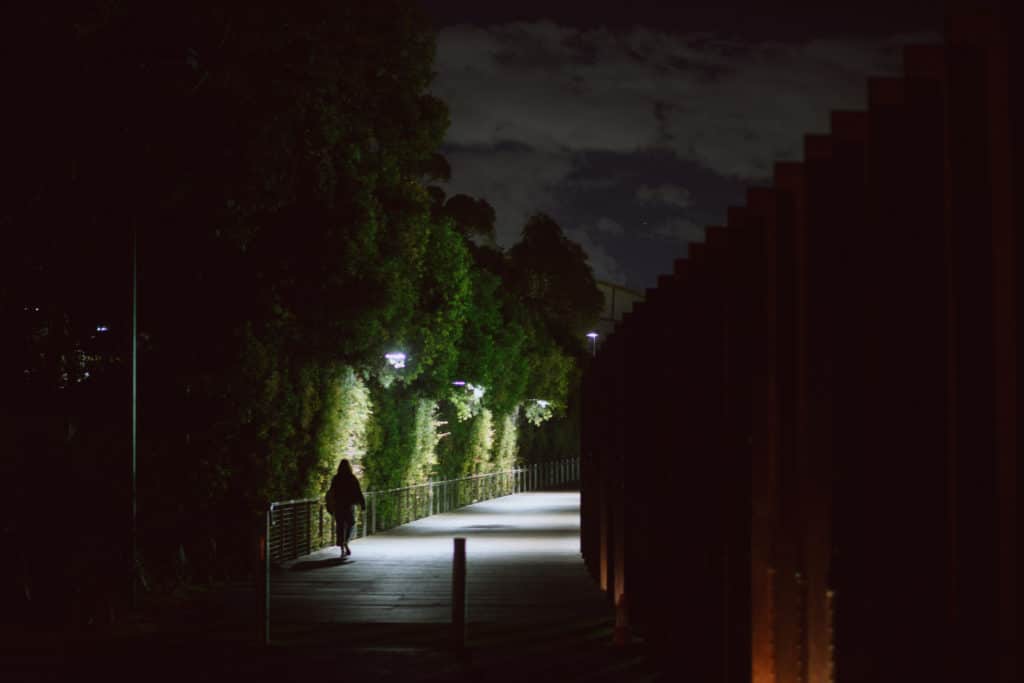
You step off your train and notice the station is lit by only a single harsh bright overhead light, illuminating one small section of the platform, while casting everything else in ominous shadow. The light is so bright, it actually dazzles, and the dark shadows loom even more in contrast. You think how much better and safer you would feel with a few more light sources installed. In fact, you think how much safer you would feel if the fencing around the platform was designed so you could see what was on the other side, using bars, or a lower wall, because as it is, the blind corners you have to pass are making you nervous.
You wonder how many women were in charge of designing the area.
This is the question at the heart of a global research report conducted by sustainable development firm Arup, with the United Nations Development Programme (UNDP) and the University of Liverpool (UK), Cities Alive: Designing cities that work for women.
Despite accounting for half of the world’s population, the safety and wellbeing of women and girl’s is woefully unconsidered in urban planning and design. Surveys revealed 32 per cent of women felt unsafe in public spaces at night, which has real-world impacts on women’s equity. In Jordan, 47 per cent of women turned down job opportunities because of access to public transport and sexual harassment on it as key reasons.
These issues are sadly unlikely to change without intervention. Women are currently not well-represented in key decisions that affect the future of urban environments with only around one in seven environmental sector ministries worldwide led by women. There are long term strategies needed to entrench women’s role in planning decisions, and removing barriers for women in city planning, construction, and leadership positions, but this must happen in tandem with short-term changes that influence current city design.
The gender bias built into the design of cities has deeply felt negative ramifications for women around the world. When the city you live in seems to be working against your health, wellbeing, and economic success, it makes it even harder to reach gender equity.