

The buzz of attending a women’s leadership conference is a feeling many professional women know well. Insightful speakers and meaningful conversations can leave you feeling energised and filled with a sense of possibility.
But too often, once you’re back at your desk with an overflowing inbox and looming deadlines, you might wonder: what did I actually take away from it?
This is exactly the issue the 2026 Women in Leadership Summit series, run by the Women Leaders’ Institute in partnership with UN Women Australia, is designed to solve.
This year, the event series is building a new standard for leadership return on investment (ROI), looking at closing the capability gap by giving women the opportunity to take part in a structured learning journey.
It moves away from the inspiration model of traditional conferences towards providing real, measurable professional development outcomes for women.
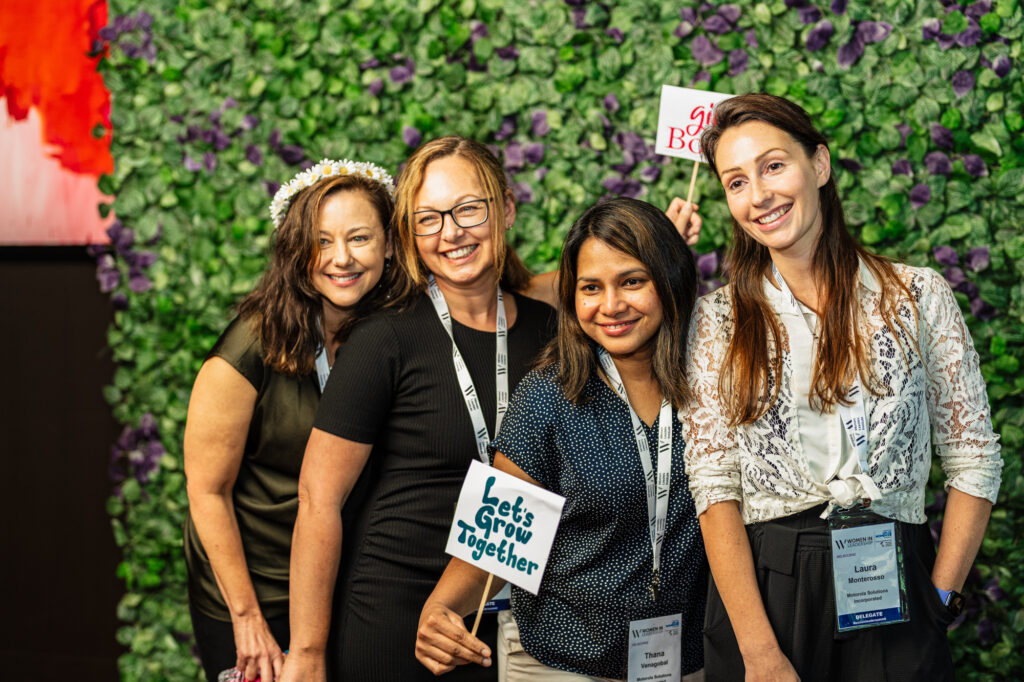
A new approach to leadership development
CEO of UN Women Australia, Simone Clarke says this kind of professional development builds individual capability and competencies, while contributing to a world and workplace we all want to be part of.
“UN Women Australia’s Women in Leadership Summit Series is a catalyst for return on investment beyond learning and development,” Clarke said. “The multiplier effect of investing in women’s leadership has an impact not only on women, but also on the communities where we live, care, and lead.”
“At a time when organisations are being asked to do more with less, this series demonstrates how a sound investment in leadership and development can be leveraged for performance AND purpose.”
In 2026, the Women in Leadership Summit series has partnered with OpenLearning to give attendees the chance to earn micro credentials and digital badges through participating in a pre-event webinar, mini workshops at the event and two post-event webinars.
Participation in the summit generates verifiable, recognised proof of capability, which is something women can point to on a LinkedIn profile, present to an employer, or use to make the case for a promotion, a new role, or a seat at the table.
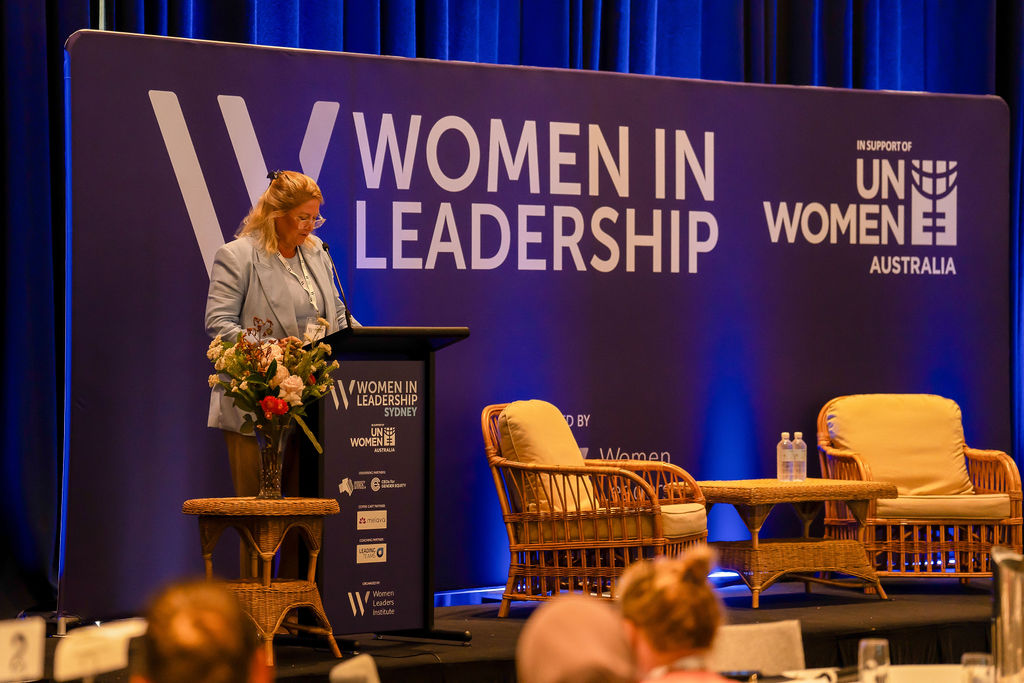
It’s a shift that Catherine Hunter, CEO of Diversity Council Australia, a partner of the event series, says matters beyond the individual.
“Initiatives like the 2026 Women in Leadership Summit matter because they don’t just build skills; they help make leadership capability visible through practical learning and recognised micro-credentials,” Hunter says.
Hunter says the most successful leaders emerge when organisations redefine the leader prototype and deliberately design systems that enable equity, rather than preserve the status quo.
“When capability is recognised, trusted and deliberately deployed, organisations see stronger performance and a clearer return on their leadership investment. That’s the new standard for leadership ROI,” she says.
An opportunity to invest in women’s professional growth
The case for investing in women’s leadership potential is clear, according to Lisa Annese, CEO of partner organisation Chief Executive Women, who notes that progress towards gender representation in executive leadership teams has effectively stalled.
“The CEW Senior Executive Census, shows that women hold just 31 per cent of Executive Leadership Team positions across the ASX 300, up only one percentage point on last year,” Annese said.
“Men hold 80 per cent of CEO pipeline roles, and 41 per cent of ASX 300 companies have no women in those roles at all. At this pace, gender balance in corporate Australia remains decades away.”
Australia has one of the most educated female workforces in the world. Annese says that the women coming through corporate Australia are among the most capable leaders in the country. The barriers for these women are structural.
“Strong leadership development is not about making women ready,” Annese said.
“Its role is to give them the backing, the networks and the confidence to navigate workplaces that were not built for them, and to lead the change those workplaces need. Women have long been ready.”
For organisations looking to support their teams with leadership development, the summit’s new format is the perfect opportunity to do so. Research consistently shows that greater representation of women in leadership drives better performance, higher productivity, and greater profitability.
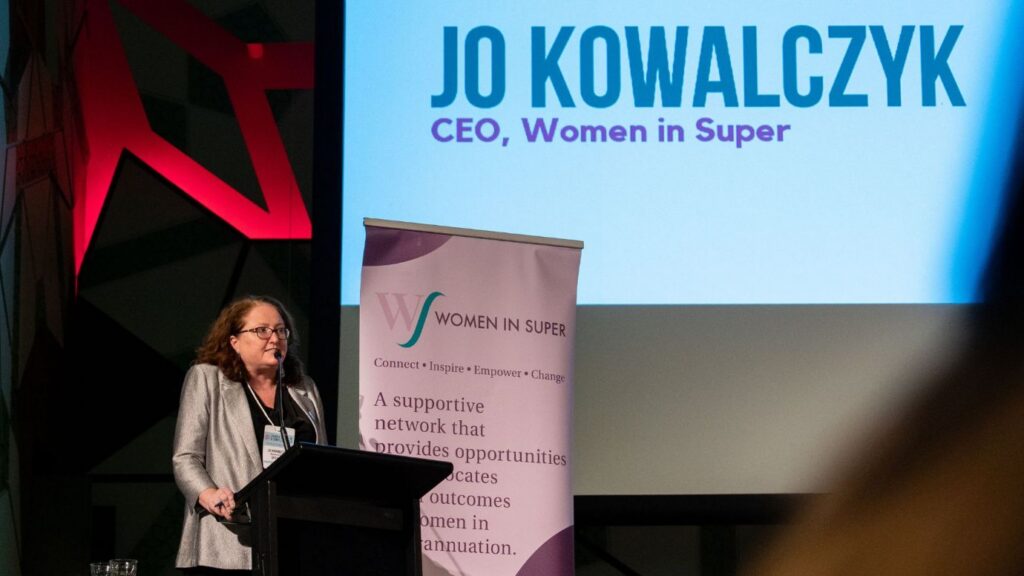
Jo Kowalczyk, CEO of Women in Super, says leadership development should deliver tangible and measurable outcomes, including verified capability and professional recognition that can support women in the face of the gender pay and superannuation gaps.
‘Women continue to face significant structural barriers to financial security, including persistent gender pay and superannuation gaps that compound over a lifetime and leave many women retiring with substantially less savings than men,” Kowalczyk said. “Supporting women’s leadership, visibility and career progression is critical to changing those outcomes.”
“The Women in Leadership Summit provides an important opportunity for women to invest in their professional growth, expand their networks and strengthen the skills and confidence needed to progress into leadership roles,” Kowalczyk said.
The time for good intentions has passed
CEO of partner organisation CEOs for Gender Equity, Ashley McGrath, says the credentialling conversation extends beyond individual women to the leaders who are ultimately responsible for creating change. The digital badging through OpenLearning can provide the measurable performance data CEOs need to prove their organisations are moving from intent to action.
“Change starts at the top,” McGrath says.
“Employees, prospective employees, and other key stakeholders are looking at CEOs for proof that they are walking the talk on the gender equity journey.”
McGrath says it is up to membership organisations to ensure digital badges are not “awarded lightly”, only to those who are moving from intent to tangible action and outcomes.
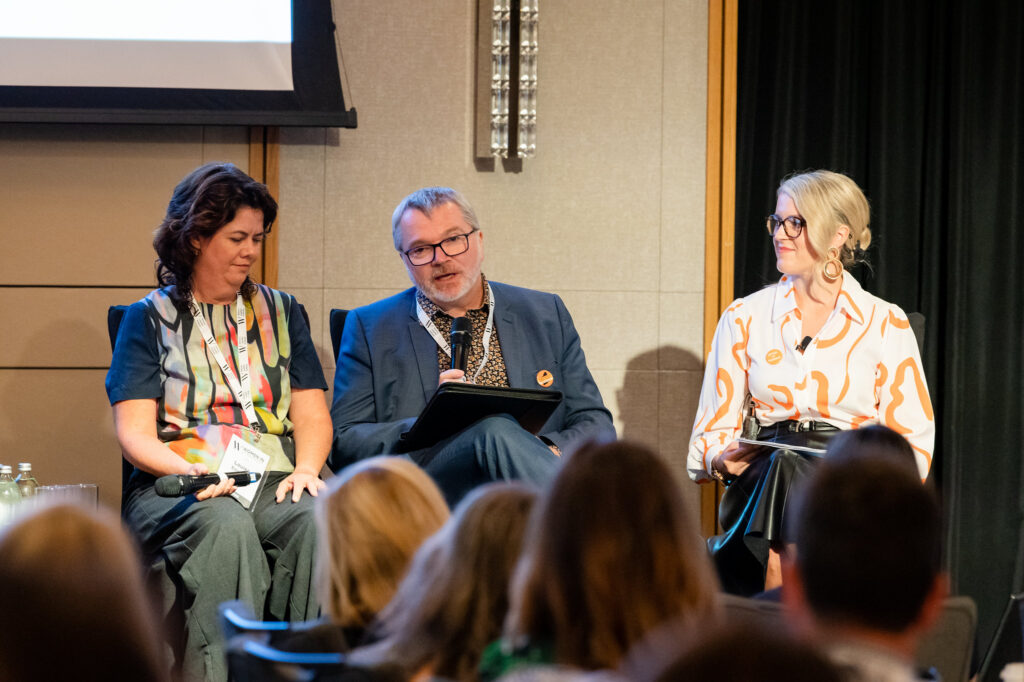
Building global impact
Through its partnership with UN Women Australia, the Women in Leadership Summit series is actively contributing to programs that expand women’s economic opportunity, safety and leadership in Australia and worldwide.
That means an organisation’s professional development budget does double duty, investing in the women on its own team while contributing to gender equity efforts on a global scale.
Women in Super’s CEO Jo Kowalczyk says this makes the summit genuinely distinctive from its counterparts.
“Women in Super is also proud to support an initiative that extends beyond individual career development through its partnership with UN Women Australia, helping contribute to broader efforts to support women’s empowerment globally,” she says.
As UN Women’s Simone Clarke highlights, every conversation, connection, and capability built throughout this event series, contributes to creating new and expanding opportunities for women entrepreneurs, workers, and leaders across our region.
“When we invest in leadership in Australia, the ripple effect is global; it directly supports UN Women’s work advancing women’s economic empowerment across the Asia-Pacific.”
Find out more about the 2026 Women in Leadership Summit series here.