
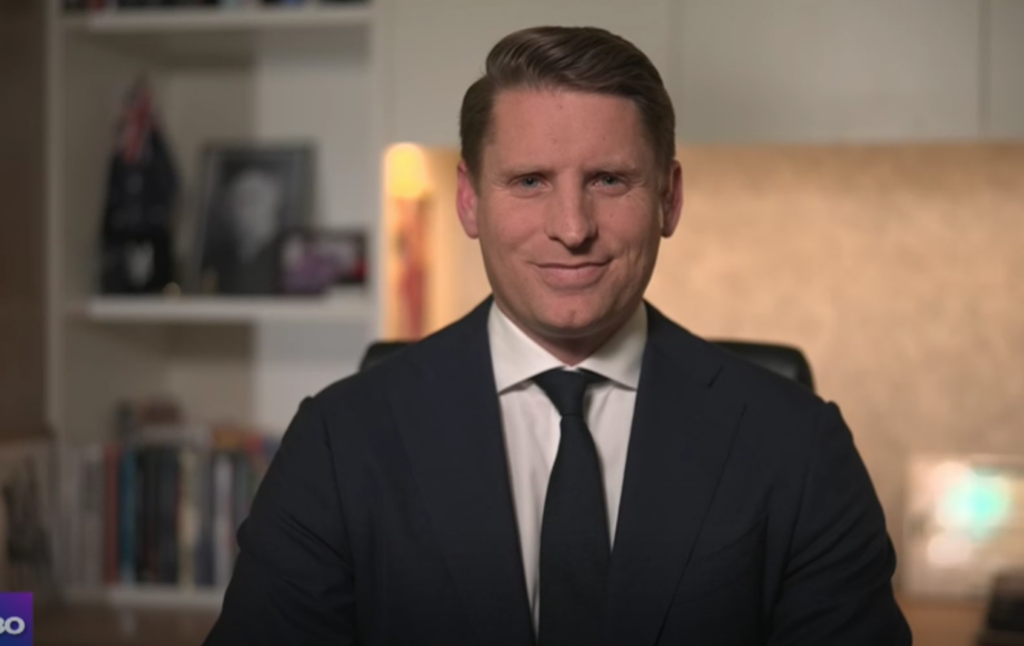
Western Australian Liberal MP Andrew Hastie believes there is a “third way” for Australia, a path somewhere between Pauline Hanson’s warped vision of “monoculturalism” and our long-held approach of multiculturalism.
Speaking to Sarah Ferguson on ABC’s 730 program on Wednesday night, Hastie stopped short of endorsing Australia’s long-standing model of multiculturalism, arguing it had now been co-opted by the “woke left”.
“You’ve got the woke right pushing for monoculturalism. You’ve got the woke left pushing for multiculturalism. I sit with most sensible mainstream Australians somewhere in the centre. I think there is a third way,” he said.
“It doesn’t matter where you’re from or what colour your skin is. If you sign up to our shared language, which is English, our shared institutions like parliament and the rule of law or our judiciary, and if you sign up to our shared symbol, that is the Australian national flag, then you’re Australian.”
Since when did multiculturalism become a dirty word for right-wing politicians?
The answer is when One Nation Leader Pauline Hanson stood up at the National Press Club and called for Australia to reject multiculturalism and embrace her seemingly mythical version of monoculturalism.
And then, Liberal leader Angus Taylor, caught up in the populism of Hanson’s approach, refused to endorse multiculturalism when asked several times by journalists whether the Coalition still supported it.
“You explain to me what you mean by that. There is all these vague words running around. I’ll tell you what, the one thing I want all of us to share is those core Australian values,” Taylor said.
In the current political climate, where One Nation is dictating the approach of the right in Australia, it’s easy to forget that it was once politicians of the right, like Malcolm Fraser, who played a central role in multiculturalism’s development in Australia.
As Liberal prime minister from 1975 to 1983, Fraser was a champion of multiculturalism whose government was the first to accept migrants from Asian countries, including Vietnamese refugees. He created the SBS and the Australian Institute of Multicultural Affairs and won three federal elections while championing these policies.
Speaking to 730, Hastie seemed intent on painting multiculturalism — which has been an overwhelmingly successful approach to life for Australia over decades — in a negative light. He demonised multiculturalism in a way that distorts its proud history.
“There are people who would advocate for multiculturalism where we balkanize and ghetto-ise our country where people are able to opt out of our language. They’re able to opt out of our institutions. They’re able to opt out of our symbols,” Hastie said.

“And I reject that as much as I reject those who insist on a monoculturalism, which is sort of based in ethnicity.”
Hastie isn’t warm to Hanson’s idea of monoculturalism either. His framing of the deabte comes as he is expected to face a strong challenge in his seat of Canning at the federal election from One Nation. And as the party targets Hastie, a former SAS soldier, for his involvement in the Ben Roberts-Smith case. Hastie has now been granted extra security for himself and his family, and has said he will “never surrender to One Nation”.
Hastie’s comments illustrate just how far the Coalition’s debate on immigration and national identity has shifted. Not long ago, multiculturalism was a bipartisan principle, embraced by governments of both major parties as a cornerstone of modern Australia.
In trying to carve out a “third way”, Hastie may be attempting to distinguish himself from Hanson. But in treating multiculturalism itself as politically problematic, he is also reflecting how successfully One Nation has reshaped the boundaries of the debate.