
The online world has given girls and women powerful tools to connect, organise and speak. It has also given new shape and scale to very old ideas about gender, power and who gets to belong.
The “manosphere” is one of the clearest examples. It is often described as an online subculture, but that underplays its reach. It is a cultural force, spilling into classrooms, workplaces, group chats and public debate – and it is shaping the world our young people are growing up in.
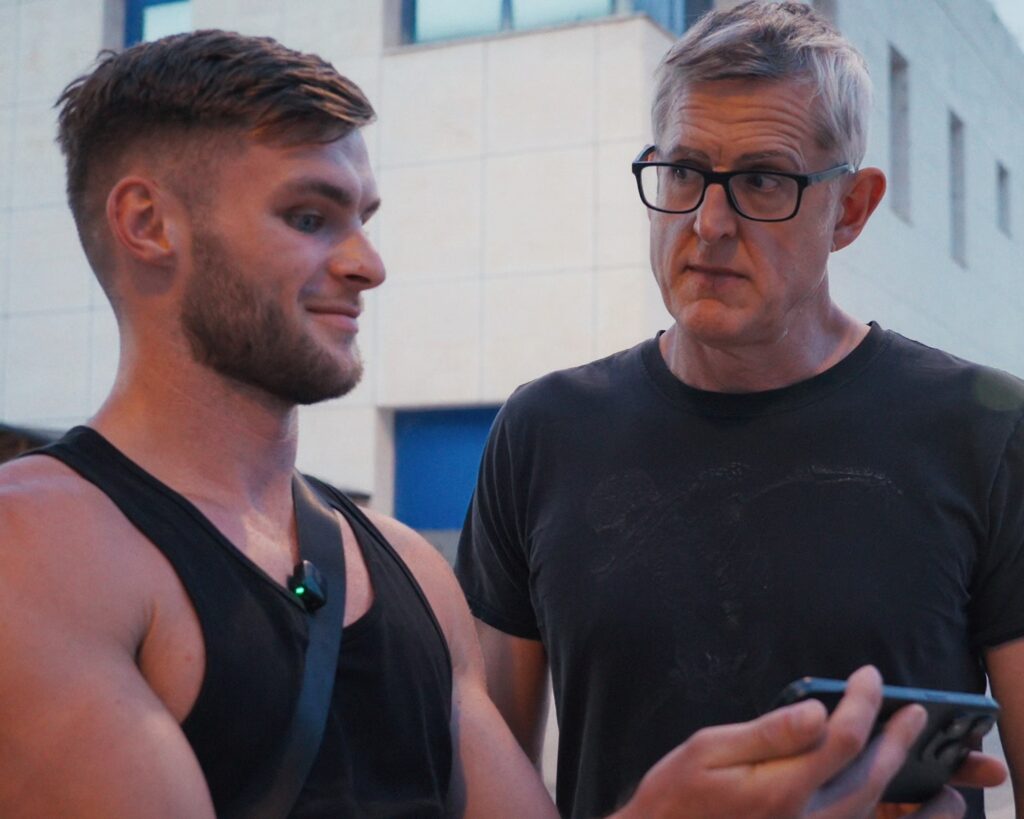
Louis Theroux’s documentary Inside the Manosphere has shone a light on this ecosystem. Many parents, teachers and young people already sense it is there, even if they do not always have the language for it. On the surface, much of this content looks like help for men and boys: advice on fitness, confidence, business, dating and “success”. Underneath, it carries harmful messages that only serve to divide us.
And it’s not about a handful of extreme influencers. It is about how platform design and algorithms can take a curious teenage boy from generic self‑help to explicitly misogynistic content in a remarkably short period of time. One study found that after just 23 to 26 minutes of watching videos, some social media platforms begin recommending toxic or misogynistic content to young male users.
In Australia, we are already seeing the effects. Researchers and educators are warning that the manosphere is gaining traction in schools, shaping attitudes in classrooms and playgrounds before many adults even realise what boys are consuming online. Girls report feeling less safe. Female teachers describe harassment and intimidation linked directly to what their students are watching on their phones.
For women and girls, this is not theoretical. It intersects with the realities they already face: sexual harassment at work, abuse online, attacks on women in public life, the fear of violence at home. The manosphere does not create misogyny from scratch, but it amplifies and packages it in language that can sound like truth‑telling, resilience or even care.
It is important to say clearly: many boys and young men are not deliberately seeking out hatred of women. They are trying to understand themselves and the world, often in the middle of economic insecurity, social isolation and uncertainty about the future. The manosphere exploits those vulnerabilities, offering simple explanations and a sense of belonging – and, too often, someone to blame.
The cost is borne by all of us. For boys and young men, these narratives narrow what it is to be a man down to dominance, stoicism, control and the myth of the alpha. They suggest that showing tenderness or uncertainty makes them weak, and that asking for help is failure. That cuts them off from connection, from compassion and from the full range of what it means to be human. In that sense, boys and young men are also being failed by this culture.
For girls and women, the impact is immediate. When misogynistic ideas are normalised, women’s worlds become smaller. Safety, choice and voice are constrained. It chips away at women’s freedom and at their right to move, speak and lead without fear – whether they are in a classroom, a boardroom, a change room or Parliament.
This is not simply a matter of a few “bad apples” online. It is a structural and cultural challenge that demands a structural and cultural response.
For policymakers, that means treating the manosphere as part of the broader ecosystem of gender‑based violence and inequality – not as a niche internet trend. It means holding platforms to account for design choices that drive engagement with harmful content, and resourcing regulators with the powers and capacity they need to act. It means sustained investment in prevention: evidence‑based respectful relationships and gender‑transformative education, not just one‑off programs.
For education systems, it means recognising that teachers cannot do this work alone, and supporting them with training, resources and clear policy settings. For workplaces and institutions, it means examining their own cultures and asking hard questions about how these narratives about gender and power show up internally.

And for women’s organisations, advocates and community leaders, it means insisting that men and boys are part of the conversation – not as potential perpetrators, but as partners and as people who are themselves being targeted by harmful messages about what it means to be a man. If we do not offer boys alternative pathways, the manosphere will continue to do it for us.
We need spaces where boys and men can talk honestly about pressure, fear and uncertainty; where they can explore different ways of being strong, caring and connected; where equality is framed not as loss, but as an opportunity for more authentic and expansive lives for all.
The answer cannot be division. It has to be unity. Coming together, with clarity and compassion, to say that equality is for everyone. When women and girls are safe and free, men and boys have more space to be themselves. Equality is not a binary proposition – it’s about being on the same side, building a world where all of us have space to live speak, love and lead without fear.
It is the foundation of a safer, fairer and more connected society for us all.