
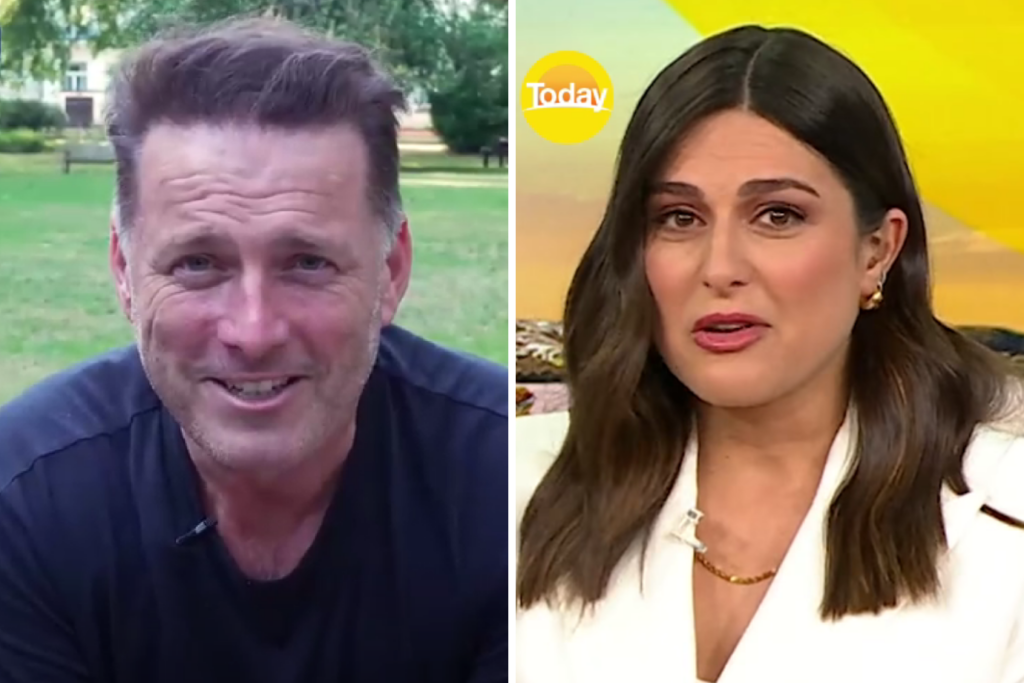
Karl Stefanovic’s interview with UK far-right figure Tommy Robinson this week was always going to detonate. And it did. Calling Robinson “courageous” and “tenacious” and giving him free rein to spout racist drivel, wasn’t robust journalism but an endorsement from Stefanovic, that immediately set the tone for the backlash that followed.
Yesterday, Stefanovic’s exit from Nine was confirmed, with both sides effectively drawing a line under a relationship that had become increasingly difficult to reconcile with the direction of his independent podcast.
Stefanovic was quick to defend himself on free speech grounds, arguing he is no longer operating under network constraints and that audiences should be trusted to sit with uncomfortable ideas.
That defence has been quickly backed up by male media figures. Ben Fordham has publicly defended Stefanovic, arguing the backlash is overblown and positioning him as simply showing his “real” self. James Packer, the former owner of Nine, agreed, adding weight to the idea that Stefanovic is being unfairly criticised for stepping outside the boundaries of mainstream television.
“In my time at Nine and certainly at the Nine newspapers, the old Fairfax newspapers, there’s always been editorial independence.
“I think it’s pretty hypocritical not to allow Karl editorial independence, especially on something I didn’t think was that bad”, he told the Sydney Morning Herald.
It’s hardly surprising these two have jumped quickly into the brawl. When high-profile men in media come under fire, the defence is often immediate, vocal, and led by other men in positions of influence. The language is consistent too. Karl isn’t reckless but “courageous”, “authentic”, “saying what others won’t”.
What is equally noticeable is who has not joined that chorus.
Women’s Agenda reached out to Lisa Wilkinson, Sarah Abo, Deb Knight and Brooke Boney for comment on Stefanovic’s podcast and the Robinson interview. None responded publicly. These are women who have worked beside Stefanovic for two decades, and by all accounts consider him a friend.
That silence is more pronounced not only by the speed of male-led defence, but also to the nature of what is being defended. Robinson is not a marginal controversial guest. He is a figure widely associated with far-right activism, racism, and persistent disinformation. He’s also got an extensive criminal history, spanning violence, fraud, immigration offences, and contempt of court.
Other predictably controversial guests selected to feature on Stefanovic’s podcast include Pauline Hanson, Pete Evans, the Katters, Jacinta Price and Gerard Rennick. Well-ingrained leaders of the culture-war ecosystem.
By contrast, the four women Stefanovic sat alongside for the majority of his career have all, in different ways, publicly pushed back against racism, bigotry and division. Now, they watch their friend helm a podcast that’s designed to fuel it.

In 2020, when Pauline Hanson described residents in Melbourne’s locked-down public housing towers as “drug addicts” and “alcoholics” who “couldn’t speak English”, she was effectively shut out from appearing on Nine’s Today. Brooke Boney, a Gamilaroi woman who grew up in public housing, called the comments out on air as deeply offensive and harmful. She later said on ABC television she was “so happy to see her gone”.
Lisa Wilkinson has also repeatedly positioned herself on the side of public accountability and survivor advocacy, most notably through her sustained support of Brittany Higgins and her decision to conduct the first televised interview that brought allegations of rape in Parliament House into the national conversation.
Deb Knight, who has often described herself as a feminist, has regularly used her platform to highlight structural inequality, including the housing and financial insecurity driving homelessness among older women, now the fastest-growing cohort at risk in Australia.
And Sarah Abo, Stefanovic’s most recent co-host and a Syrian migrant who arrived in Australia as a child, has spoken openly about the role migration played in shaping her life and has consistently highlighted the value of multicultural Australia in public commentary.
Against that backdrop, the current direction of Stefanovic’s podcast sits in stark contrast. Not simply because it courts controversy, but because it increasingly elevates voices and narratives that sit at the centre of debates about racism, extremism and social cohesion.
It’s hard to reconcile Stefanovic’s broader track record against this pivot, too. This is the same man who famously wore the same suit for a year to highlight gendered scrutiny in media appearance standards.
Stefanovic would argue that mainstream media has become too cautious and sanitised. But there is a difference between broadening debate and amplifying figures whose public profile is built on grievance and division. He has had a long and successful career in media. He’s a household figure who’s either been loved or tolerated. Never loathed.
Now he’s gunning to be a man who’s revered only by those who want to cause social harm. And the rest of us, including most likely the many progressive women he’s worked with through the years, have lost all respect.