
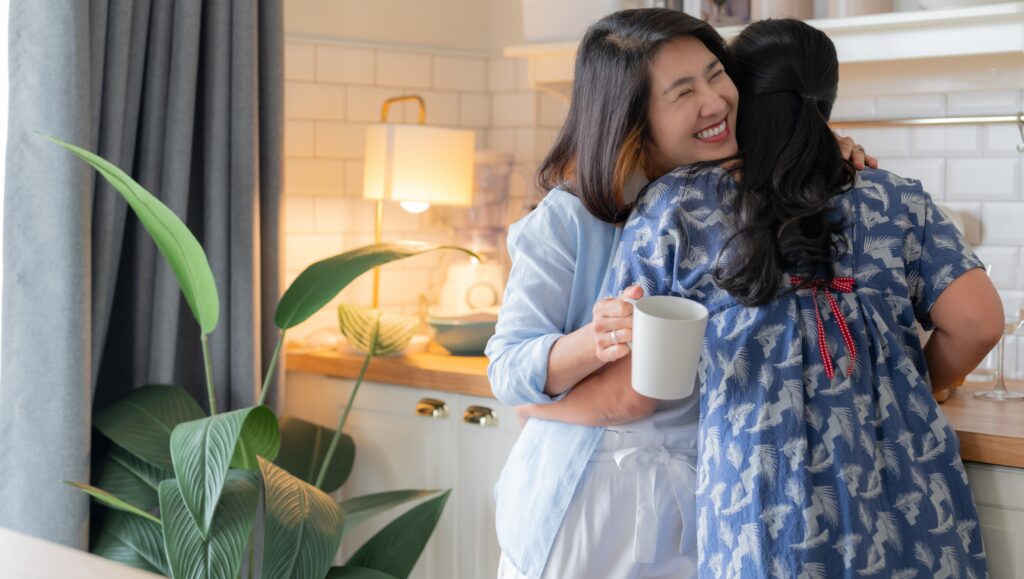
Many of us are feeling lonely and socially isolated, even while living in a home full of loved ones (or at least people), and even though we are more reachable and contactable than ever before.
Twenty-eight per cent of us report being lonely and 42 per cent being socially isolated, according to the latest 2026 State of the Nation report into loneliness, released to mark this week’s Loneliness Awareness Week.
The theme of the report is to “Make Room for Connection”, which speaks to a number of ideas for doing so but really hits home when you consider the opportunity to drop the expectations we have on the perfect home and moment and time and meal to have people over.
The call to just have people over is something I’ve been pondering a lot recently, having reflected on how some of the best days I’ve enjoyed this year happened while informally hosting friends at home – with the place untidy and cramped, with the snacks being whatever not-so-stale crackers were available from the pantry, and the drinks being whatever happened to be cold in the fridge.
And yet my fear is that the “drop-ins” and last-minute invites have become fewer and fewer in the age of social media, and WhatsApp polls demanding 24/7 responses regarding availability weeks in advance.
Further, I fear the levelled-up expectations of what it means to host a meal and have a great-looking living room – often as depicted in the edited versions of people’s lives online – may also be adding to the pressure to get it right and not do it at all.
Meanwhile, I fear how the physical and mental exhaustion of day-to-day life further holds women back on participating in informal gatherings, with no capacity to take on even more unpaid labour in the form of hosting, and with women already taking on so much of the responsibility of “kinkeeping” for other people in their lives. Kinkeeping was a term first used by Carolyn Rosenthal to describe the invisible, uncredited work of keeping people connected — and yes, it’s yet more unpaid work that is typically done by women. Work that holds families and communities together.
But what if we could open the doors just a little more and see more in the people and conversations within them, rather than in the physical space they occupy?
Of course, having a space for people to “drop in” is not always feasible. There are issues with who else lives in the home, its safety, its capacity, and its location. I also don’t want to overlook those who are experiencing homelessness and housing precarity, where loneliness and social isolation carry additional challenges.
The point here is that if you do have the capacity to share a home with friends, even for the shortest of catch-ups, try to drop the standards for what the home, the meal, and the company should look like. Connecting with friends should fill our cup rather than further draining what’s left. And connecting with friends shouldn’t have to involve striving to get every detail right.
There’s room to drop the expectations we place on ourselves, to be a little kinder with what we can and can’t do, and to reposition the meaning of “home” as being about the people and all their messy conversations and flaws within them, rather than how what’s between the walls looks.
Regardless of whether the above is realistic, it’s also important to still consider at least calling or messaging a friend — not just today, but regularly.

It may help to consider the findings of “The Surprise of Reaching Out” report, based on 13 experiments involving almost 6,000 people. Peggy Liu at the University of Pittsburgh found that we consistently underestimate just how much other people appreciate hearing from us. The gap gets wider the more reluctant we feel, and the more the idea of contacting the friend may be perceived to come out of nowhere.
The friend you might worry about bothering could very well be the one most glad that you did.