
Travis Kalanick’s resignation as the CEO of Uber yesterday is something of a victory.
His undoing is not explained by a single event. Five of the company’s major investors effectively demanded his exit because of the cumulative impact of too many missteps and crises in recent years.
There have been driver class actions, pedestrian and passenger fatalities, global protests by the taxi industry, concerns regarding a lack of adequate background checks on drivers and weird privacy and surveillance operations.
Uber CEO Travis Kalanick resigns following months of chaos https://t.co/70LyMcSb6L #uber #TechNews #tech #business #ondemand @KatapulsionUK pic.twitter.com/vlx4pLC5Rf
— Tom Forshaw (@Forsh) June 21, 2017
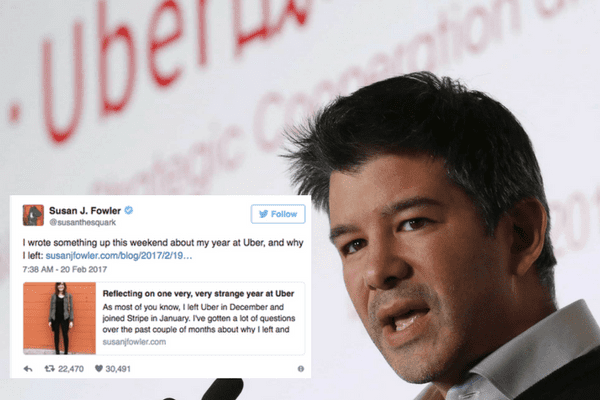
But there is no doubt that a major catalyst for Kalanick’s demise was a blog post written by a former engineer.
Four months ago Susan Fowler did what thousands and thousands of other women – from all sorts of workplaces, all around the globe – have contemplated doing at one point or another.
She spoke out. She resisted the temptation to stay quiet. To keep the reality she had experienced, the dynamics she had endured, private and carry on.
Instead, she lifted the lid and detailed the toxic culture at Uber. She wrote about the sexual harassment and misogynistic culture that made it a repugnant place to work for many women.
https://twitter.com/susanthesquark/status/833415550638313472
In plenty of instances there has been no upside in an employee doing this. The reward for speaking out about bad behaviour at work often comes in the form of being shown the exit. It’s not uncommon for women who do it publicly, particularly in the realm of sexual harassment, to be ostracised in the press for their efforts. To be labelled vexatious or scorned or humourless.

Not this time. Not for Susan Fowler.
Her words went viral. The company was forced to take her complaints seriously.
After her piece was published on February 19 this year, Uber took immediate action. The company enlisted former US Attorney General Eric Holder to undertake an internal assessment of the company’s culture the very next day.
A couple of weeks ago, 20 staff were shown the door following an investigation into more than 200 complaints of bullying and harassment.
Last week, an Uber board director David Bonderman resigned after making a joke – at an event to address sexism and harassment – suggesting women ‘talking too much’ during an all-in company meeting.
When board member Arianna Huffington said it was good the Uber board had increased it’s female ration to 25%, he said: “Actually, what it show is that it’s much more likely to be more talking.”
It is not difficult to imagine Bonderman’s remarks or Susan Fowler’s words being dismissed. Let’s not forget that just last year, in the year 2016, America elected a president who had bragged about grabbing women by the pussy.
Back in 2014 in a GQ profile Trevor Kalanick was asked whether he’d been having more luck with women since the success of Uber which he founded in 2009. He replied: “Yeah, we call that Boob-er.”
Susan Fowler’s blog suggests those remarks set the tone for the treatment of women within Uber. And for a long time that was accepted.
Lesson from Susan Fowler's impact on Uber: Don't underestimate the power of your voice, even if you're just one person. Speak truth.
— Andrew Ng (@AndrewYNg) June 21, 2017
Not anymore. There is no joy in seeing someone fail. It is no victory when someone is forced out of the business they built.
But do you know what is worse? A business succeeding despite the way it treats its staff. Despite women being subject to harassment. Despite a toxic culture.
So let’s hope the lesson from Kalanick’s exit is two fold. For women, there is power in speaking out. And for business, allow sexism and harassment to flourish at your peril.