
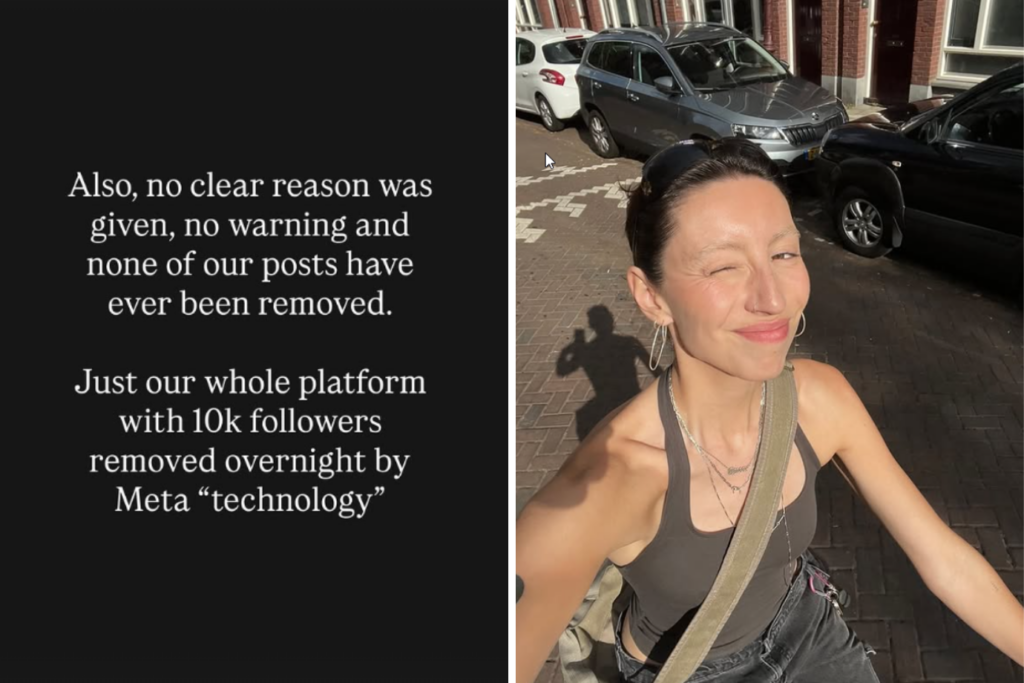
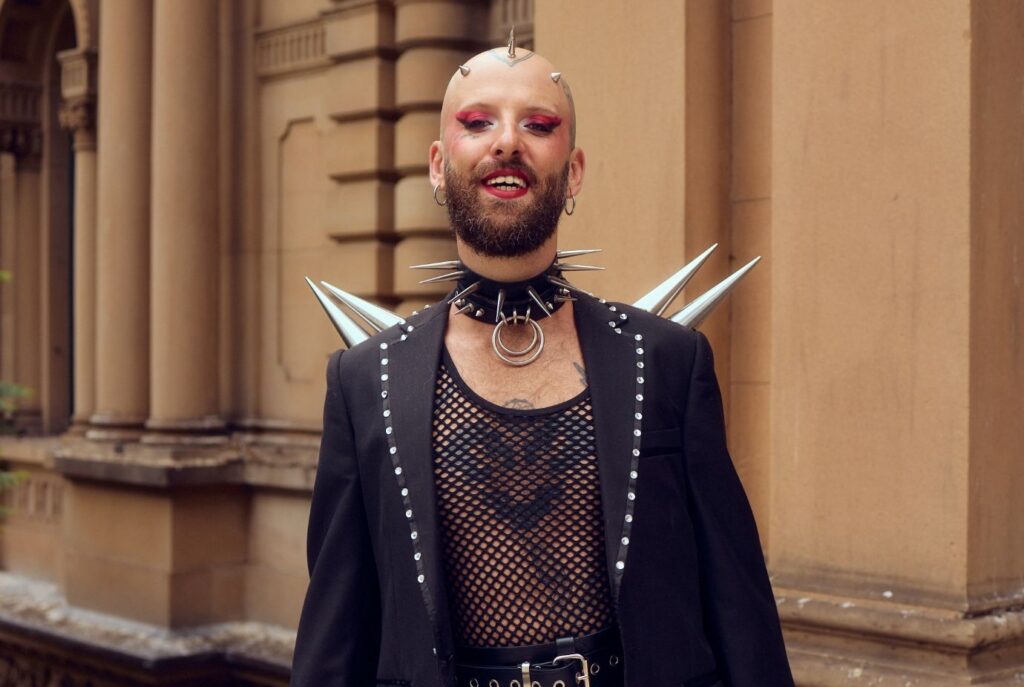
Micklin Korsuize, co-founder of The Queer Agenda, was busy preparing for an event at the world’s largest gender equality conference in Melbourne in April when, ironically, their Instagram platform was deleted without warning or explanation.
“It was kind of fitting, but then also so annoying, because we’re trying now to build a community here in Australia and in Melbourne,” said Korsuize, who moved from the Netherlands to the Victorian state earlier this year.
“We might post some things that are a bit edgy for the mainstream, but it’s still nowhere as close as things that are still up on Instagram that are related to child porn or harassment or right-wing hate, and it doesn’t hurt anyone, in fact, the opposite.”
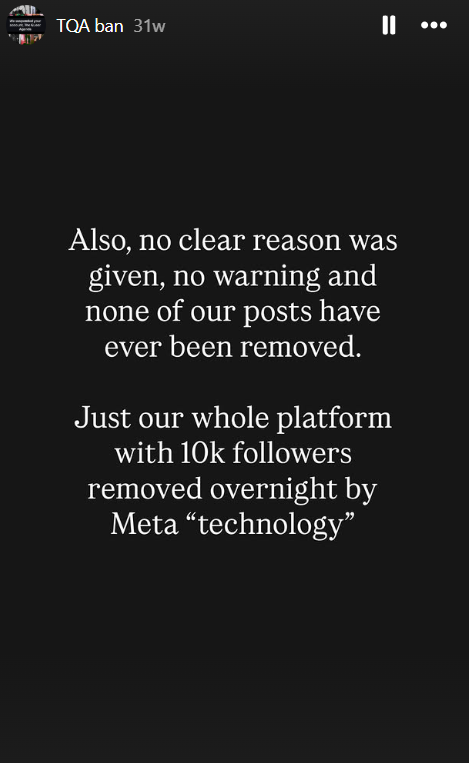
The sudden censorship of their account by the tech giant was the second for the queer community account, the first having been in November. It’s part of a broader crackdown of nearly 400 documented censorship incidents involving LGBTQIA+ communities, artists, performers, nightlife spaces, sexual and reproductive health organisations, educators, activists, and cultural groups worldwide this year – almost double the number recorded last year – according to Repro Uncensored. The global nonprofit, based in the US and Europe, tracks censorship and reinstates blocked accounts among other things.
The accounts censored in Australia include those belonging to sex workers and local LGBTQ+ events, plus a national HIV group.
“Repro Uncensored has already documented dozens of censorship cases affecting organisations, creators, and community spaces in Australia, and we believe this represents only a fraction of the actual scale of the problem,” its founder and executive director, Martha Dimitratou, told Women’s Agenda.
“What we are seeing reflects the same broader pattern documented elsewhere: accounts being suspended, removed, restricted, or made significantly less visible, often with little explanation and limited opportunities for meaningful appeal.”
The scale, consistency, and timing of these reports make it increasingly clear that this is not simply a collection of isolated moderation errors and that Australia’s world-first teen social media ban could be to blame, said Dimitratou.
“Many of these cases emerged alongside expanded platform safety measures, increased reliance on automated moderation systems, and broader restrictions around content classified as sensitive,” she said.
“While protecting young people online is an important goal, many of the affected accounts provide legitimate health information, public education, community support, cultural programming, and civic engagement.”
Last month Dykotomy, a Melbourne-based lesbian event organisation founded and run by four sex workers, had their Instagram account followed by almost 5000 people deleted and was left with no other way of reaching their community.
Co-founder Amelia Abboud said that her personal account was removed about a week ago and that she had tried to appeal the decision involving it and the group’s. But she had been informed by Meta that they would be personally deleted. One of the women also had her business accounts for her hairdressing and cooking services – “very PG-rated stuff” said Abboud – permanently deleted. She too had been informed by the multi-million dollar platform that she would not be able to appeal the decision.
The group, providing another space for the queer community to gather online and physically, have now resorted to using an email list to communicate with people and have been unable to get in touch with any one at Meta about having the accounts restored.
“We don’t really know what to do,” said Abboud.
Meanwhile, Basjia, an award-winning queer artist of colour, has had Instagram accounts removed six times and has told Digital Rights Watch, a Melbourne-based NGO, that the censorship threatens her survival and has left her isolated.
Paisley Heart, a Sydney-based event producer, queer activist, DJ and facilitator, said they had received a lifetime ban from Meta in December. It has cost them an estimated $60,000 – $70,000 in business.
“The platforms have us in a chokehold where, because we make our money through them, it’s hard to take a stand,” they said.
The National Association of People With HIV Australia (NAPWHA) also told Women’s Agenda that they were unable to boost posts for a campaign for the National Day of Women Living with HIV a few months ago and received a notice about them containing political or social issues. Sydney Sauna’s account was disabled in March and they’ve also been unable to appeal.
What Were You Wearing?, a charity dedicated to ending domestic, family, and sexual violence, the LGBTQ+ NSW Community Arts Hub and Festival and Central Coast Pride have experienced problems with their accounts too, according to Repro Uncensored.
DRW said some of the reported content was often innocuous, for instance, photos of high heels, or details for upcoming dance workshops. The censorship was having “a chilling effect on online LGBTQ discourse,” said the charity’s founder and chair Lizzie O’Shea, with some content creators now forced to self-censor.
“It means we are missing out on valuable perspectives,” she said.
The removal and appeal process is opaque and difficult to navigate.
One account owner expressed feeling as though they were “being punished for being queer”.
Some account owners have resorted to scammers who promise to retrieve deleted accounts for up to $3,000 USD per account, but then hold them for ransom and continue to demand money from them, said DRW.
As Repro Uncensored and a coalition of Dutch queer organisations pursue landmark legal action against Meta over the removal of accounts in the Netherlands, they and DRW warn similar legal and regulatory challenges could emerge in Australia.
It was only on April 29 that The Queer Agenda had its Instagram account reinstated through Repro Uncensored. But even now back on the platform, “you’re not actually safe from the big scary Meta police”, stressed Korsuize, adding they were now effectively self-censoring so it wouldn’t happen again.
Having been banned from the digital world twice, and to highlight the crackdown, The Queer Agenda, together with the NGO, staged a physical exhibition during April’s Women Deliver conference in Melbourne. It featured photos taken by Korsuize, documenting “bodies, intimacy, nightlife, desire and collective presence”, to emphasise that in the online world “simply being seen becomes political”.
“That was really lovely and empowering to see our community show up,” said Korsuize. “A lot of people support and are angry with us or for us.”
A spokesperson for Meta told Women’s Agenda: “We take action on accounts that violate our policies, and people can appeal if they think we’ve made a mistake.”
Feature image: Micklin Korsuize/Instagram.