

For generations, women have been told that raising children “takes a village”. But for many mothers navigating the early years of parenthood in Australia, that village is increasingly hard to come by.
Our new research on motherhood suggests loneliness is experienced by the overwhelming majority of mothers (73 per cent) at least a few times a month.
Women’s Agenda’s Beyond the Village report, produced in partnership with Medibank and based on a survey of more than 1,000 Australian mothers, provides a deeper look at what life looks like for many women who have young children.
Rather than feeling supported and connected during a time of overwhelming change, many women described navigating the transition into motherhood feeling isolated and lonely.
Only 38 per cent of women felt like they were part of a “village” and just 28 per cent had built genuine friendships through formal mothers and parents groups. Nearly half (48.5 per cent) reported feeling lonelier now than before becoming mothers, while almost 15 per cent said they feel much lonelier.
The findings reveal that loneliness in motherhood is wide-reaching and we need a social infrastructure that is better equipped to support women to build meaningful social connections.
Social support as a protective factor for mums
What’s clear from the research is that positive social support can be an important protective factor for mothers at risk of loneliness. But more needs to be done to ensure mothers can build networks and communities, beyond access to an assigned mothers or parents group.
Many women who responded to the survey spoke about coming into the new chapter of motherhood while living away from extended family, partners returning quickly to work, rising living costs limiting opportunities to socialise, and communities that don’t naturally create opportunities for connection.
There are some key areas identified that are ripe for change. For example, mothers frequently visit places such as parks and playgrounds with their children. But these spaces are not set up to build meaningful connections for adults.
Just 28 per cent of women built genuine friendships through formal mothers and parents groups, while only five per cent said they made connections at playgrounds. At the same time, 71 per cent of mothers felt isolated from the social networks they had before entering motherhood.
The social expectations and cultural norms that portray motherhood through rose-coloured glasses, especially on social media, can make mothers who are struggling feel even more isolated, according to the report. This disconnect can discourage parents from opening up about the challenges they are experiencing.
Creating better social infrastructure for mums means creating workplaces where parental leave genuinely supports both parents, making community spaces easier to access, investing in local support networks, and fostering environments where women can speak honestly about the realities of parenting without fear of judgement.
How Mum Walk is leading the way
Australian organisation Mum Walk has recently released its own report into motherhood loneliness, finding 90 per cent of mums surveyed from the Mum Walk community reported feelings of loneliness after birth with nearly half reporting high or severe levels.
Founder Kimberly Kay, who personally struggled with her mental health after having babies, said the report, titled Mums Needs Mums, makes clear that loneliness in motherhood is “the norm, not the exception”.
Speaking to Women’s Agenda, Kay the findings about the prevalence of loneliness didn’t surprise her but what did was the depth of those feelings among mums.
“When I moved into this space, I could sense the urgency and scale from how many mums applied to start a Mum Walk,” she says.
“But there wasn’t a lot of Australian-based data and research to back up what I felt to be true from the experience of growing Mum Walk.
“It’s validating that we now have two really comprehensive research pieces that confirm that motherhood loneliness is the norm rather than the exception.”
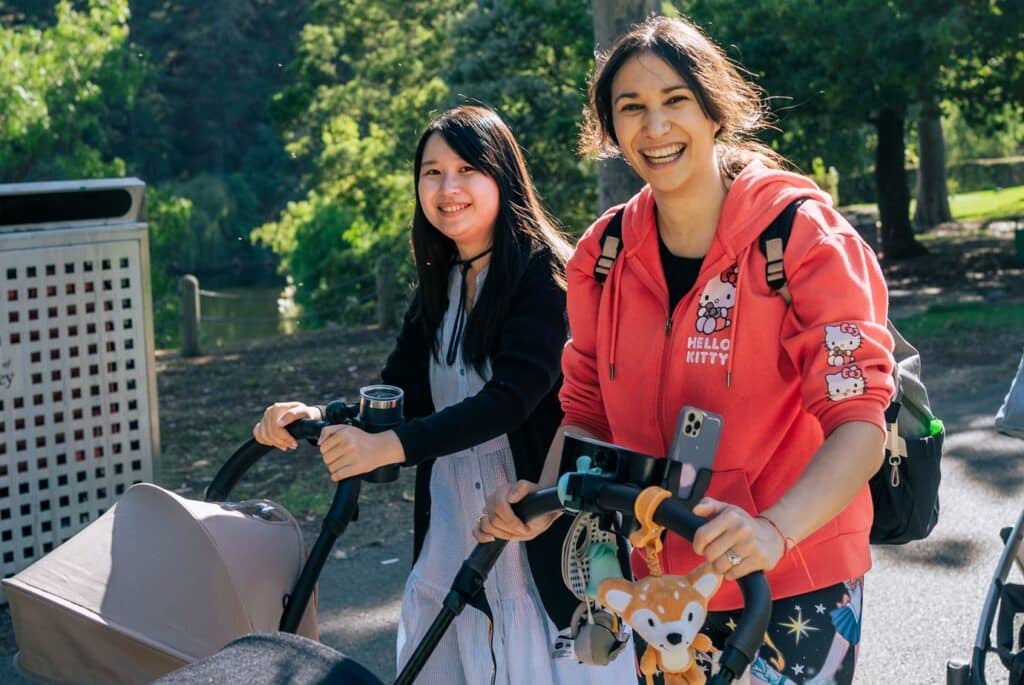
What sets Mum Walk apart from other organisations is a focus on socialising and building connections among mums, rather than their children. Kay says this is the right approach to support women to build lasting connections.
“Society has been built in a way that most of the programs are centered around children and the baby’s development,” Kay explains.
“There really is not much on offer for mums that center around mums connecting. At groups like baby rhyme time and even play groups, that social connection isn’t really built in, and it’s making mums feel isolated.
“They’re going to these spaces and they have to take on that responsibility themselves to build those connections rather than having those spaces do some of the lifting for them.”
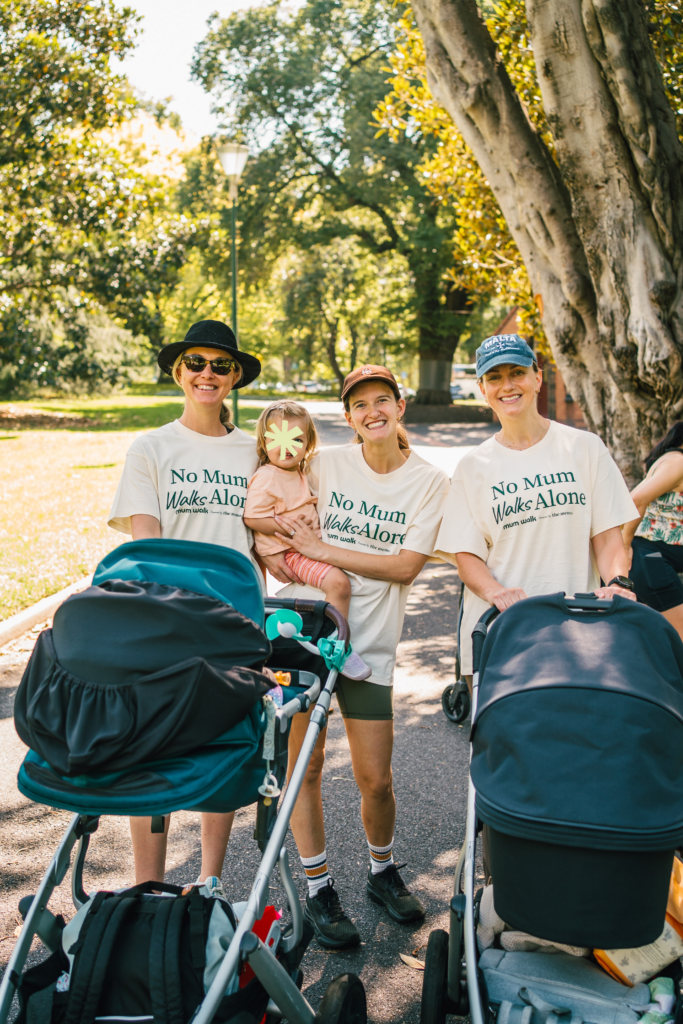
Building social groups around mums
As highlighted in the Beyond The Village report, women are generally quite proactive in building their own support networks but only 49 per cent believed their new friendships would last.
When new connections are so often centred around milestones like children being the same age or going to similar places, these relationships may fade as children grow up.
That’s where groups like Mum Walk come in. It’s now Australia’s leading platform for mums to find, join or even start a local social pram walk with other mums in their local area. It’s special because Mum Walk specifically supports mums to carve out time for themselves in a chaotic and overwhelming period of life. These are the kind of connections that can last a lifetime.
As for regular mothers or parents groups, a key issue raised with Women’s Agenda has been that women are placed in them quite randomly. A shift to redesigning these groups with a focus on shared interests, values or experiences could be a way to support women to find more meaningful connections in their local communities.
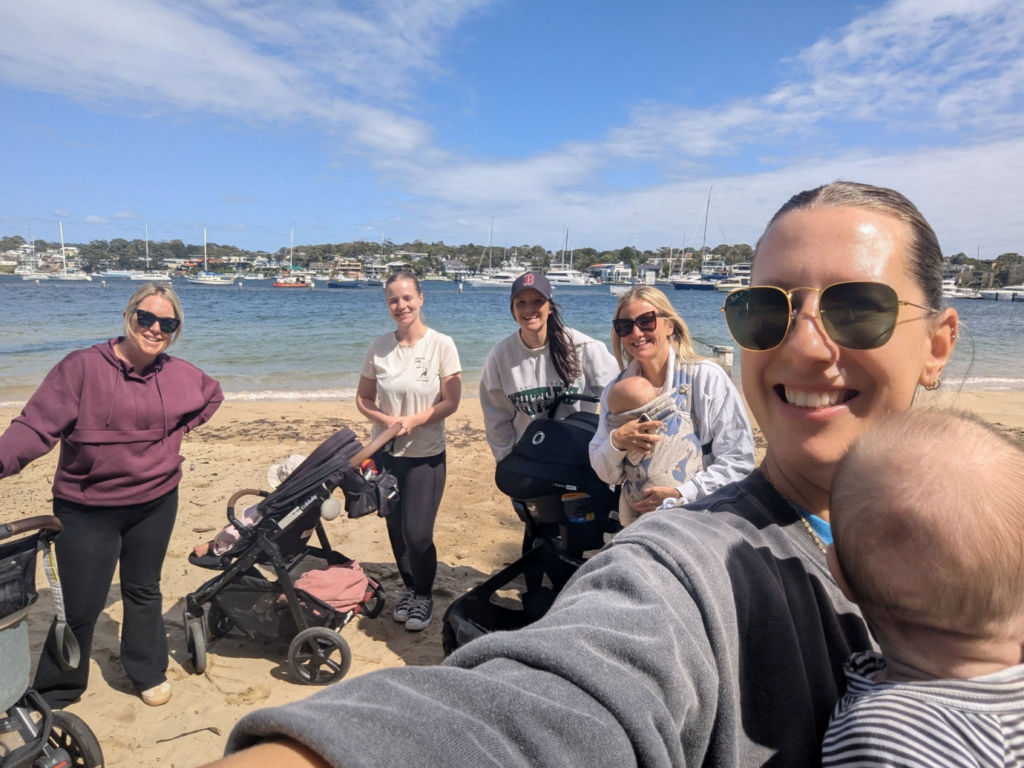
Better-funded frontline services to support women facing disadvantage are also a key part of the solution. This includes support and social services for mothers escaping violent relationships, mothers who can’t rely on a partner or family, mothers who have recently moved to Australia, or mothers living in regional and remote areas.
As Mum Walk’s Kimberly Kay puts it: “We no longer have to prove that this is a problem. We can move on and say this is a problem now. So what are the solutions, and how are we helping solve this for mums?”
You can find our Beyond the Village report, produced in partnership with Medibank, here.