

For women and children who live with someone with complex-PTSD, family life can be confusing and stressful at times. Women whose partners are current or previously serving members of Defence, or those who are first responders, are more likely to have this psychological injury.
The University of New England (UNE), Central Queensland University and Kings College London have teamed up to develop free, psychosocial resources to support families whose parents live with complex post-traumatic stress disorder (C-PTSD).
The project builds on the award-winning work of creating research-based programs and resources for children from Defence, veteran, and first responder families (i.e., service families). Their resources have been evaluated by parents, educators, family and social workers, and Defence School Mentors. They are widely used across Australia, and are also being adapted for use in Canada and the UK.
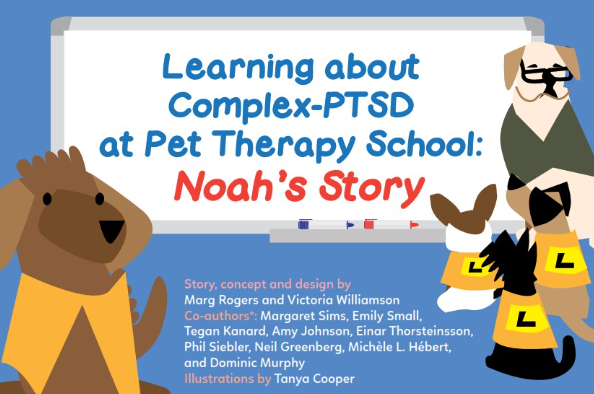
The new resources include a bibliotherapy storybook based on real-life narratives from people who grew up with parents living with C-PTSD (designed for one-to-one reading and therapy). Those with lived experience co-created the resources, meaning they are more likely to be relevant, impactful and useful. There are also online modules to improve the knowledge, skills, and confidence of parents, support workers, and clinicians.
While the project focuses on service families, C-PTSD affects many families, including those impacted by childhood abuse, domestic violence, neglect, attachment trauma, human trafficking, war, imprisonment, and cultural displacement.
The team have already created 14 free, research-based children’s books, each with downloadable educational activities, including puzzles, puppets, board and card games, numeracy tasks, storytelling and sequencing exercises, and sight words. Interactive storybooks are also freely accessible online. The accompanying three suites of resources support parents, educators, and support workers and clinicians to better assist these children.
The need for these psychosocial resources is great in service families, who experience frequent relocations, parents working away for long periods of time, and higher risks of parents being injured (physical, mental and moral). The Royal Commission into Defence and Veteran Suicide found that families are ‘invisible’, and that the roles of (mainly women)
‘The risk of intergenerational trauma runs high when children’s needs are not seen and the required services are not put in place to support the child’s psychosocial development’.
Community members are invited to test the usability of the draft C-PTSD resources through a short online survey. Feedback will help shape the final design before release of the free resource. The draft storybook and survey are available here.
“We thank the many service providers, organisations, researchers and volunteers who have co-created these resources,” Dr Rogers said. For more information and to browse existing free resources, visit, or the storybook platform.